
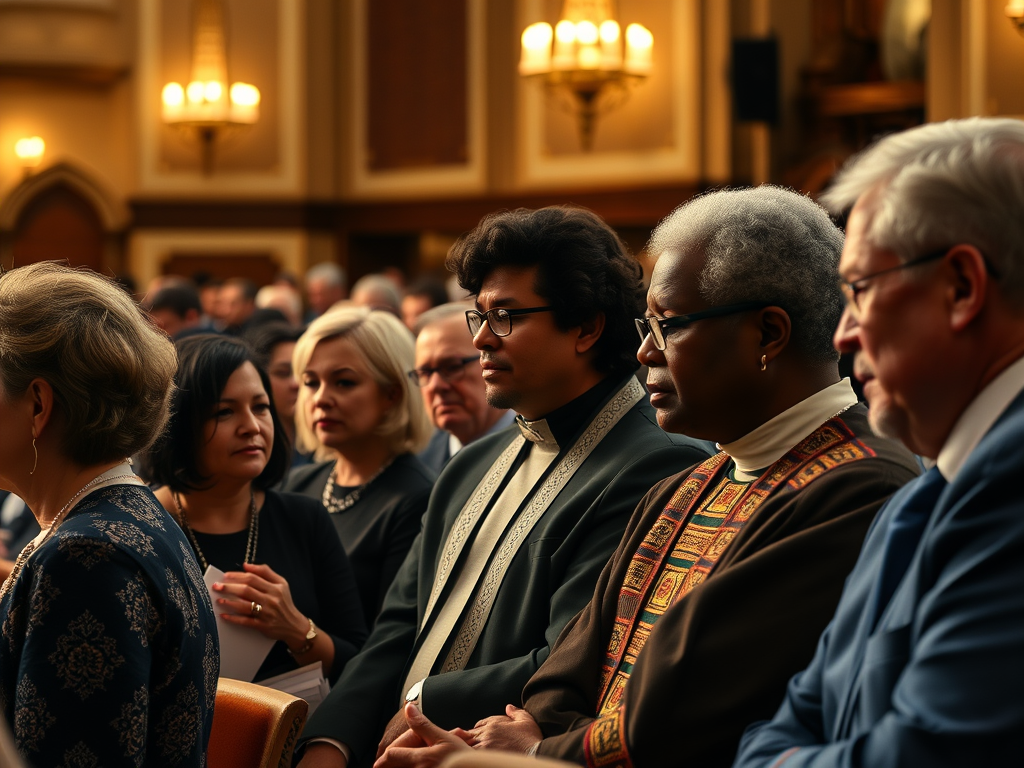

Southern Baptists to Vote on Effort to Overturn Same-Sex Marriage

This week, the Southern Baptist Convention is set to take a formal vote on a resolution aimed at reversing the landmark 2015 Supreme Court decision Obergefell v. Hodges, which legalized same-sex marriage across the United States. This initiative marks a significant and organized step by one of the most influential evangelical denominations in the country to oppose what many Americans now consider a settled civil right.
Although the Southern Baptist Convention (SBC) has long expressed opposition to same-sex marriage, the upcoming vote—scheduled to take place during its annual meeting in Dallas—represents the first time the denomination will formally urge its thousands of affiliated churches to actively seek the legal dismantling of Obergefell.
This effort coincides with a broader resurgence among evangelical and conservative Christian activists to revisit the question of same-sex marriage, especially in light of their success in 2022 when the Supreme Court overturned Roe v. Wade, the long-standing decision that had legalized abortion nationwide. Inspired by the strategies and eventual success of that anti-abortion campaign, activists are now redirecting their legal and political efforts toward undoing federal protections for gay marriage.

While public opinion remains strongly in favor of same-sex marriage—recent surveys show more than two-thirds of American adults support its legality—activists are hoping that, like in the abortion debate, they can achieve their goals through a combination of grassroots mobilization, judicial influence, and political advocacy, even as a cultural minority.
“We are called to pursue enduring change,” said Andrew T. Walker, an ethics professor at a Southern Baptist seminary in Kentucky and the author of the resolution. As head of the SBC’s resolutions committee, Walker plays a key role in reviewing and recommending motions that come from Southern Baptists nationwide.
“There’s growing discussion at the legal strategy level about how to begin challenging Obergefell,” Walker said. “The question is: what did we learn from the decades-long effort that overturned Roe, and how do we apply that to Obergefell?”

The resolution being presented is titled “On Restoring Moral Clarity through God’s Design for Gender, Marriage, and the Family,” and it articulates the SBC’s belief that civil law should reflect Biblical principles concerning marriage and family structure. The document calls not only for Obergefell to be overturned but also targets other laws and policies that the denomination views as contradicting a divine design for human relationships.
Among the policies it opposes is the Respect for Marriage Act, passed and signed into law by President Biden in 2022, which codifies federal recognition for same-sex marriages. The resolution also singles out commercial surrogacy as an area for legal restriction and urges legislators to pursue policies that reinforce what the SBC views as morally grounded family life.

“The government should enact laws that reflect the truths of God’s creation,” the resolution asserts, “and reject any policy that contradicts what is evident in both nature and Scripture.”
According to R. Albert Mohler Jr., president of the Southern Baptist Theological Seminary, the introduction of this resolution reflects a deeper shift within the denomination’s approach—a realization that a long-term legal strategy, like the one that led to the fall of Roe, is now necessary in the fight against Obergefell. He added that Southern Baptist leaders have been in close communication with legal advocates at Alliance Defending Freedom, the Christian legal organization that played a pivotal role in the anti-abortion legal movement.
“It’s not just a debate about marriage,” Mohler said. “It’s about how we interpret the Constitution—just like it was with abortion.”
The upcoming vote only requires a simple majority of the SBC’s attending delegates to pass, and it is expected to be approved without significant opposition. If successful, the resolution could serve as a tool for conservative lawmakers and activists to demonstrate that there is organized religious support for revisiting gay marriage in court and in legislatures—even if that position is increasingly unpopular in the broader public sphere.
Walker, the resolution’s author, acknowledges this challenge: “There’s a prevailing narrative that same-sex marriage is as American as baseball and apple pie,” he said. “And I recognize that the political will to challenge that is quite small right now.”

Currently, only two Supreme Court justices—Clarence Thomas and Samuel Alito—have openly suggested that the court should reconsider Obergefell. Chief Justice John Roberts dissented from the original 5-4 decision in 2015 but has not publicly supported a reversal.
Justice Thomas, in his concurring opinion in the Dobbs v. Jackson Women’s Health Organization case that ended Roe, called for the Court to reexamine precedents that established rights to contraception, same-sex intimacy, and same-sex marriage—raising concern that Obergefell may be vulnerable to future legal challenges.
One such challenge may be coming soon. Mathew Staver, a longtime Southern Baptist and the chairman of Liberty Counsel, a conservative Christian legal advocacy group, plans to ask the Supreme Court next month to hear a case related to Kim Davis—the former Kentucky county clerk who refused to issue marriage licenses to same-sex couples in 2015. Staver hopes that this case will serve as a vehicle to directly challenge Obergefell.
Staver has spent the past two decades fighting gay marriage through the court system and recently worked with lawmakers in Idaho on a resolution passed by the state’s House of Representatives urging the Supreme Court to overturn the ruling. Similar proposals have emerged in states such as South Dakota, Montana, and Michigan, with partial success in North Dakota and Idaho.

“These legislative actions begin to reflect a broader sentiment among officials,” Staver explained. “And that growing momentum leads to greater coordination—just as we saw in the campaign to reverse Roe.”
Although efforts at the national and state level have mostly developed independently so far, Staver and others believe that increased collaboration among conservative churches, legal advocacy groups, and legislators could be the key to achieving their goals.
The SBC itself has leaned further to the right in recent years, particularly on topics like gender roles, sexuality, and church leadership. The denomination has also faced internal turmoil following public revelations of widespread sexual abuse and allegations of mishandling such cases over several decades.
The annual SBC meeting has often served as a bellwether for broader evangelical political and cultural priorities. Although only about 10,000 of the SBC’s roughly 13 million members typically participate and vote, their decisions tend to reflect larger ideological trends within conservative evangelical Christianity.
In 2023, the SBC passed a resolution opposing in vitro fertilization, sparking concern among many evangelicals who use the treatment to conceive. That same year, the denomination also expelled several churches for having female pastors, including one of its most prominent congregations. A subsequent attempt to impose even stricter limits on women in ministry passed one vote but failed to achieve final approval in 2024. However, that proposal is expected to resurface at this year’s meeting.
As the SBC prepares to cast its vote on the gay marriage resolution, observers say the decision could shape the trajectory of Christian conservative politics in the coming decade—setting the stage for a prolonged legal battle that, like the fight against abortion, could take years or even decades to fully play out.




Leave a Reply