
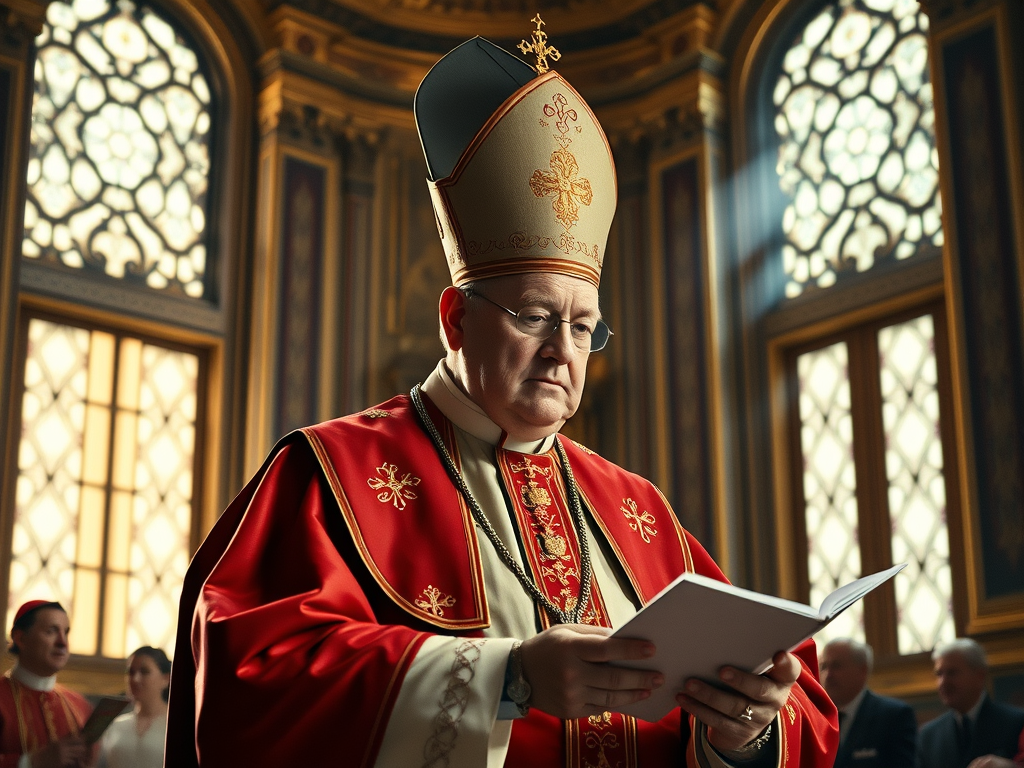

How a Quiet American Cardinal Became Pope

The cardinals tasked with selecting the next leader of the Roman Catholic Church emerged from the Sistine Chapel on Wednesday evening, fatigued and hungry after a lengthy opening meditation delayed their initial vote. The first round of voting proved inconclusive, with three prominent candidates emerging as potential successors to Pope Francis. Maintaining their vow of secrecy, the cardinals returned to Casa Santa Marta, the guesthouse where they were isolated without phones, and began discussing the emerging contenders over dinner.
Cardinal Pietro Parolin, 70, an Italian who had managed the Vatican’s affairs under Pope Francis, entered the conclave as a frontrunner. However, the evening’s vote revealed that his support was far from unanimous. The Italian faction remained divided, with some expressing dissatisfaction with his perceived failure to prioritize the collaborative style of governance that Pope Francis had emphasized.

Meanwhile, Cardinal Peter Erdo of Hungary, 72, backed by a conservative coalition that included African supporters, struggled to gain momentum among the predominantly Francis-appointed electorate. This left Cardinal Robert Francis Prevost, 69, as a surprise emerging candidate. Prevost, a relatively low-profile American, had risen unexpectedly in the evening’s vote, capturing the interest of many.
Prevost’s diverse background — a missionary who became a religious order leader, then a bishop in Peru, and eventually a prominent Vatican figure — made him a compelling candidate. His ability to connect with both North and South American cardinals helped bridge a geographical divide, and as discussions continued over dinner, many cardinals began to see him as a viable choice.

Throughout the dinner, Prevost refrained from overt politicking or power plays, according to those present. By the next morning, he had transformed from a dark horse into a dominant contender, as factions increasingly consolidated around him. “You start to see the writing on the wall and think, ‘Well, I won’t need all five days of clothes,’” joked Cardinal Pablo Virgilio Siongco David of the Philippines.
Interviews with several cardinals, who spoke on condition of anonymity to avoid violating conclave secrecy rules, reveal how Prevost emerged as Pope Leo XIV. In a conclave marked by rapid consensus, the American’s rise to the papacy surprised those unfamiliar with his work in the church.

The Path to Consensus
Following Pope Francis’s death on April 21, cardinals from around the globe gathered in Rome, including key Vatican officials like Cardinal Prevost, whose influence had grown significantly under Francis. Despite his extensive experience in church administration, Prevost remained relatively new to the College of Cardinals, having received his red hat less than two years prior.
Cardinal Prevost sought advice from Cardinal Luis Antonio Gokim Tagle of the Philippines, a veteran of the previous conclave and once considered a leading contender himself. “He asked, ‘How does this work?’” Cardinal Tagle recalled, adding that Prevost was still navigating the intricacies of the papal selection process.
Prevost lacked the name recognition that many candidates relied upon, and his low profile meant that several cardinals barely knew him. “I didn’t even know his name,” admitted Cardinal David. But those familiar with his work spoke highly of him. As the former leader of the Order of St. Augustine, Prevost had cultivated strong relationships across continents. His long tenure in Peru and his fluent Spanish further solidified his appeal among Latin American cardinals.
Cardinal Baltazar Enrique Porras Cardozo of Venezuela, who had known Prevost for decades, said, “He’s one of us.” This familiarity and his connection to Pope Francis, who had championed his career, became key assets as conversations intensified in the days leading up to the vote.
During the pre-conclave meetings, Prevost’s remarks did not stand out, several cardinals said. “Like everyone else,” Cardinal Juan José Omella Omella of Spain remarked. However, in smaller group discussions, Prevost shone. “He listened well, he worked well with others,” said Cardinal Jean-Paul Vesco of France.
In the final days before the conclave, as the cardinals prepared to cast their votes, more began to rally behind Prevost. Cardinal Wilton Gregory of the United States noted that Prevost performed effectively in smaller discussions, engaging thoughtfully with colleagues. Cardinal Blase J. Cupich of Chicago praised his ability to lead meetings across language and cultural barriers. “That’s not easy to do,” Cupich said.
A Swift and Decisive Vote
On Wednesday, May 3, the cardinals assembled in the Sistine Chapel, taking their oaths of secrecy before the doors closed at 6 p.m. The opening meditation, meant to set a solemn tone, stretched to nearly an hour. Cardinal Parolin, presiding over the conclave, asked if they wished to postpone the first vote until the next morning. The cardinals, hungry and tired, opted to proceed.

When the first vote concluded around 7:30 p.m., the results were far from definitive. Cardinal Erdo, Cardinal Parolin, and Cardinal Prevost each garnered significant support. As the cardinals returned to Casa Santa Marta, discussions about the candidates intensified over dinner. According to Cardinal Gerhard Ludwig Müller of Germany, a prominent conservative critic of Pope Francis, he consulted with Latin American cardinals, who praised Prevost as “not divisive.”
By Thursday morning, a consensus began to crystallize. The second and third votes further clarified the field, with support increasingly coalescing around Prevost. During the fourth vote, Cardinal Lazarus You Heung-sik of South Korea noted a decisive shift in the ballots. “The ballots overwhelmingly shifted to Prevost,” he said.
Cardinal Tobin of New Jersey, a longtime friend of Prevost, recalled looking over at his compatriot, who sat with his head in his hands as the votes piled up in his favor. By the end of the count, Prevost had secured 89 votes — enough to secure the papacy. The room erupted in a standing ovation, and as the tally neared triple digits, Cardinal Parolin asked everyone to settle down so the final count could be completed.
Shortly thereafter, the conclave was over. Cardinal Prevost, now Pope Leo XIV, stepped onto the balcony of St. Peter’s Basilica to greet the world. Cardinal Tagle, the man who had once explained the conclave rules to Prevost, approached the new pope and said, ‘If you want to change the rules, they’re all yours now.’”





Leave a Reply