
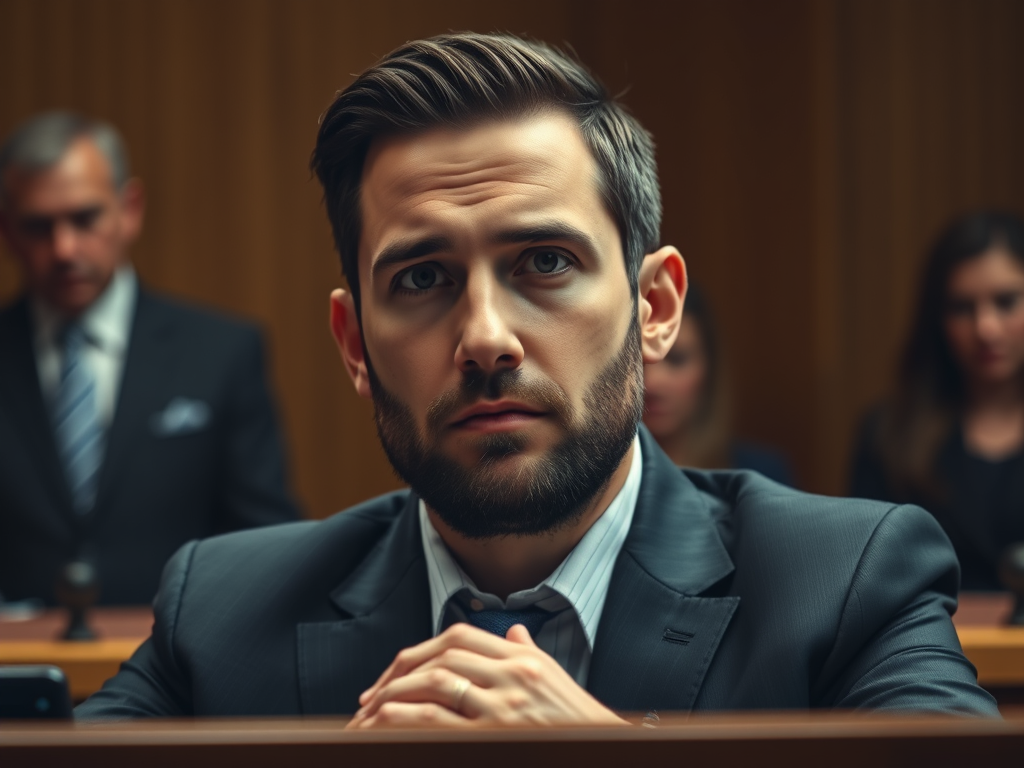

Kevin Systrom Challenges Meta’s Narrative in Court Testimony

Kevin Systrom, one of the original creators of Instagram, took the witness stand this Tuesday in a pivotal antitrust trial that could reshape the future of Big Tech. In his testimony, Systrom painted a stark picture of how Meta—formerly Facebook—allegedly stifled the growth of Instagram after acquiring it, out of concern that the app posed a direct threat to Meta’s dominance in the social media space.
“Mark didn’t want to invest in Instagram because he thought we threatened Facebook’s expansion,” Systrom told the court, referring to Mark Zuckerberg, Meta’s CEO and founder.
Systrom’s testimony, which lasted more than six hours, forms a critical part of the Federal Trade Commission’s (FTC) argument that Meta’s acquisition of Instagram in 2012 was not simply a business deal but part of a broader anti-competitive strategy. The government contends that Meta adopted a “buy-or-bury” approach—eliminating potential rivals before they could grow large enough to challenge its monopoly.
Although the Instagram deal brought Systrom substantial financial gain—Meta paid $1 billion for the app—his statements strongly challenged Meta’s narrative. His remarks contrasted sharply with those made by Zuckerberg just days earlier, when the Meta CEO argued that Instagram had thrived thanks to Meta’s technical expertise and financial backing.
But Systrom offered a different account. He claimed that he decided to leave Meta in 2018 precisely because the company had failed to allocate sufficient resources to Instagram, even as the app experienced explosive user growth. By then, Instagram had amassed one billion users—roughly 40% of Facebook’s user base—but had a workforce of just 1,000 employees, compared to Facebook’s 35,000.

“We were the fastest-growing team by far,” Systrom emphasized. “We were generating massive revenue. Given our scale and performance, we deserved far more resources than we received.”
He said Meta’s neglect was puzzling, even disheartening. When questioned by an FTC attorney about Zuckerberg’s motivations for limiting support for Instagram, Systrom suggested that emotions may have played a role. “He was emotionally invested in Facebook,” Systrom said. “I believe there was a human side to this. It was about which product he wanted to win.”
The case—Federal Trade Commission v. Meta Platforms—entered its second week in federal court in Washington, D.C., and is centered around Meta’s high-profile acquisitions of both Instagram and WhatsApp, which it bought in 2014 for $19 billion. The government’s core allegation is that these takeovers eliminated promising competitors and damaged innovation in the tech space.
According to the FTC, Meta was driven by fear of emerging platforms offering better products and user experiences. Rather than improving its own offerings, the company allegedly chose to neutralize its rivals through acquisition—an action the agency argues has harmed consumers by reducing options and weakening competition.

The consequences of this trial could be enormous. The FTC is pushing for the breakup of Meta, a move that could dismantle its $165 billion advertising business and radically alter how over 3.5 billion people access and share content online.
Zuckerberg, who was called as the FTC’s first witness, testified last week that Meta contributed significantly to Instagram’s growth post-acquisition. He cited improvements such as advanced spam filtering systems and server infrastructure that allowed Instagram to operate more efficiently.
However, Systrom dismissed those claims. On Tuesday, he countered that Instagram had effectively managed spam issues on its own and already had a robust infrastructure, thanks in part to services from Amazon Web Services.
This lawsuit is part of a wider effort by federal regulators to check the influence of America’s most powerful tech firms. Just last week, the Department of Justice secured a win in a separate antitrust case involving Google’s dominance in ad tech. That decision followed another government victory against Google’s monopoly over search.
Meanwhile, both the FTC and the Department of Justice have filed similar lawsuits against Amazon and Apple, marking a comprehensive offensive against alleged anti-competitive practices in Silicon Valley.
The lawsuit against Meta was originally filed under the Trump administration in December 2020 and is one of the few antitrust actions against a tech giant to actually reach trial in recent years.
Unlike traditional antitrust arguments that focus on price fixing or collusion, the FTC’s case against Meta employs a more novel theory: that the company systematically quashed competition by acquiring fast-growing start-ups before they could become meaningful challengers. The case rests heavily on internal documents, executive statements, and testimony like Systrom’s.
During the trial, the court revisited Instagram’s early history. Launched in 2010, the app experienced meteoric growth. On its very first day, it attracted 25,000 users. By early 2012, Instagram was adding four million new users every month.

During cross-examination, Meta’s lawyer Kevin Huff presented earlier statements by Systrom that seemed to praise Facebook’s post-acquisition support. Systrom had once likened running Instagram before the acquisition to holding it together with “duct tape.” He also previously noted that after joining Facebook, it became significantly easier to access resources like sales teams and infrastructure.
On Tuesday, Systrom did acknowledge that Instagram expanded more rapidly thanks to Facebook’s support. “We grew faster as part of Facebook than we would have as a standalone company,” he admitted. However, he stood firm in his belief that Meta deliberately underinvested in Instagram to limit its long-term potential.
Earlier in the trial, the government presented internal communications in which Zuckerberg appeared to view Instagram as a direct competitor. In one 2012 email, Zuckerberg proposed acquiring Instagram to “neutralize” it and maintain Facebook’s supremacy. He also suggested keeping the app running with minimal feature updates—implying an intention to preserve its status while halting its innovation.
Another layer of the government’s argument is that Instagram had alternative pathways to growth. Roelof Botha, a partner at Sequoia Capital, testified via video on Monday that there was serious investor interest in Instagram before the Meta acquisition. He described the company as “lightning in a bottle,” and said that several investors, including Sequoia, were eager to inject additional funding.
“There were too many pigs at the trough,” Botha recalled, referencing the intense competition among venture capitalists trying to get in on the deal. Systrom himself revealed during Tuesday’s testimony that in negotiations with Zuckerberg, he pushed for a higher acquisition price—up to $4 billion. Ultimately, he settled for a deal that, in hindsight, he now considers a steal for Meta.
“I think they got a screaming deal,” Systrom remarked.
The trial continues as the FTC builds its case to demonstrate that Meta’s acquisition strategies have systematically weakened market competition. With testimony from key figures like Systrom and Zuckerberg, the outcome of the trial could have far-reaching implications not only for Meta, but for the future of antitrust enforcement in the digital era.




Leave a Reply