

Does Meta Have a Social Media Monopoly? Here’s What the U.S. Has Argued.

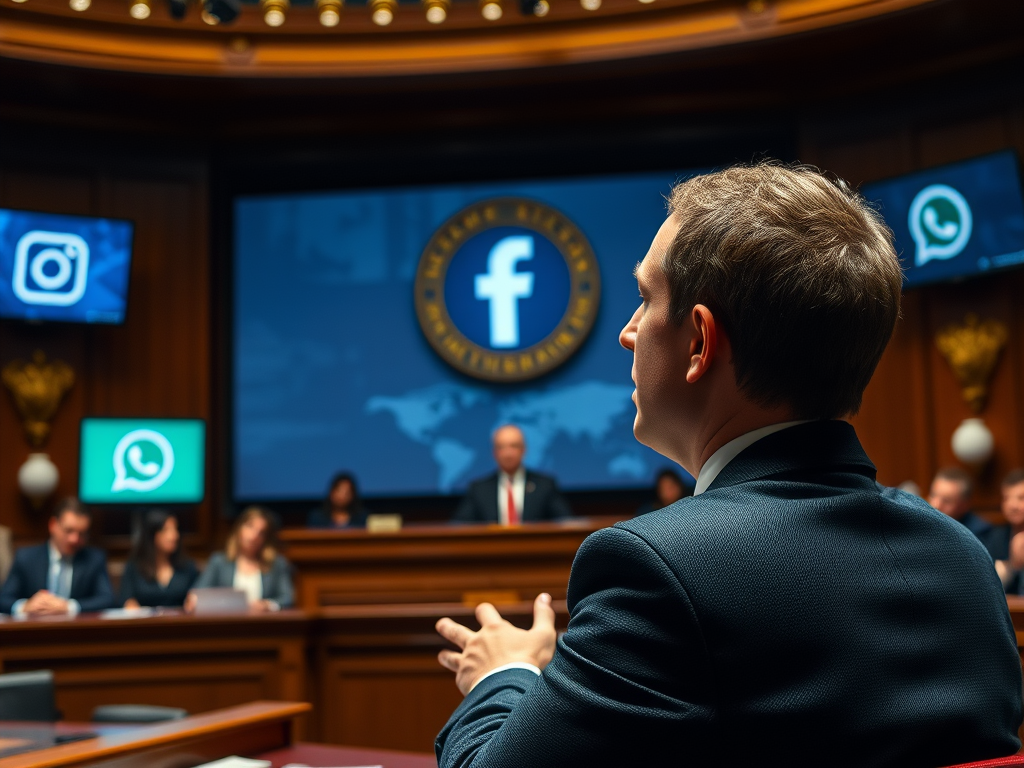
For the past five weeks, the Federal Trade Commission (FTC) has been building its case against Meta Platforms, alleging that the tech giant engaged in unlawful monopolistic practices through the acquisition of Instagram and WhatsApp. On Thursday, the government concluded its arguments in the U.S. District Court for the District of Columbia, allowing Meta to begin presenting its defense.
During the initial phase of the trial, FTC attorneys interrogated Meta’s CEO Mark Zuckerberg along with executives from TikTok, YouTube, Pinterest, and LinkedIn. The FTC’s primary objective was to demonstrate that Meta had intentionally overpaid for Instagram and WhatsApp as part of a strategic effort to eliminate competition through what they termed a “buy or bury” approach.
Here are the key arguments presented by the FTC:
Meta’s Concern Over Emerging Rivals

The FTC emphasized that Meta’s acquisitions of Instagram in 2012 for $1 billion and WhatsApp in 2014 for $19 billion were driven by concerns that these platforms could evolve into formidable competitors. Government lawyers referenced numerous internal communications, including emails, board documents, and instant messages, to illustrate the company’s persistent anxiety over potential rivals.
One such email from 2012 revealed Zuckerberg expressing a desire to “neutralize” Instagram, whose superior smartphone camera app posed a growing threat to Facebook. Other communications indicated that Meta executives were also worried about messaging apps adopting social networking features, which could position them as direct competitors.
Zuckerberg defended these communications in his testimony, asserting that it was standard business practice to remain vigilant about competition and to consider acquisitions as a legitimate strategy for maintaining a competitive edge.
Instagram’s Potential Stifled Under Meta

Another focal point of the FTC’s argument was the assertion that Instagram could have achieved greater success and fostered more competition in the social networking space had it remained independent. To support this claim, the FTC called Kevin Systrom, a co-founder of Instagram, to testify.
According to Systrom, Zuckerberg was hesitant to invest in Instagram’s growth, fearing it might cannibalize Facebook’s user base. “Mark was not investing in Instagram because he believed we were a threat to their growth,” Systrom stated. However, under cross-examination by Meta’s legal team, he admitted that Instagram had also benefited from Meta’s resources and infrastructure after the acquisition.
Meta’s Alleged Monopoly in Social Networking
The FTC contended that Meta had monopolized the “personal social networking” sector, a market defined as platforms that connect friends and family. By this definition, the government argued that Meta’s only significant competitor was Snap, the parent company of Snapchat, which Meta dwarfed in terms of user base and influence.
To reinforce this claim, FTC attorneys referenced a company post from 2006 in which Zuckerberg stated, “Facebook is about real connections to actual friends.” Meta, however, countered that it had since evolved into a broader entertainment platform, competing with other social media giants like TikTok and YouTube. Zuckerberg noted that only 20% of content on Facebook and 10% on Instagram is generated by friends, with the remainder being broader social and entertainment content.

Judge Boasberg’s Response and Observations
Before the trial commenced, Judge James E. Boasberg revealed that he had little personal experience with Facebook or Instagram, prompting the government to call expert witnesses to clarify the distinctions between various social media platforms. These experts aimed to illustrate how Meta’s business model centered more on personal connections than its competitors, reinforcing the FTC’s monopoly argument.
However, Judge Boasberg expressed skepticism, noting that the social media landscape had transformed significantly in the years since Meta acquired Instagram and WhatsApp. He questioned whether the differences between Meta and other social media apps were substantial or merely matters of degree. “Why aren’t the way these are used now just a difference in degree?” Boasberg asked, challenging the FTC’s framing of Meta as a distinct type of platform.
The next phase of the trial will see Meta presenting its defense, aiming to counter the government’s claims and assert that its acquisitions were legitimate business moves in a rapidly evolving tech landscape.




Leave a Reply