
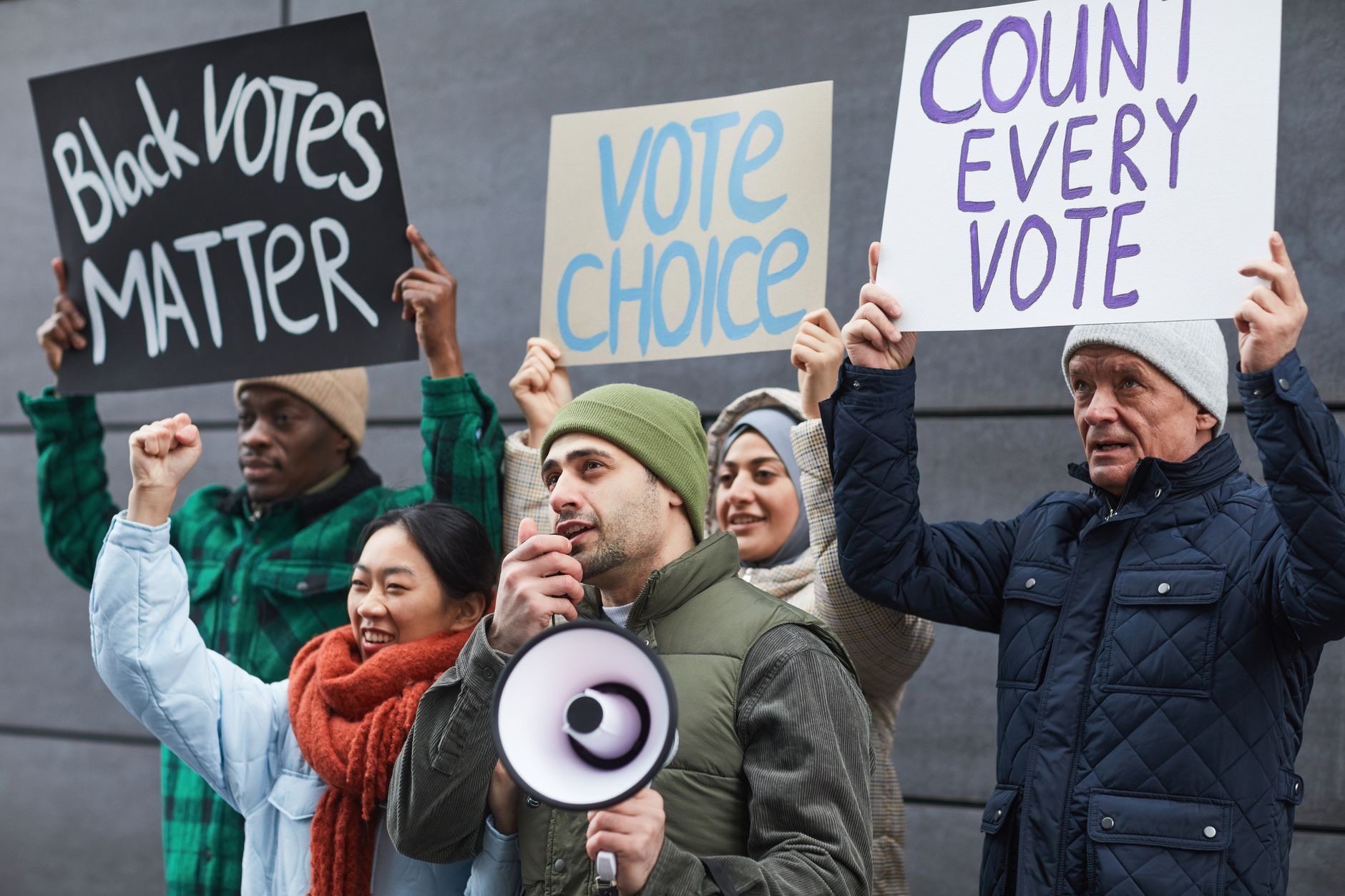
WASHINGTON, Oct. 17, 2026 — Demonstrators gathered in cities and communities across the United States on Saturday as the No Kings movement launched a nationwide campaign encouraging Americans to vote early in the November 3 midterm elections. The coordinated events brought together protesters, community organizers and voting-rights advocates in a push to turn months of demonstrations against President Donald Trump’s administration into participation at the ballot box.
The latest mobilization, branded “No Kings: Vote Early,” marked the movement’s fourth nationwide day of action. Unlike earlier demonstrations that primarily challenged the administration’s policies and presidential authority, Saturday’s events placed greater emphasis on practical voter participation. Organizers promoted early voting locations, registration checks, absentee ballots and community assistance, seeking to make election participation a central part of the movement’s activities.
Events were organized in all 50 states and Washington, D.C., according to the coalition. The demonstrations ranged from conventional marches and rallies to neighborhood gatherings, block parties and voter education activities. Organizers described the campaign as nonpartisan, although the movement’s history and the political messages displayed at many events reflected continuing opposition to Trump’s presidency.
In Washington, demonstrators assembled near the Lincoln Memorial, where a band performed for a crowd of several hundred people dressed for chilly weather. Participants danced, carried signs encouraging early voting and displayed messages expressing concern about election administration. The gathering combined the visual language of previous anti-Trump protests with a more immediate message about participating in the approaching election.
In Atlanta, City Councilman Michael Julian Bond encouraged attendees to recognize voting as an essential civic responsibility. Speaking at a rally, Bond compared the power of the ballot to the extraordinary abilities of fictional superheroes, urging residents not to surrender an opportunity to influence their government. His remarks reinforced a theme heard across the country: political participation requires more than attending demonstrations and expressing dissatisfaction with elected officials.
New York City hosted its own mobilization in Washington Square Park, where hundreds of people attended an event featuring speeches, music and poetry. Public Advocate Jumaane Williams emphasized voting as an important instrument for political change. Organizers described the gathering as an effort to convert public engagement into electoral action. The event also attracted a small number of counterprotesters supporting Trump, while police maintained a visible presence. New York’s early voting period begins October 24, giving organizers a week to encourage attendees to develop voting plans.
In Los Angeles, several hundred demonstrators gathered at Gloria Molina Grand Park before marching through downtown. Protest signs criticized the Trump administration, while speakers encouraged participation in California’s upcoming elections. Local organizers and participants raised concerns about immigration enforcement, voting rights and government accountability. The gathering was smaller than some earlier No Kings demonstrations, illustrating the movement’s shift toward a broader network of community activities rather than relying exclusively on large central-city crowds.
Across the San Francisco Bay Area, Saturday’s events combined street demonstrations with voting activities. Participants organized gatherings in Oakland and San Francisco, including a rolling neighborhood event beginning at Dolores Park. A large human formation spelling “VOTE” was organized at Ocean Beach, while organizers distributed information about official ballot drop-off locations. According to the San Francisco Chronicle, dozens of participants deposited ballots at a nearby collection location following a march. The activity demonstrated how the campaign sought to connect public demonstrations with immediate election participation.

Philadelphia offered another example of the movement’s evolving approach. Demonstrators gathered outside City Hall, where some participants used Pennsylvania’s available mail-ballot procedures to vote ahead of Election Day. Unlike states with traditional in-person early voting, Pennsylvania allows eligible voters to request and submit mail ballots through county election offices. Local voting advocates also encouraged residents to volunteer as poll watchers, adding election observation to the day’s organizing priorities.
The differences among state voting systems are central to the coalition’s strategy. Some states already allow early voting or have begun distributing mail ballots, while others will open their in-person voting periods later in October. Organizers have therefore encouraged participants to check official local election information rather than assuming that the same deadlines and voting procedures apply nationwide. Their outreach emphasizes registration verification, ballot-return requirements and identifying convenient voting locations before Election Day.
The campaign takes place amid growing national disagreements over voter eligibility and federal involvement in election administration. On Thursday, October 15, the Trump administration filed a lawsuit against California election officials seeking to prevent the counting of certain mail ballots associated with voters the federal government identified as likely noncitizens until their immigration status could be verified. The dispute concerns the government’s allegations about voter eligibility and the appropriate procedures for evaluating those claims.
On Friday, the Justice Department warned that local officials processing ballots submitted by suspected noncitizen voters could face criminal investigation or prosecution. The warning heightened concerns among Democratic lawmakers about potential federal interference with election administration. Senators Alex Padilla of California, Sheldon Whitehouse of Rhode Island and Dick Durbin of Illinois wrote to Attorney General Todd Blanche requesting assurances that federal authorities would not seize ballots or other election materials before the midterm results are certified.
The administration has presented its election-related actions as efforts to address eligibility and prevent unlawful voting. Trump has repeatedly questioned mail voting and continued to make unsupported claims about widespread fraud affecting the 2020 presidential election. Election officials and independent experts have consistently challenged allegations that widespread illegal voting determined that election’s outcome. The California dispute now places competing interpretations of election security and voter access at the center of an already contentious midterm campaign.
For No Kings organizers, these developments have reinforced the argument that eligible Americans should vote as early as their state laws permit. The coalition says early participation can reduce last-minute difficulties, including long lines, scheduling conflicts and unresolved registration or ballot issues. Voting officials generally advise voters to follow state-specific instructions and verify the status of mailed ballots through authorized election systems where tracking is available.
The coalition has also emphasized peaceful conduct during its mobilizations. Its published organizing principles describe the events as nonviolent, lawful and open to eligible voters regardless of party affiliation. Participants are encouraged to avoid confrontations, follow safety instructions and refrain from bringing weapons. These commitments are particularly relevant because the movement’s rallies often bring together people with sharply different political views, including demonstrators critical of the president and occasional counterprotesters supporting him.

Saturday’s events were the latest stage in a protest movement that gained national prominence in June 2025. Previous No Kings mobilizations focused on executive power, immigration enforcement, civil liberties and other administration policies. The October 17 campaign retained those political concerns while placing greater operational emphasis on civic participation. Organizers have sought to maintain the enthusiasm generated by major protest days through smaller local gatherings and sustained volunteer engagement.
The approach also reflects the practical challenges of organizing during a national election. Large demonstrations can attract attention and generate political momentum, but their electoral effects depend on whether participants subsequently register, vote and encourage others to participate. By incorporating voter information, community outreach and ballot-return activities into its events, the coalition is attempting to establish a more direct connection between protest participation and the electoral process.
The midterm elections will determine the composition of the next Congress while also deciding numerous state and local offices. Both major political parties are working to motivate their supporters, and turnout patterns could prove consequential in competitive districts and statewide contests. No Kings events are therefore taking place during a period when campaign organizations, advocacy groups and election officials are all seeking to increase public awareness of voting procedures and deadlines.
The effectiveness of Saturday’s mobilization cannot be measured solely by rally attendance. Organizers’ expectations of widespread participation do not establish how many additional ballots the campaign will ultimately generate. Reliable conclusions about its electoral impact would require more complete voting data and an assessment of whether the events reached people who otherwise might not have participated.
With Election Day approaching, the No Kings coalition is also preparing for possible disputes over ballot counting and certification. Its website calls for nonviolent community action in response to potential interference with election results and encourages supporters to remain engaged beyond the October 17 events. Those plans reflect organizers’ concerns about the period between voting and certification, although the existence of contingency plans does not establish that interference will occur.
For now, the immediate focus remains on encouraging eligible Americans to participate before November 3. Saturday’s rallies demonstrated how a movement built around opposition to presidential power is attempting to expand its role in election-related civic engagement. Whether that effort produces greater turnout will become clearer as early voting continues and election officials begin reporting participation figures ahead of the midterms.

Leave a Reply