
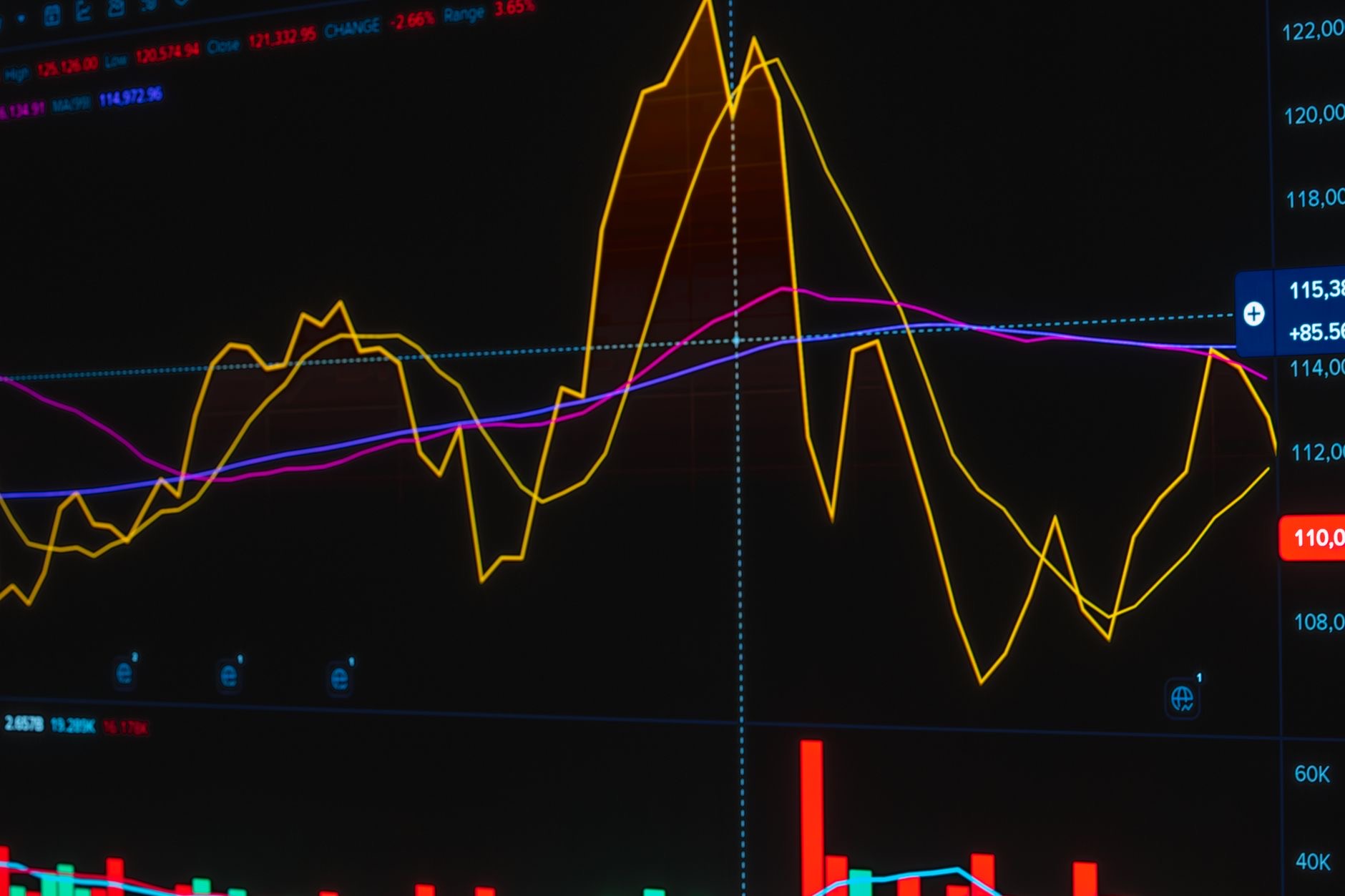
NEW YORK, October 17, 2026 — The Nasdaq Composite recorded its worst weekly decline since June as technology stocks extended their selloff on Friday, while gold recovered from a sharp midweek decline but struggled to establish a sustained advance above $4,200 per ounce. The contrasting moves capped a volatile week for U.S. financial markets, with investors reassessing artificial intelligence spending, inflation risks and the outlook for Federal Reserve interest rates.
The technology-heavy Nasdaq dropped 572.99 points, or approximately 2.1%, on Friday to finish at 26,140.03. The S&P 500 declined 84.62 points, or 1.1%, to 7,659.44, while the Dow Jones Industrial Average fell 175.28 points, or 0.3%, to 52,002.41, according to figures reported by the Associated Press. Smaller companies also weakened, with the Russell 2000 declining 1.7% to 2,721.37.
For the week, the Nasdaq lost approximately 4.5%, ending four consecutive weeks of gains and recording its weakest weekly performance since late June. The S&P 500 fell 1.9%, while the Russell 2000 declined approximately 3%. The Dow proved comparatively resilient, advancing 0.7% over the five trading sessions despite Friday’s decline.
The divergence between major indexes illustrated how concentrated the selling had become. Technology companies, particularly those associated with artificial intelligence infrastructure, accounted for a substantial portion of the losses. Investors increasingly questioned whether the pace of capital expenditure on advanced computing facilities, semiconductor equipment and cloud capacity could be supported by future revenue and financing conditions.
Semiconductor stocks were among Friday’s largest decliners. Micron Technology fell 5.6%, Advanced Micro Devices dropped 6%, Broadcom declined 4.5% and Intel lost 5.8%. The declines followed a turbulent period for chipmakers as market participants reconsidered growth assumptions embedded in valuations across the AI supply chain.
Other major technology companies also weakened. Meta Platforms declined 3.7%, while Alphabet, Google’s parent company, lost 2.5%. The broad retreat showed that selling pressure extended beyond semiconductor manufacturers to digital advertising, software and platform businesses. Investors were increasingly attentive to whether AI investments would generate sufficient returns to justify their scale and financing requirements.
The pressure carries particular importance for Silicon Valley, where data center investment, cloud computing expansion and AI product development remain central to corporate strategy. Rising borrowing costs can make large infrastructure projects more expensive, while declining share prices can complicate capital raising and reduce investor tolerance for spending plans that depend on profitability years into the future.
Despite the technology retreat, the broader market displayed pockets of resilience. The Associated Press reported that slightly more than half of S&P 500 constituents declined Friday, even as nearly the entire index technology sector closed lower. That distinction suggests the weakness was concentrated in specific industries rather than evenly distributed across the market.

Energy stocks outperformed as crude oil prices remained elevated. Exxon Mobil gained 2.5% and Chevron rose 2.6% Friday. Elsewhere, favorable corporate earnings provided selective support: Alcoa advanced 2.5% and Travelers gained 1.5% after reporting quarterly results that exceeded Wall Street expectations. The contrasting performances reinforced the importance of company-specific profitability and sector exposure during periods of market volatility.
Inflation and interest-rate expectations complicated the investment outlook. U.S. consumer inflation accelerated to 3.7% annually in September, exceeding expectations and raising concerns that persistent price pressures could require additional monetary tightening. Higher interest rates generally present a challenge for growth stocks because they increase financing costs and reduce the present value investors assign to profits expected far into the future.
U.S. Treasury yields nevertheless retreated from recent highs. The benchmark 10-year Treasury yield slipped to approximately 5.09% Friday, compared with 5.10% late Thursday, after exceeding 5.30% earlier in October. The decline indicated renewed demand for bonds despite stronger-than-expected inflation data. Federal Reserve Chair Kevin Warsh offered no fresh indication of the central bank’s next policy move during remarks at an international financial gathering in Bangkok.
Oil prices added another source of uncertainty. Brent crude rose approximately 3.7% Friday to settle at $109.86 per barrel as supply concerns and geopolitical tensions continued to affect energy markets. Higher fuel costs can feed into transportation, manufacturing and consumer prices, potentially complicating the Federal Reserve’s efforts to contain inflation. The national average gasoline price stood at approximately $4.33 per gallon Friday, according to AAA figures cited by the Associated Press.
Gold experienced its own volatile week. Spot prices began the period near $4,194 per ounce and briefly climbed above $4,200 before reversing. Selling intensified Wednesday after stronger U.S. inflation data boosted the dollar and Treasury yields. According to Kitco News, spot gold touched a weekly low near $4,073 before recovering during Thursday and Friday trading.
The rebound was supported by lower bond yields, a softer dollar and reduced expectations of an immediate October interest-rate increase. Gold does not generate interest income, making its relative attractiveness sensitive to changes in real yields. A weaker dollar can also support bullion demand by reducing its effective cost for investors holding other currencies.
Even with those supportive developments, the recovery struggled to establish sustained momentum. Kitco reported spot gold near $4,165 late Friday, marginally lower for the week. Separately, Dow Jones Newswires reported December gold futures trading around $4,200.80 during Friday’s session. The figures reflected different instruments and observation times, underscoring why a brief move through a round-number price does not necessarily establish a durable breakout.

Technical analysts continued to identify the $4,200 region as an important near-term resistance area, with additional resistance around $4,235. A sustained advance above that zone could strengthen confidence that the market’s recent correction is ending. Conversely, renewed weakness toward $4,100 would raise questions about whether buyers have established a reliable price floor. These levels represent market observations rather than guaranteed trading outcomes.
The precious metal’s behavior also highlighted the complicated relationship between inflation and safe-haven demand. Persistent inflation can increase interest in gold as a store of value, but it can simultaneously prompt expectations of higher interest rates, which may reduce bullion’s relative appeal. Geopolitical uncertainty and elevated energy prices introduce further competing influences on demand.
Analysts surveyed by Kitco expressed divided views about gold’s immediate direction. Some pointed to the resilience of bullion despite elevated borrowing costs and a stronger dollar earlier in the week. Others questioned whether the recovery could continue without a more sustained decline in Treasury yields or a clearer shift in Federal Reserve expectations.
For U.S. investors, the combination of declining technology shares, relatively resilient defensive sectors and fluctuating gold prices suggests portfolio positioning is becoming more sensitive to financing conditions and near-term earnings visibility. Companies with substantial borrowing requirements may face closer scrutiny, while businesses demonstrating stable cash flow and manageable capital expenditure could attract greater interest.
Attention now turns to the next round of corporate earnings and economic releases. Investors will examine whether technology executives maintain ambitious AI spending plans, whether demand supports existing infrastructure commitments and how higher financing costs affect profitability. Economic indicators, including housing activity, weekly jobless claims and business surveys, will provide additional information about the strength of the U.S. economy.
As markets prepare to reopen Monday, October 19, the Nasdaq’s ability to stabilize after its worst week since June and gold’s capacity to sustain a recovery through the $4,200 resistance region will be closely watched. The central questions remain whether technology earnings can support elevated investment expectations and whether inflation pressures will allow financial conditions to ease without prompting renewed monetary tightening.



Leave a Reply