

Iran and the United Arab Emirates backed a joint BRICS declaration calling for maximum restraint in the Middle East war, giving the expanded bloc a rare point of consensus on a conflict that directly involves the United States and has strained relations between Tehran and Washington’s Gulf partners.
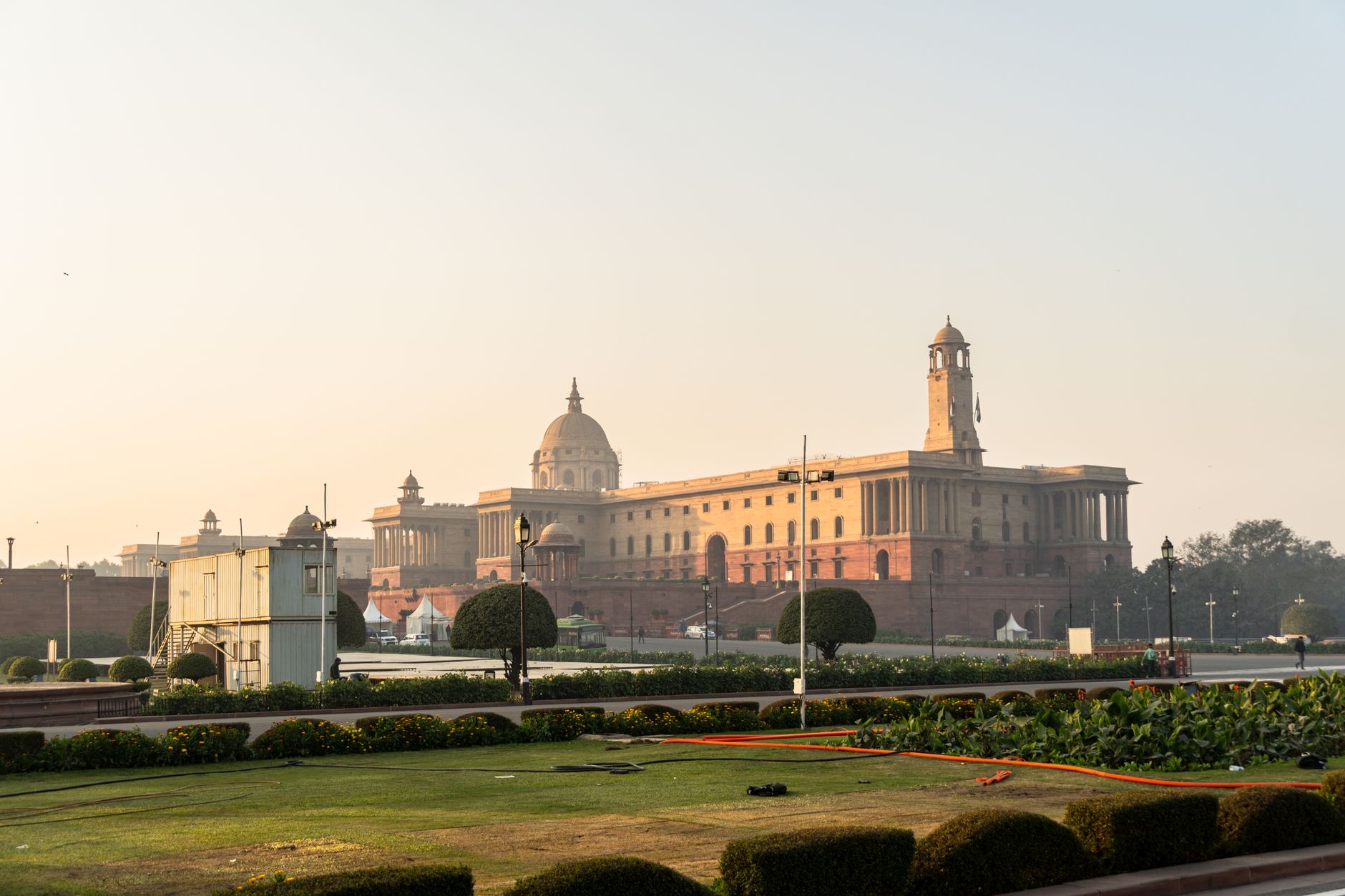
The declaration, adopted at the BRICS leaders’ summit in New Delhi, expressed deep concern over escalating tensions and urged the parties to avoid actions that could further aggravate the situation. Its language stopped short of assigning responsibility for the conflict, an important compromise for a grouping whose members hold sharply different positions on Iran, the United States and the wider regional security order.
The statement also called for the protection of civilians and civilian infrastructure under the principles of the United Nations Charter, including respect for sovereignty and territorial integrity. It stressed cooperation to maintain the flow of global trade, supply chains and energy, issues with immediate international consequences because instability in and around the Gulf can affect oil markets and commercial shipping well beyond the region.
The agreement was notable because Iran and the UAE have been on opposing sides of some of the war’s most sensitive security questions. During the conflict, Iran has targeted U.S. military facilities in the Gulf, including an attack in late August on Al Minhad Air Base in the UAE, where American personnel and aircraft have been stationed. The confrontation has therefore created direct risks not only for Gulf governments but also for the U.S. military presence that supports Washington’s regional security partnerships.
Iranian President Masoud Pezeshkian and Abu Dhabi Crown Prince Sheikh Khaled bin Mohamed bin Zayed Al Nahyan also met on the sidelines of the summit. The encounter was the highest-level meeting between Iran and the UAE since the conflict began. The UAE’s official Emirates News Agency said the two discussed regional and international issues and emphasized efforts to ease tensions, promote de-escalation and strengthen regional stability.
No ceasefire or bilateral security agreement emerged publicly from the meeting, and the BRICS declaration itself has no enforcement mechanism. Its immediate importance lies instead in the willingness of Tehran and Abu Dhabi to approve common language at a time when their security interests have been directly affected by the fighting.

Fresh reporting from The Indian Express on Sept. 14 described the consensus as the product of nearly 100 hours of negotiations by Indian diplomats. According to that account, India had been trying for months to narrow the differences between Iran and the UAE after earlier BRICS discussions exposed deep disagreement over the conflict. China and Russia became involved during the final stage of negotiations, while Brazil and Egypt also supported efforts to produce an agreed text.
The eventual formulation was deliberately constructed to acknowledge differing national positions rather than identify either Iran or the United States as responsible for the escalation. That approach allowed both Tehran and Abu Dhabi to accept a paragraph urging restraint while separately emphasizing sovereignty, civilian protection and diplomacy.
The breakthrough contrasted with the BRICS foreign ministers’ meeting in New Delhi in May. At that gathering, members were unable to reach comparable consensus on the Middle East, recording instead that some countries held differing positions. The leaders’ summit therefore demonstrated that the bloc could produce a negotiated statement even as its expanded membership brought countries with competing security alignments into the same forum.
For the United States, the declaration has several layers of relevance. Washington is directly involved in the conflict with Iran, while the UAE remains an important American security and economic partner. The Gulf also contains U.S. forces, major energy-export infrastructure and maritime routes that connect Asian, European and American markets. Continued escalation could therefore affect U.S. military planning, energy prices, shipping costs and broader economic conditions.
At the same time, the BRICS initiative highlights the emergence of diplomatic channels in which Washington is not the central convening power. India maintains substantial relationships with the United States, Israel, Iran and Gulf Arab governments, giving New Delhi an unusual position from which to speak with parties that often approach the conflict from incompatible perspectives. China and Russia likewise maintain close ties with Tehran while pursuing extensive economic relationships across the Gulf.
That does not mean BRICS has developed a unified foreign policy. The carefully negotiated wording illustrates the opposite: consensus was possible largely because the declaration recognized separate national positions and avoided assigning direct blame. The bloc includes governments whose relationships with Washington range from strategic partnership to open confrontation, limiting its ability to translate broad diplomatic statements into coordinated military or sanctions policy.
The declaration nevertheless creates a reference point for further talks. Its emphasis on restraint, dialogue and diplomacy gives Iran and the UAE language they have both formally accepted, while the Pezeshkian-Sheikh Khaled meeting demonstrates that direct high-level engagement remains possible despite the security confrontation around them.
Whether that diplomatic opening can produce measurable de-escalation will depend on decisions made outside BRICS as well as within it. Washington and Tehran remain central to the trajectory of the fighting, while Gulf governments must balance their security partnerships with the United States against their interest in preventing their territory, infrastructure and economies from becoming additional fronts in the war.
For now, the New Delhi agreement is best viewed as a limited but meaningful diplomatic development: Iran and the UAE did not resolve their differences, but they agreed that further escalation should be avoided and that diplomacy, civilian protection, sovereign security and the continuity of trade and energy flows should form part of any path toward regional stability.




Leave a Reply