
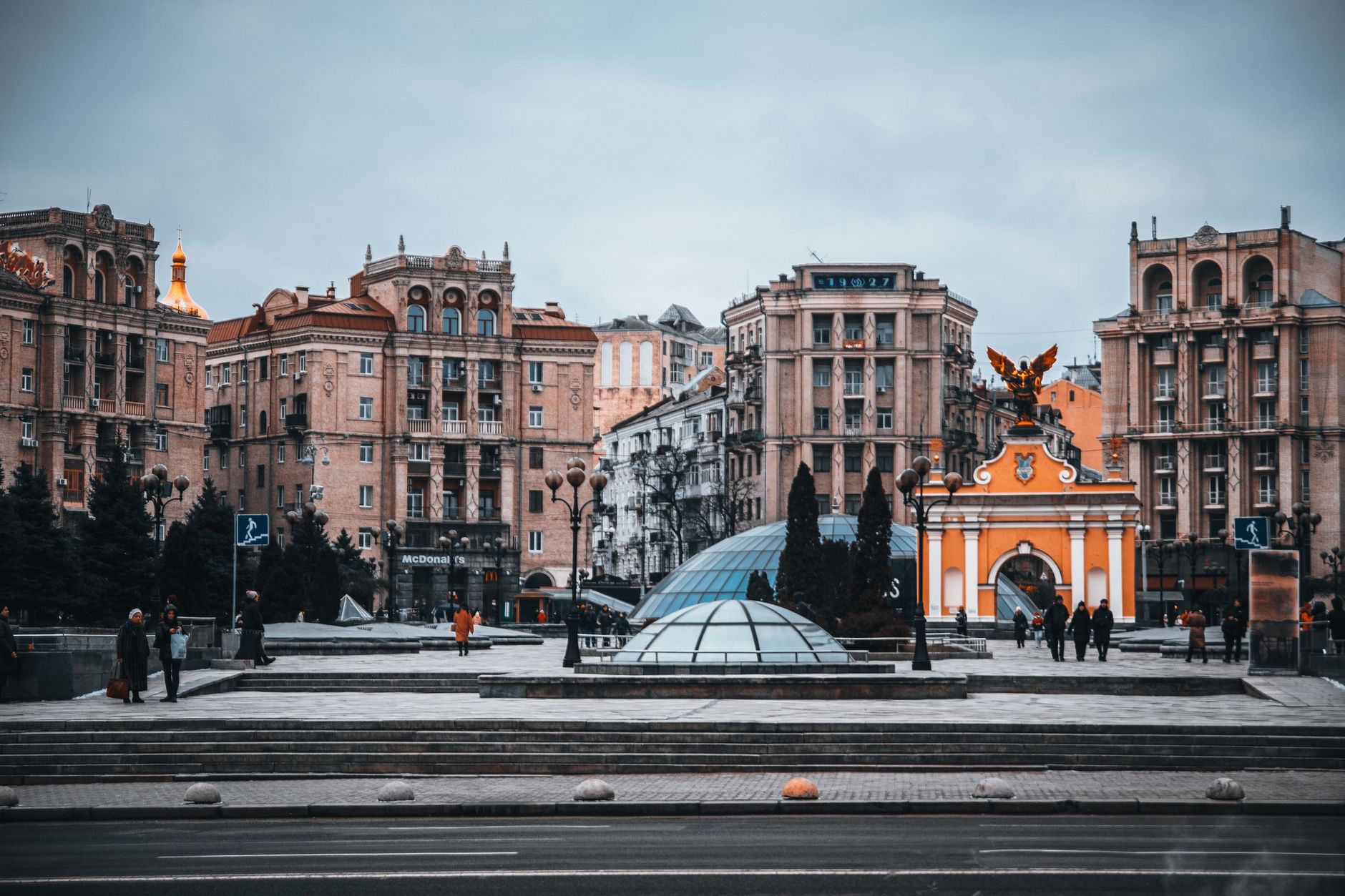
Indian External Affairs Minister S. Jaishankar said in Kyiv on Thursday that restricting purchases of Russian oil will not by itself bring the war in Ukraine to an end, putting New Delhi’s emphasis on diplomacy against a renewed U.S. push to use sanctions and tariffs against countries that continue buying Russian energy.
Jaishankar made the remarks after talks with Ukrainian Foreign Minister Andrii Sybiha during his first standalone visit to Ukraine as India’s foreign minister. Asked whether India would reduce purchases of Russian oil if Washington moves ahead with new penalties against major importers, he pointed to the difficulty of meeting the energy needs of more than 1.4 billion people and said both India’s and Ukraine’s perspectives should be respected.
“This conflict will not be solved because somebody is buying or not buying oil or alumina or minerals or metals or fertilizer,” Jaishankar said, according to reporting from Kyiv. “The conflict will be solved by dialogue, by diplomacy, by negotiation.”
The comments land directly in an active U.S. policy debate. In August, the Senate passed the Lindsey O. Graham Sanctioning Russia and Iran Act of 2026 by an 86-11 vote. The legislation would authorize the president to impose tariffs of as much as 100% on goods from the five largest purchasers of Russian-origin crude oil or natural gas, while also imposing or expanding sanctions on Russian officials, financial institutions, the energy sector and vessels associated with sanctions evasion.
The measure still requires action in the House before it could reach President Donald Trump. Supporters in Congress argue that targeting the foreign demand sustaining Russian energy exports would strengthen U.S. leverage and reduce revenue available to Moscow for its war effort. India and China are among the countries most exposed to that strategy because of the scale of their Russian crude purchases.
India has repeatedly presented its approach as one of energy security rather than political alignment with Moscow. Jaishankar said Thursday that governments criticizing New Delhi’s purchases must recognize the challenge of supplying affordable energy to India at a time of severe disruption in global energy markets. His comments came as instability in other producing regions has further complicated global sourcing and shipping.
India’s Russian crude imports remained substantial in August even as they fell sharply from a record level in July. Provisional tanker data cited by Indian media showed imports from Russia declining about 26% month over month, with tighter Russian export availability, refinery maintenance and stronger competition from Chinese buyers contributing to the drop. The decline underscores that India’s purchasing decisions are driven not only by diplomatic pressure but also by price, supply and shipping conditions.

Washington has already used trade policy to confront India over Russian energy. In August 2025, Trump imposed an additional 25% duty on Indian goods after determining that India was directly or indirectly importing Russian oil. The White House said at the time that those purchases undermined U.S. efforts to pressure Russia over its invasion of Ukraine.
Trump removed that additional India-specific tariff in February 2026 after the White House said New Delhi had committed to stop directly or indirectly importing Russian oil, buy U.S. energy products and expand defense cooperation with Washington. The executive order ending the tariff also instructed U.S. officials to monitor whether India resumed Russian oil purchases and left open the possibility of renewed action.
The latest congressional sanctions proposal therefore adds a new layer of uncertainty to a U.S.-India relationship that Washington increasingly treats as strategically important in the Indo-Pacific. A tariff confrontation over Russian energy could affect not only oil policy but also broader U.S.-India trade negotiations, defense cooperation, technology investment and supply-chain initiatives.
Jaishankar’s Kyiv visit also showed New Delhi attempting to maintain an active relationship with Ukraine while preserving its longstanding ties with Russia. He met President Volodymyr Zelenskyy after his discussions with Sybiha, and the Ukrainian presidency described the trip as the first standalone visit to Ukraine by an Indian foreign minister.
Zelenskyy thanked India for supporting the objective of ending the war and reiterated that peace was necessary. According to his office, he also briefed Jaishankar on Ukraine’s diplomatic efforts, including contacts with the United States, and said Kyiv hoped for further engagement with the American side that could help accelerate efforts to end the conflict.
The meeting took place against the continuing security threat facing Kyiv. Zelenskyy said Russia launched jet-powered Shahed-type drones while the Indian delegation was in the Ukrainian capital and said Ukrainian aircraft intercepted most of them, keeping the delegation safe. The episode gave Jaishankar’s diplomatic message an immediate wartime backdrop.

Black Sea security was another focus. Ukrainian officials have accused Russia of threatening civilian shipping and food-export routes, while Jaishankar noted that attacks on commercial vessels have killed Indian seafarers. India, with one of the world’s largest merchant-mariner populations and heavy dependence on imported energy, has a direct economic interest in secure shipping routes through both the Black Sea and other major maritime corridors.
Zelenskyy’s office said the two sides also discussed bilateral commerce, agriculture, food security and industry. Ukraine said trade between the countries stands at about $2.6 billion and has room to expand. Jaishankar also highlighted India’s humanitarian assistance to Ukraine, which has included medicines, medical equipment and generators.
The visit illustrates India’s attempt to occupy diplomatic space between the competing approaches of Moscow, Kyiv and Western capitals. New Delhi has avoided joining Western sanctions against Russia, but it has also repeatedly stated that the conflict should be settled through diplomacy and has maintained direct engagement with Ukrainian leaders.
For Washington, however, Jaishankar’s oil remarks expose the limits of relying on economic coercion without securing cooperation from major energy-consuming countries. U.S. lawmakers view Russia’s energy revenues as a critical source of wartime financing and increasingly want third-country buyers brought within the sanctions architecture. India is signaling that it does not accept the premise that its energy purchases should determine its position on how the war ends.
That disagreement does not necessarily rule out cooperation. India continues to say it is prepared to support peace efforts, while Ukraine has sought a larger Indian diplomatic role. But as Congress considers tougher penalties on Russia’s largest energy customers, the question of Russian oil is becoming increasingly difficult to separate from the wider U.S.-India relationship and from competing international strategies for bringing Moscow and Kyiv toward negotiations.




Leave a Reply