
Iran said Monday that it was prepared to shift from a defensive strategy to a “fully offensive” posture if diplomacy with the United States failed, issuing the warning as the 60-day negotiating period created by a June memorandum of understanding reached its end without a permanent settlement.
A senior Iranian official told Reuters that government and military entities had been instructed to prepare for an escalation in the Strait of Hormuz and elsewhere in the region. The official said Tehran could undertake a “timely and precise” military operation to break what Iran describes as a U.S. naval blockade if diplomatic channels do not produce results.
The statement represents a significant hardening of Iran’s public position, though it does not by itself confirm that an attack has been authorized. The official did not specify a target, operational timetable or the exact conditions that would trigger military action. Framing the policy as a preparation for possible offensive action gives Tehran room to continue negotiations while signaling that the current pause in large-scale fighting may not hold indefinitely.
The warning arrived on the deadline set by the June 17 memorandum, a 14-point document signed by President Donald Trump and Iranian President Masoud Pezeshkian after talks mediated by Pakistan. The agreement created a 60-day period, extendable by mutual consent, for the two governments to negotiate a wider deal addressing Iran’s nuclear activities, sanctions, regional hostilities and shipping through the Strait of Hormuz.
Under the memorandum, the parties declared an immediate and permanent end to military operations on multiple fronts. Iran agreed to make arrangements for commercial vessels to pass through Hormuz without charge during the 60-day period period period and to undertake demining work. The United States committed to sanctions relief and the eventual removal of forces deployed near Iran as part of a final agreement. The document also contemplated a reconstruction and economic-development package for Iran worth at least $300 billion, without resolving who would finance it or how it would operate.
The arrangement began breaking down within days. Iran and the United States adopted sharply different interpretations of language governing maritime passage. Tehran argued that the memorandum recognized an Iranian role in administering traffic through the strait. Washington maintained that commercial vessels were entitled to safe passage and rejected Iran’s claim that it could dictate routes across the international waterway.

Oman, which shares the strait with Iran and has frequently served as an intermediary between Tehran and Washington, supported a route closer to its coastline. Iran promoted a different route nearer its own coast and treated part of the Omani side as restricted. The conflicting instructions left ship operators facing both navigational uncertainty and the risk that following one route would be viewed as a hostile act by the other side.
Attacks on commercial vessels and renewed military exchanges soon overwhelmed the diplomatic process. U.S. Central Command said in July that Iran had attacked more than 30 commercial vessels over the preceding three months. CENTCOM also said U.S. forces had helped facilitate the transit of approximately 900 commercial ships carrying about 450 million barrels of crude oil since early May. Iran has disputed Washington’s characterization of the conflict and accused U.S. forces of violating the memorandum through strikes on Iranian territory.
The Trump administration formally argued in a July 30 policy statement that Iran’s attacks on neutral-flagged vessels were inconsistent with the agreement and justified renewed U.S. strikes against missile sites, air defenses, maritime assets and military infrastructure. The administration said American forces would remain positioned to respond to threats against U.S. personnel and regional allies. Trump had already declared on July 7 that the memorandum was “over.”
Iran, in turn, said Washington had committed extensive violations that suspended Tehran’s obligations. Iranian Foreign Ministry spokesperson Esmaeil Baghaei has argued that the 60-day deadline became irrelevant because formal talks never began after the alleged U.S. breaches. That position complicates the latest warning: Iranian officials are simultaneously treating the original timetable as void and using its expiration to increase pressure for U.S. compliance.
The senior official who spoke to Reuters said Iran would establish a new deadline lasting only a few weeks. Under Tehran’s proposed sequence, the United States would first have to implement all provisions of the memorandum before direct negotiations could continue. The official said intermediaries would communicate the deadline to Washington and governments in the region. No mutual extension of the original 60-day period had been announced by Monday.
Iran’s conditions and Washington’s account of the agreement remain far apart. Tehran wants relief from U.S. sanctions, recognition of its maritime and security demands, and fulfillment of the economic provisions in the memorandum. The United States has continued to prioritize unrestricted commercial navigation and limits on Iran’s nuclear program while insisting that Tehran end attacks on vessels and U.S. interests.

Trump reiterated Monday that ensuring Iran cannot acquire a nuclear weapon remained his principal objective. The administration has presented military pressure and diplomacy as complementary parts of the same strategy, arguing that a credible threat of force is necessary to obtain Iranian concessions. Iran says its nuclear program is not intended to produce a weapon, but its enrichment activities and restrictions on international monitoring remain central obstacles to a settlement.
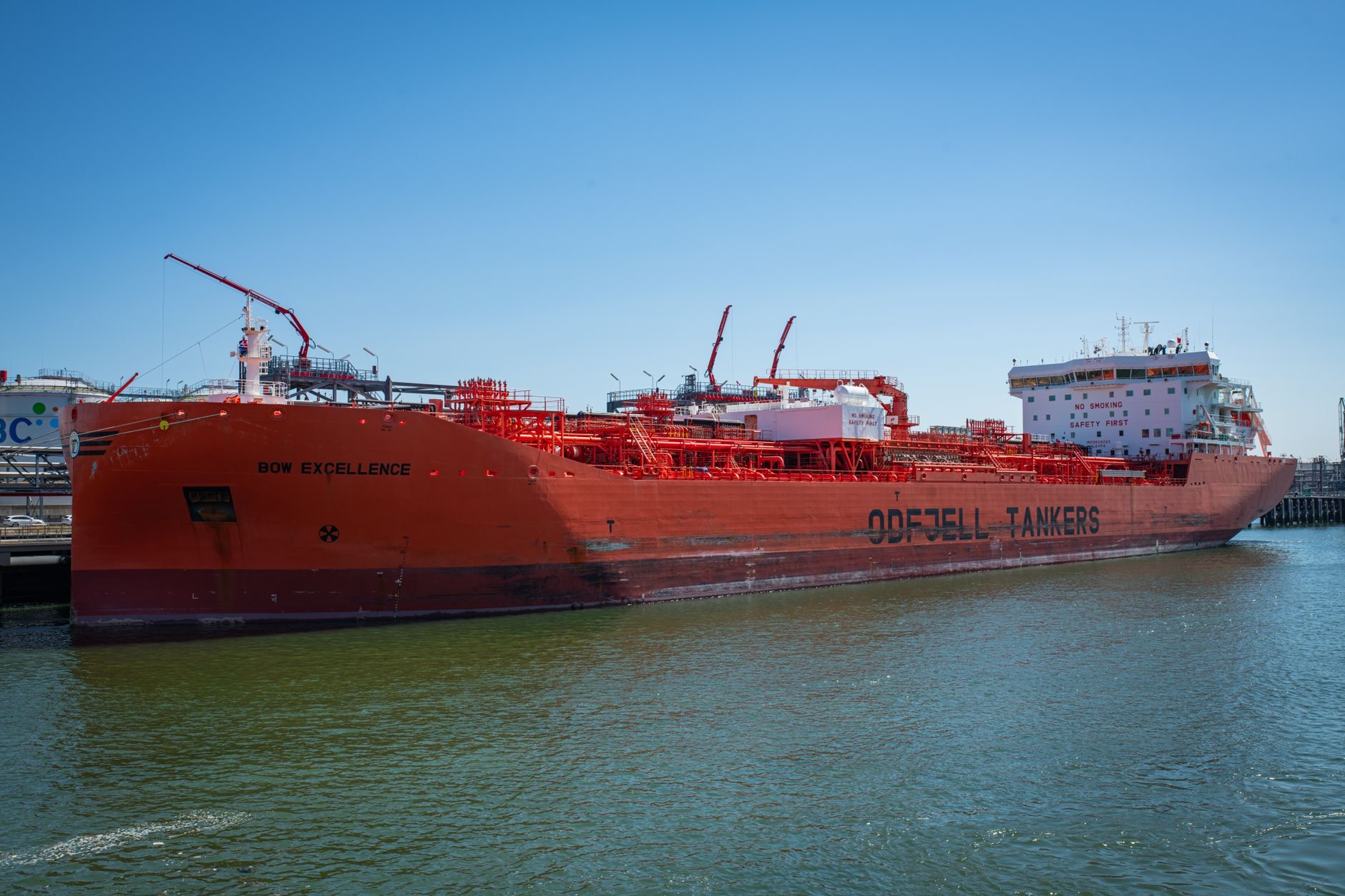
Any renewed fighting around Hormuz would have consequences beyond the two governments. The strait connects Persian Gulf energy producers with the Arabian Sea and is one of the world’s most important maritime oil corridors. Threats to tankers can lift insurance premiums, force shipping companies to change routes or schedules and increase expectations of supply disruptions. Those costs can reach U.S. consumers through gasoline, diesel, aviation fuel and prices for goods moved by sea.
The American military dimension is also substantial. CENTCOM said in late July that more than 50,000 U.S. service members were operating across the Middle East. Iran has previously demonstrated an ability to target military installations, energy facilities and shipping through missiles, drones and allied armed groups. A new Iranian offensive could therefore extend beyond the strait even if Tehran initially describes its action as an attempt to counter the blockade.
Regional mediators now face a narrow opportunity to prevent the rhetoric from becoming another cycle of strikes and retaliation. Pakistan helped produce the June memorandum, while Oman remains essential to negotiations over maritime administration. Indirect communication may continue even without a formal extension, but the expiration has removed the clearest shared framework for a final deal.
The immediate question is whether Iran’s threat is primarily coercive diplomacy or preparation for an operation. Tehran has not closed the door to talks, but it has made further negotiations conditional on prior U.S. action. Washington, meanwhile, has shown no indication that it will accept Iran’s interpretation of control over Hormuz. Without a new compromise, the dispute that caused the memorandum to collapse remains in place—and both sides are signaling that military force remains an available option.




Leave a Reply