
President Donald Trump added a politically charged reparations demand to negotiations with Iran on Monday, complicating efforts to reopen the Strait of Hormuz as Russia cautiously rebuilt its technical presence at an Iranian nuclear facility and Washington promoted new trade links through the South Caucasus.
Trump said Iran should compensate people killed or seriously wounded in conflicts and attacks he attributed to Tehran and its partners. He also called for compensation for the families of Iranians killed during government crackdowns, saying the issue should be placed firmly into future negotiations. The demand was a response to Tehran’s insistence that the United States pay for damage inflicted during the conflict.
The competing claims substantially widen the gap between the two governments. Iran has sought an end to the U.S. blockade of its ports, the lifting of economic sanctions, the release of frozen Iranian assets and compensation for wartime destruction. Iranian officials have tied those conditions to the restoration of normal passage through Hormuz, while Washington and its partners have pressed Tehran to reopen the waterway without preconditions.
Iranian Supreme National Security Council Secretary Mohsen Rezaei said Tuesday that the strait would remain closed until the United States ended the war, released frozen funds and met additional conditions delivered through mediators. Qatar said separate talks between Iran and Oman had reached an advanced stage, but those discussions appeared focused on reducing maritime tensions rather than resolving every dispute between Washington and Tehran.
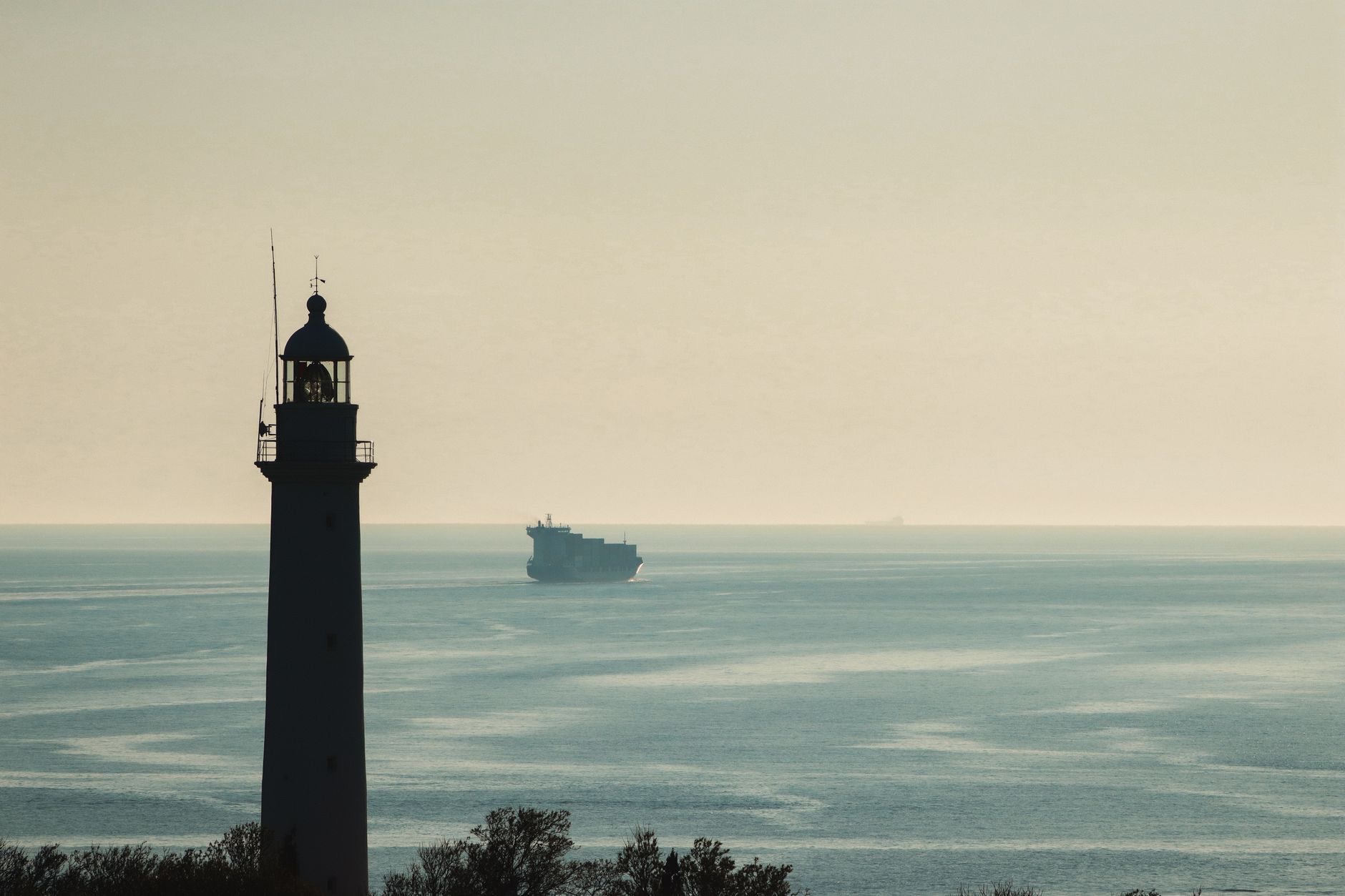
The practical consequences were already visible at sea. Shipping data cited by Reuters showed only six vessels transiting Hormuz on Monday, compared with roughly 130 to 140 daily passages before the war. Brent crude climbed toward $90 a barrel Tuesday before surrendering some gains, reflecting concern that a prolonged diplomatic impasse could restrict exports from the Persian Gulf and amplify supply disruptions elsewhere.
For the United States, the effects extend beyond gasoline prices. More expensive crude can increase aviation, freight, manufacturing and agricultural costs, feeding into consumer inflation. The uncertainty can also delay investment decisions by energy companies and shipping operators. American officials must therefore balance enforcement of the blockade and pressure on Tehran against the danger that further military action could produce a more severe interruption of regional commerce.
Security deteriorated along another major shipping corridor Tuesday when Iran-aligned Houthi forces were accused of a deadly attack on a vessel near the Bab el-Mandeb Strait, which connects the Red Sea to the Gulf of Aden. The incidents at Hormuz and Bab el-Mandeb placed simultaneous pressure on two maritime chokepoints used by trade between Asia, Europe and the United States.

Against that backdrop, Russia signaled that its long-running civilian nuclear cooperation with Iran was resuming. Rosatom Chief Executive Alexey Likhachev said the state corporation had started returning specialists to the Bushehr nuclear power plant after evacuations earlier in the year. Five engineering and technical employees had returned, bringing the reported Russian presence at the site to 25.
Rosatom plans to raise its Bushehr workforce to approximately 100 specialists by the fall, depending on security conditions and progress toward an end to hostilities. Several dozen additional workers could arrive within two weeks if the conflict does not escalate. Construction was continuing on the main and auxiliary structures for the plant’s second and third reactors.
Bushehr has been a durable institutional link between Moscow and Tehran. Russia contracted to complete the plant’s first unit in 1995, and the reactor entered operation in 2011. The two countries agreed in 2014 to build two additional units. Rosatom’s phased return does not by itself indicate a broader breakthrough, but it shows that Russia intends to preserve a strategic energy project despite military risks and Western sanctions.
The relationship gives Iran access to nuclear expertise and gives Russia economic leverage and political influence on the Persian Gulf. It also presents Washington with a monitoring challenge: Bushehr is a civilian power project subject to international safeguards, but any expansion of Russian-Iranian cooperation receives heightened scrutiny because of the unresolved confrontation over Iran’s nuclear activities and Moscow’s broader opposition to U.S. sanctions policy.
Competition over infrastructure is also unfolding around the Caspian Sea and the South Caucasus. The United States, Armenia and Azerbaijan marked the first anniversary of their August 2025 White House summit by emphasizing stability along the Armenian-Azerbaijani border and progress toward normalized relations. Their foreign ministers had initialed a draft agreement on peace and interstate relations following the summit.
Central to Washington’s regional strategy is the Trump Route for International Peace and Prosperity, known as TRIPP. The proposed connection is intended to facilitate movement between Azerbaijan and its Nakhchivan exclave through Armenia while respecting national sovereignty. Engineering surveys are underway in Armenia, and Azerbaijan has advanced highway and railway construction on its side. The countries have also supported an electricity transmission line along the route.

The State Department said the United States had committed $201 million to a Trans-Caspian Enterprise Fund supporting private-sector investment in the Middle Corridor, the network linking Central Asia with Europe through the Caspian Sea and South Caucasus. Washington has also expanded cooperation with Armenia and Azerbaijan in energy security, border infrastructure, artificial intelligence, semiconductors and critical minerals.
Those projects have direct strategic relevance for the United States. A reliable Middle Corridor can diversify supply chains away from routes controlled by Russia or passing through Iran. It can also provide Central Asian producers with greater access to European markets and support the transport of energy, minerals and manufactured goods across an east-west network that does not depend exclusively on Russian infrastructure.
Russia and Iran, by contrast, have promoted north-south connectivity linking Russia to the Caspian region, Iran and ports serving the Indian Ocean. Their International North-South Transport Corridor offers commercial advantages but can also help two heavily sanctioned governments reduce dependence on Western-controlled financial and transportation systems. Moscow’s involvement at Bushehr and the two countries’ transit cooperation are separate initiatives, yet both demonstrate how infrastructure can preserve strategic partnerships under pressure.
The South Caucasus is consequently becoming more important to U.S. policy than its geographic size might suggest. Armenia and Azerbaijan sit between Russia, Iran, Turkey, the Caspian Sea and European markets. Durable peace would enable new commercial routes, reduce openings for coercion by neighboring powers and give American and European businesses a more predictable environment for infrastructure and technology investment.
Significant risks remain. Armenia and Azerbaijan still must translate political declarations into lasting agreements and workable cross-border arrangements. New transport links require financing, customs coordination, physical security and public acceptance. Iran has historically opposed any corridor it believes could weaken its border access or exclude it from regional commerce, while Russia has an interest in retaining influence over routes once dominated by Moscow.
The developments of August 11 therefore form a connected strategic picture. Trump’s new demand raises the cost of compromise with Iran just as maritime disruption threatens the global economy. Russia’s return to Bushehr shows that Tehran is not isolated from every major power. Washington’s South Caucasus initiative, meanwhile, represents a longer-term attempt to shape Eurasian connectivity through peace agreements and private investment rather than dependence on Russian-Iranian networks. Whether those tracks lead toward stability will depend on diplomacy at sea, security on land and the ability of governments to prevent infrastructure competition from becoming another arena of conflict.




Leave a Reply