
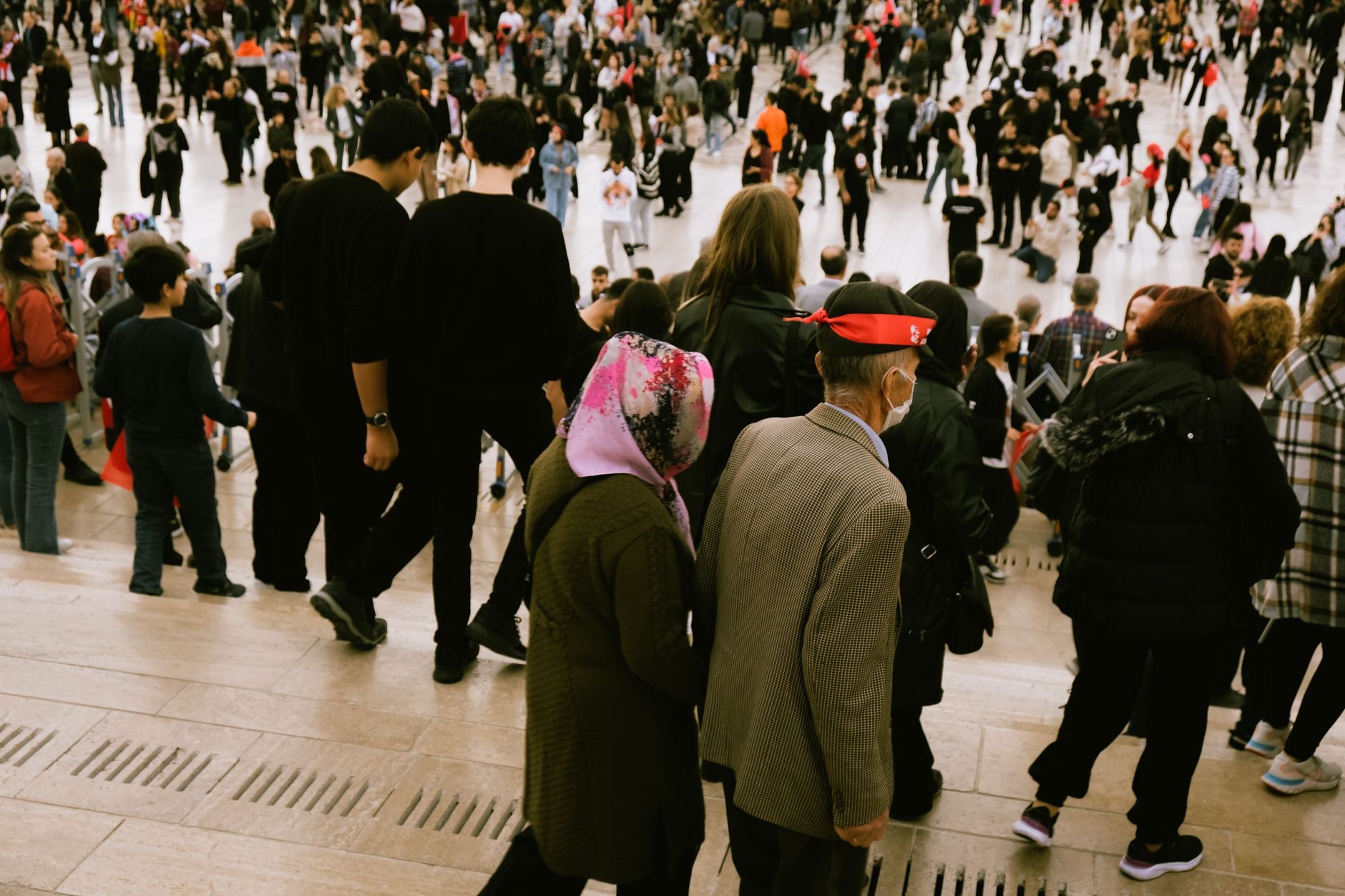
Iran’s ruling establishment used the July 5 funeral ceremonies for Ayatollah Ali Khamenei to project defiance, continuity and control, sending Washington a blunt message: the regime survived the war and is emerging from it more security-focused, more ruthless toward dissent and less likely to make easy concessions in talks with the United States.
The latest signal came as Iran’s top officials and brothers of the new supreme leader appeared publicly at funeral prayers in Tehran, according to Associated Press reporting from the capital. The new supreme leader, Ayatollah Mojtaba Khamenei, has not appeared in public during the funeral events and is believed to be in hiding after reportedly being wounded in the strike that killed his father. The optics were carefully calibrated: senior figures visible, crowds mobilized, security tight and the top decision-maker protected from view.
For U.S. officials, the scene crystallizes the problem left by the war. The campaign severely damaged Iran’s military, killed senior leaders and forced Tehran into negotiations over a wider settlement. But it did not produce the political rupture that some in Washington and Israel had hoped for. Instead, the Islamic Republic’s surviving power centers appear to have adapted, with the Revolutionary Guard and other hard-line institutions moving deeper into the core of decision-making.
That assessment tracks with earlier U.S. intelligence reporting described by The Washington Post, which said Iran’s regime was likely to remain in place despite heavy losses and was becoming more hard-line, with powerful security forces exerting greater control. The same conclusion now hangs over the fragile diplomacy that followed the cease-fire and the U.S.-Iran memorandum announced in June. A regime that feels it endured decapitation strikes may see little reason to negotiate from weakness.
The funeral ceremonies also showed how Tehran is turning wartime survival into a domestic legitimacy campaign. Crowds chanted “Death to America” and “Death to Israel,” AP reported, while some hard-liners called for revenge over the Feb. 28 attack that killed Khamenei and other top officials. Such messaging is familiar in Iran, but the postwar context gives it sharper political use. The leadership is presenting endurance as victory, framing continued resistance as proof that the Islamic Republic remains the central defender of national sovereignty.
That narrative matters because Iran’s regime faces a public that is exhausted by sanctions, inflation, unemployment, repression and war damage. Before and during the conflict, rights groups documented mass arrests, executions and crackdowns on protesters and dissidents. Amnesty International reported in May that Iranian authorities had arbitrarily arrested more than 6,000 people since the U.S.-Israeli military campaign began on Feb. 28, including protesters, journalists, lawyers, human rights defenders, dissidents and members of minority communities. Human Rights Watch, in its 2026 Iran reporting, described the country’s human rights situation as spiraling further into crisis, citing mass arbitrary arrests and the highest number of known executions in decades.

The regime’s apparent answer has not been political opening. It has been tighter control. Analysts and rights groups have warned that Tehran is using the war’s aftermath to justify harsher policing, broader accusations of espionage and faster punishment of perceived enemies. That approach is not only a domestic concern. It shapes diplomacy because a leadership that fears internal unrest may be less willing to accept concessions that hard-liners could portray as surrender to Washington.
The Trump administration has argued that its pressure campaign forced Iran toward a cease-fire and a broader negotiating track. A June White House statement described the U.S.-Iran memorandum as a breakthrough intended to end fighting and pursue a durable peace. A separate administration policy statement last week said hostilities had ended and that the June 17 memorandum began an effort to bring greater security and stability. But the view from Tehran appears more complicated. Iran’s leaders are signaling that survival itself gives them leverage.
One immediate arena is the Strait of Hormuz, the narrow Gulf passage that remains central to global energy flows and U.S. security planning. AP reported that negotiations over ending the war, reopening the strait and addressing Iran’s nuclear program are on pause during national mourning, while Iran continues to demand strategic concessions and the United States maintains a strong naval presence in the region. That standoff carries direct implications for U.S. consumers, global oil markets, shipping, insurance costs and the security commitments Washington has made to Gulf partners.
The nuclear file is another pressure point. The International Atomic Energy Agency has repeatedly said it cannot provide the assurances it needs without full safeguards cooperation from Iran. In recent reports, the agency has described unresolved verification problems and the need for access and information related to nuclear material and facilities. Any durable U.S.-Iran arrangement will therefore have to confront not only sanctions relief and security guarantees, but also whether a more suspicious Iranian leadership will accept inspections robust enough to satisfy Washington, Israel and European governments.
The risk for the United States is that Iran’s weakness and Iran’s danger may now coexist. The country’s military capacity has been degraded. Its leadership hierarchy has been shaken. Its economy remains under strain. But those same pressures may empower the most coercive parts of the state, especially institutions built for survival under siege. A more isolated leadership can be less predictable, not more flexible.

That is why the July 5 ceremonies were more than mourning. They were a political test of whether the Islamic Republic could still gather crowds, display elite unity and sustain a wartime narrative after losing the figure who dominated the system for decades. By that standard, the regime showed it still has functioning machinery. The absence of Mojtaba Khamenei from public view highlighted vulnerability, but the presence of other senior figures suggested the state believes it can manage that vulnerability without exposing its new leader.
For Iranian society, the consequences are grim. A government that emerged from war convinced it defeated foreign enemies may also feel emboldened to crush internal ones. The language of spies, collaborators and wartime betrayal can be used to silence activists, journalists, labor organizers, ethnic minorities and families of detainees. The longer national emergency politics persists, the harder it becomes for ordinary Iranians to challenge economic mismanagement or political repression without being accused of aiding outside powers.
For Washington, the policy choices are narrowing. Regime change by force appears far less plausible than advocates suggested before the war. Pure deterrence may be costly if Tehran continues using the Gulf, proxies or nuclear ambiguity as leverage. Diplomacy remains necessary, but it now runs through a system that may be more dominated by security hard-liners than before. Sanctions relief could create incentives for compliance, but it could also strengthen institutions that have tightened control at home unless carefully conditioned and monitored.
The clearest conclusion from the latest developments is that Iran’s rulers are not behaving like a defeated leadership preparing to yield. They are behaving like survivors who studied the war, absorbed its lessons and reorganized around the institutions most capable of protecting the system. That makes Tehran a more difficult negotiating partner for the United States — wounded enough to need relief, but hardened enough to demand a price.
The funeral crowds in Tehran do not prove that the Islamic Republic has resolved its internal crisis. They do show that the regime still knows how to convert grief, nationalism and fear into political endurance. The central challenge for U.S. policymakers is that the war may have weakened Iran’s arsenal while strengthening the hand of those least inclined to compromise.




Leave a Reply