
President Donald Trump met Chinese President Xi Jinping in Beijing on Thursday in a highly choreographed summit that produced the first visuals of the two leaders together but also exposed the central security risks now defining U.S.-China relations: Taiwan, Iran, trade and the limits of personal diplomacy between rival powers.
The meeting took place at the Great Hall of the People, where Xi hosted Trump for talks during the U.S. president’s state visit to China. Chinese state accounts described a formal welcome with honor guards, national anthems, a 21-gun salute and a review of the People’s Liberation Army guard of honor. Reuters reported that the talks lasted more than two hours and opened after a ceremony featuring children waving flags and flowers.
The public tone was cordial. Trump praised Xi as a “great leader,” described the meeting as one watched by the world and said the United States and China could make relations “better than ever before,” according to China’s official readout. Xi, in turn, framed the talks as an opportunity to set a new course for the relationship, saying the two sides had agreed on a vision of “constructive strategic stability.”
But the sharpest message from Beijing concerned Taiwan. China’s Foreign Ministry said Xi told Trump that the Taiwan question is “the most important issue in China-U.S. relations” and warned that, if handled improperly, the two countries could have “clashes and even conflicts,” putting the overall relationship in “great jeopardy.” Xi also said “Taiwan independence” and cross-Strait peace were irreconcilable, and urged the United States to exercise “extra caution.”
The warning landed at a sensitive moment for Washington. The United States arms Taiwan, which is democratically governed and rejects Beijing’s sovereignty claim, while also maintaining a longstanding policy framework designed to deter unilateral changes to the status quo. China claims Taiwan as its territory and has repeatedly objected to U.S. arms sales and high-level political support for Taipei. The issue has become one of the clearest military flashpoints between Washington and Beijing.
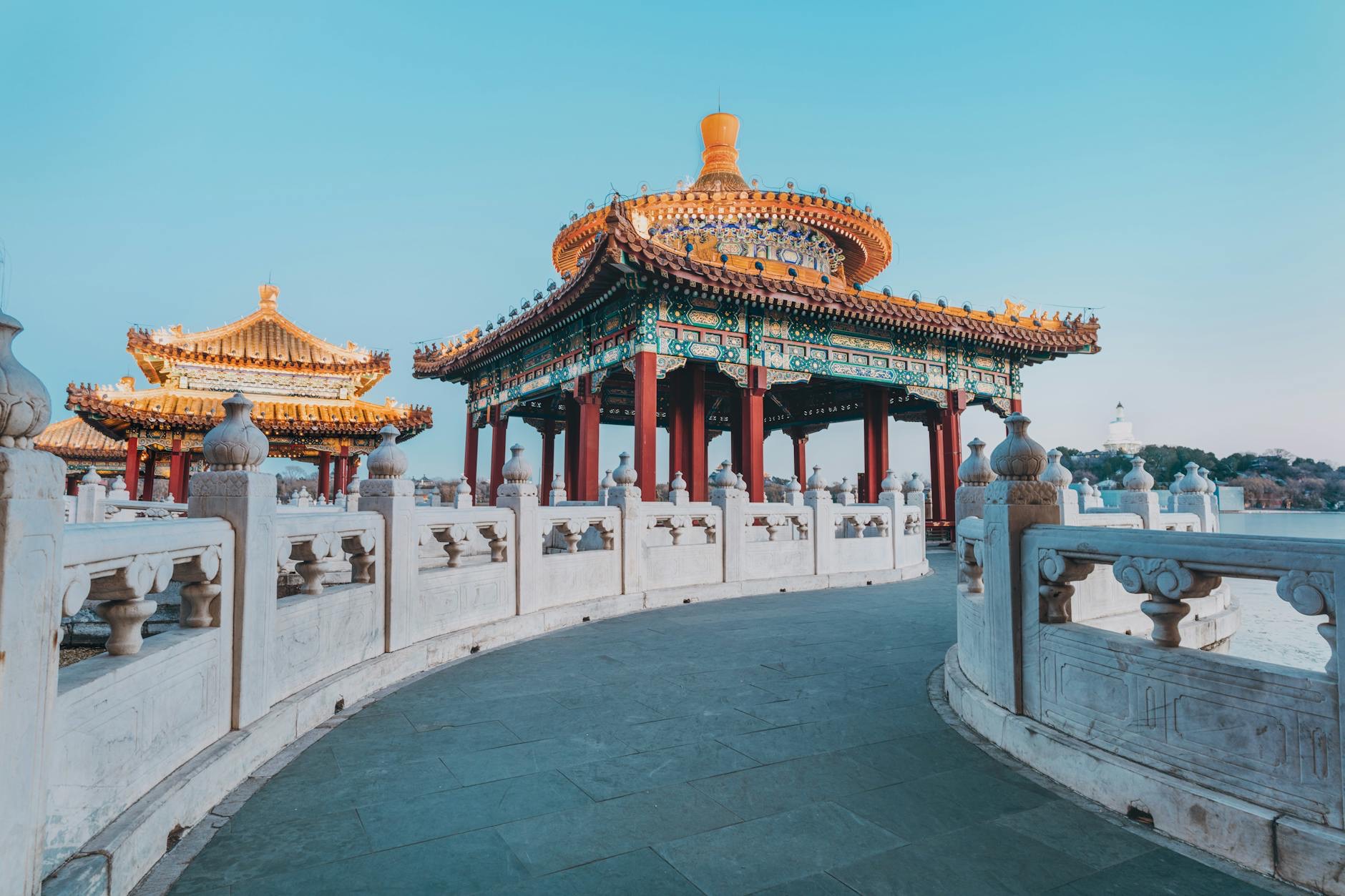
Reuters reported that Trump did not answer when a reporter later asked whether Taiwan had been discussed as he posed for photos with Xi at the Temple of Heaven, a UNESCO World Heritage Site. That silence contrasted with Beijing’s unusually direct public emphasis on Taiwan in its official account of the talks.

The other major shadow over the summit was Iran. Reuters reported that Trump was expected to ask China to help end the costly and unpopular Iran war, with peace talks stalled and the conflict’s global economic impact rising. China maintains close ties with Tehran and is a major buyer of Iranian oil, making Beijing a potential source of pressure but also a difficult partner for Washington to enlist.
According to Reuters, U.S. Secretary of State Marco Rubio said Washington wanted China “to play a more active role” in getting Iran to change course in the Persian Gulf, while also warning that any Chinese support for Tehran would hurt U.S.-China ties. The report said U.S. officials view the Strait of Hormuz as a central concern, with Washington pressing against efforts to restrict or toll traffic through one of the world’s most important energy corridors.
The Iran issue gives the Beijing meeting clear U.S. domestic relevance. Energy prices, shipping costs and inflation risks can quickly move from foreign-policy problems to household and election-year pressures. Trump entered the summit looking for diplomatic space on a conflict that has complicated his broader economic message and added urgency to talks with a country that Washington still describes as its main strategic competitor.
Trade and business access were also prominent. China’s Foreign Ministry said Xi told Trump that economic and trade ties are mutually beneficial and that recent talks between the two countries’ economic teams had produced “generally balanced and positive outcomes.” Reuters reported that those talks were aimed at preserving a fragile trade truce and creating mechanisms to support future trade and investment.
Trump brought a group of U.S. business leaders with him, and China’s readout said he asked each of them to introduce themselves to Xi. The presence of corporate executives underscored the economic stakes for American companies exposed to China’s market, manufacturing ecosystem, consumer demand and regulatory environment. Reuters previously reported that Nvidia CEO Jensen Huang joined the delegation, putting artificial intelligence and advanced technology firmly in the summit’s frame.

That technology dimension is especially relevant for Silicon Valley and the broader U.S. tech industry. U.S.-China tensions over chips, AI, export controls, data security and supply chains have reshaped corporate planning across semiconductors, cloud infrastructure, consumer electronics and electric vehicles. Even where the summit produced conciliatory language, companies will be watching for whether Washington and Beijing can stabilize rules around market access and technology flows.
China’s official readout said the leaders also exchanged views on the Middle East, Ukraine and the Korean Peninsula. It said the two sides should make better use of political, diplomatic and military-to-military communication channels and expand cooperation in areas including trade, health, agriculture, tourism, people-to-people ties and law enforcement.
The AP reported that few breakthroughs were expected on the summit’s most divisive questions and that the meeting highlighted how far apart the two governments remain despite the pageantry. The same report said Xi’s warning on Taiwan contrasted with Trump’s warmer public language and suggested the visit may be heavier on symbolism than major bilateral agreements.
Still, the summit is significant because it reopens top-level U.S.-China diplomacy at a moment when both governments have incentives to prevent escalation. Washington needs cooperation, or at least restraint, from Beijing on Iran, trade and financial stability. Beijing wants to limit U.S. support for Taiwan, preserve market access and avoid a deeper economic rupture with the United States.
For now, the clearest outcome is not a deal but a sharper map of the relationship’s fault lines. The first visuals from Beijing showed handshakes, ceremony and carefully staged diplomacy. The substance showed that Taiwan remains the most dangerous bilateral issue, Iran has become a test of great-power leverage, and any U.S.-China reset will depend less on summit atmospherics than on whether both sides can keep competition from turning into crisis.




Leave a Reply