
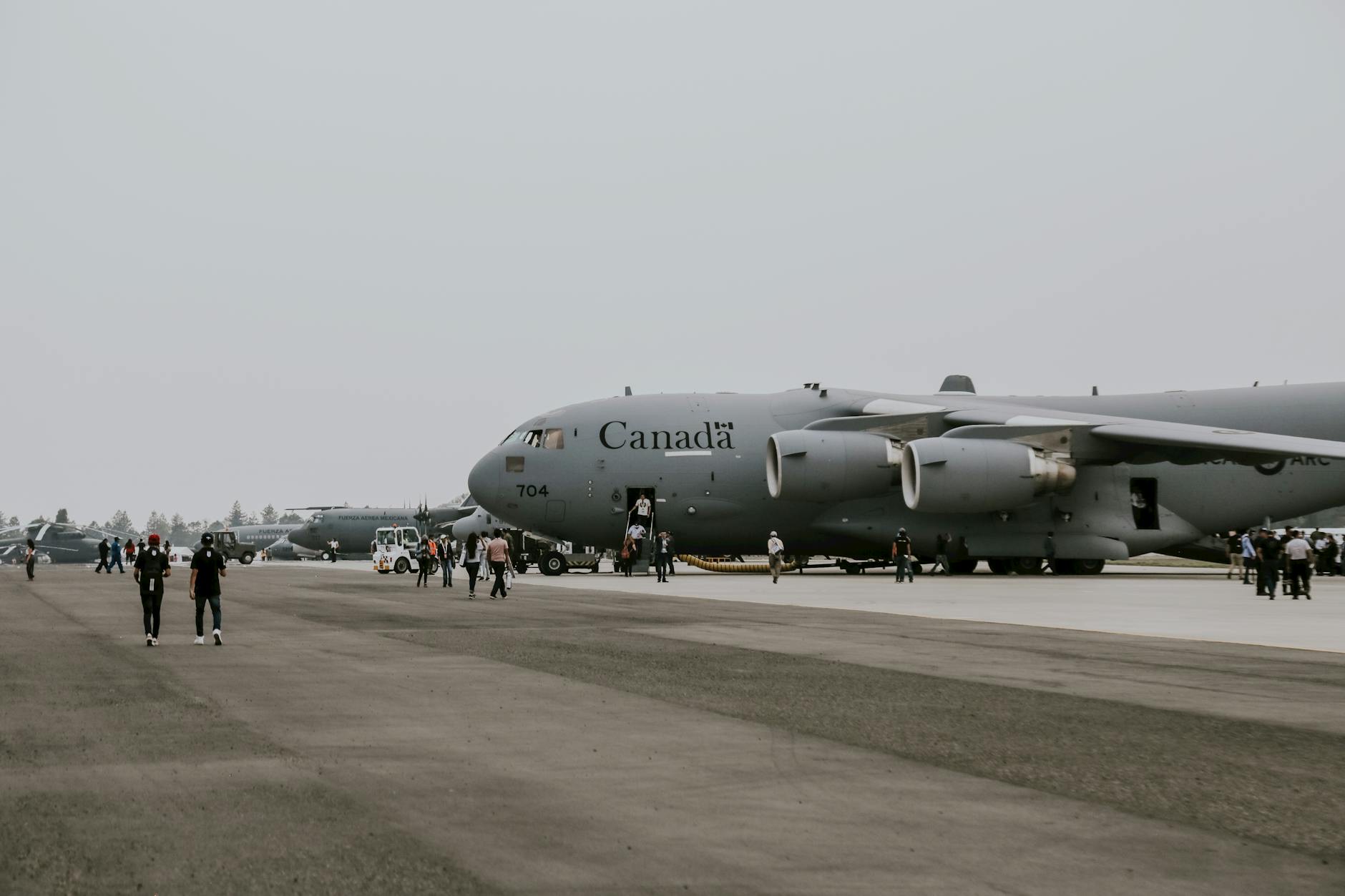
Pakistan on Tuesday pushed back against a U.S. media report alleging that it allowed Iranian military aircraft to use Pakistani airfields to avoid potential American strikes, saying the aircraft presence was connected to diplomatic logistics during ceasefire-period talks and not to any military sheltering arrangement.
The statement from Pakistan’s Ministry of Foreign Affairs came after CBS News reported, citing unnamed U.S. officials, that Pakistan had allowed Iranian military aircraft to park on its airfields while Islamabad was serving as a diplomatic conduit between Tehran and Washington. The report identified Nur Khan Airbase near Rawalpindi as one of the facilities involved and said the aircraft movement raised questions about Pakistan’s posture during a volatile phase of U.S.-Iran tensions.
Islamabad rejected that characterization. In an official response, the Foreign Ministry said it “categorically rejects” the CBS News report regarding Iranian aircraft at Nur Khan Airbase as “misleading and sensationalized.” The ministry said the narrative appeared aimed at undermining “ongoing efforts for regional stability and peace,” while acknowledging that aircraft linked to the diplomatic process had arrived in Pakistan after the ceasefire.
According to the Pakistani account, aircraft from both Iran and the United States arrived during the initial round of the Islamabad talks to facilitate the movement of diplomats, security teams and administrative staff. The ministry said some aircraft and support personnel remained temporarily in Pakistan in anticipation of further rounds of engagement. It said the Iranian aircraft currently parked in Pakistan arrived during the ceasefire period and had “no linkage whatsoever” to a military contingency or preservation arrangement.
The distinction is central to the diplomatic stakes. CBS News framed the aircraft presence as potentially shielding Iranian assets from American airstrikes, citing U.S. officials. Pakistan framed the same presence as routine logistics tied to talks in which Islamabad was helping manage contact between adversaries. Neither account, as publicly available Tuesday, provided a complete inventory of the aircraft involved, their arrival dates, or the exact command arrangements governing their presence.
The U.S. relevance is direct because the allegation concerns American military planning, U.S. intelligence assessments and Pakistan’s role in a U.S.-Iran diplomatic channel. If Washington believed Pakistani facilities were used to protect Iranian military assets, it could strain trust with a country that has often served as a difficult but consequential partner in regional crises. If Islamabad’s explanation holds, the episode could instead reflect the messy logistics of indirect diplomacy during a ceasefire period in which delegations, aircraft and security personnel moved through the same air hub.

Nur Khan Airbase has already carried symbolic and operational weight in recent regional diplomacy. The base, located near Pakistan’s capital region, has been used for high-level arrivals and security-sensitive travel. CBS News previously reported on U.S. diplomatic activity tied to the same base during Iran-related talks, and regional outlets have described it as a central logistical point for delegations moving through Islamabad.
Pakistan’s response appeared designed to preserve two messages at once: that it was not hiding Iranian military assets from the United States, and that it remains committed to a mediation role. The Foreign Ministry said formal negotiations had not yet resumed but that senior-level diplomatic exchanges had continued. It also said visits by Iranian officials to Islamabad were facilitated through existing logistical and administrative arrangements.
That explanation does not fully end the controversy. The CBS report attributed its account to U.S. officials, while Pakistan’s rebuttal relied on an official denial and a narrower description of the aircraft as part of a diplomatic process. The gap leaves several unresolved questions, including whether any aircraft had intelligence, reconnaissance or military support functions; whether the United States was notified of all aircraft movements; and whether Pakistani officials considered the aircraft protected under diplomatic arrangements.
For the Trump administration, the report lands at a delicate moment in managing the aftermath of U.S.-Iran escalation. Any suggestion that a mediator gave Iran operational breathing room could become politically combustible in Washington, especially among lawmakers skeptical of Iran diplomacy or Pakistani reliability. At the same time, U.S. officials have historically relied on regional intermediaries when direct engagement with Tehran was politically or operationally difficult.
Pakistan also faces a reputational challenge beyond Washington. It has tried to present itself as a stabilizing actor capable of maintaining lines to Tehran while engaging with the United States and other powers. The public dispute over aircraft at Nur Khan Airbase risks turning a mediation channel into a point of suspicion, particularly if more details emerge from U.S. officials or satellite imagery analysts.

Regional media coverage reflected that tension. Some outlets highlighted Pakistan’s acknowledgment that Iranian aircraft were in the country, while others emphasized Islamabad’s denial that the aircraft were being protected from U.S. strikes. The Foreign Ministry’s wording left room for the physical presence of Iranian aircraft while rejecting the motive and military meaning assigned to that presence in the CBS report.
The episode also illustrates the risks of ceasefire diplomacy conducted through military infrastructure. When talks involve adversarial states, security teams and aircraft movements can easily be interpreted through a military lens, especially in a region where airbases are dual-use symbols of both diplomacy and force projection. Pakistan’s insistence that the aircraft were tied to negotiations may be accurate, but the burden of transparency is higher when the aircraft belong to a state recently involved in hostilities with the United States.
No public U.S. government statement had, as of Tuesday’s available reporting, formally confirmed the CBS account or responded to Pakistan’s denial. U.S. Central Command declined to comment directly to CBS, referring questions to Pakistani and Afghan officials. That leaves the public record split between a report citing unnamed U.S. officials and a categorical Pakistani diplomatic denial.
For now, the practical effect may be to complicate any renewed Islamabad-based talks. Pakistan says some personnel and aircraft remained in anticipation of future engagement, but the dispute may make future logistics more sensitive. If U.S. and Iranian delegations continue to use Pakistan as a venue or conduit, both sides may face pressure to clarify aircraft movements, security arrangements and host-country guarantees more explicitly.
The broader diplomatic question is whether the controversy becomes a short-lived dispute over logistics or a larger test of Pakistan’s credibility as a mediator. Islamabad is trying to keep the issue contained by defining the aircraft presence as temporary, administrative and linked to peace efforts. The CBS report, however, has injected a more serious allegation: that aircraft positioning may have affected military calculations during a period of possible U.S. strikes. Until more evidence is publicly released, the safest conclusion is that Pakistan has confirmed an Iranian aircraft presence but strongly disputes the claim that it was part of a military sheltering arrangement.




Leave a Reply