
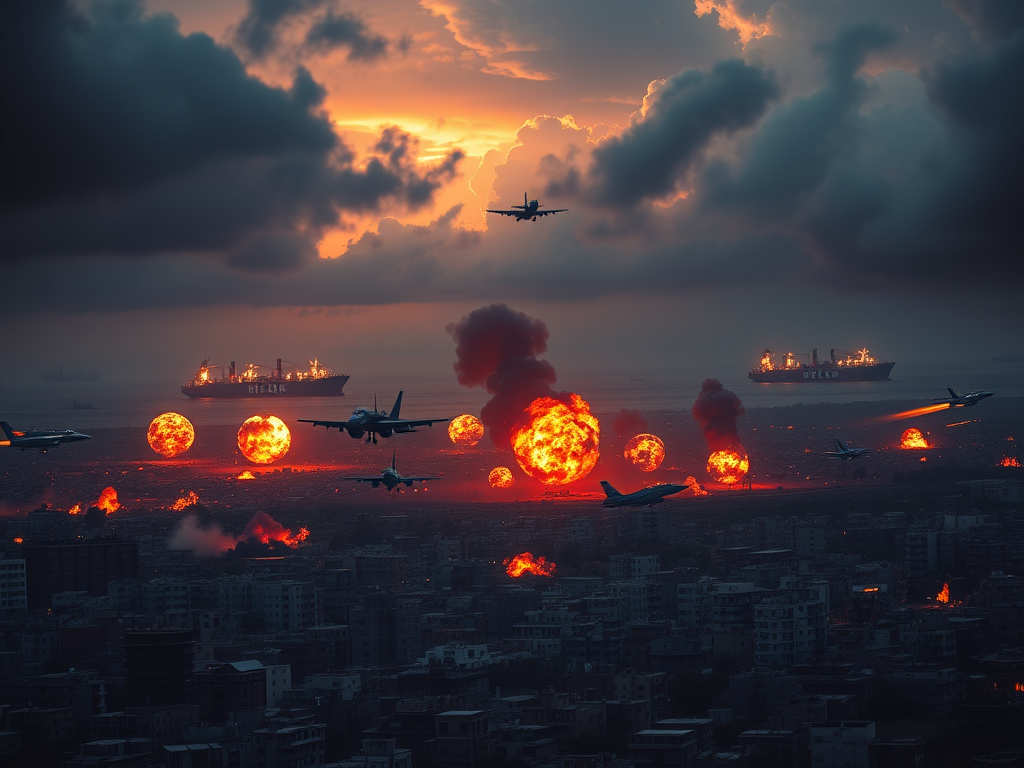

When U.S. President Donald Trump initiated a new military campaign against Iran, he described the operation as swift and decisive, suggesting that its consequences would be limited, particularly for Americans. Speaking in Florida earlier this week, he characterized the conflict as merely a “short interruption.” However, analysts and international observers increasingly argue that the situation has developed into something far more significant.
Rather than remaining a contained regional clash, the confrontation is beginning to reshape the global political and economic landscape. Security experts warn that the ripple effects of the war could surpass those produced by many recent conflicts in the Middle East, affecting everything from global trade routes to international alliances.
Now approaching its second week, the conflict is already influencing travel patterns, energy supplies, and consumer prices. Nations that have traditionally remained insulated from regional instability—such as Cyprus and the United Arab Emirates—have faced retaliatory strikes from Iran. The broader consequences may extend well beyond the region, potentially affecting domestic politics in the United States, altering the strategic dynamics of the war in Ukraine, and forcing economic adjustments in China.
Many analysts warn that the situation could escalate further if the conflict intensifies. A particular concern is the possibility that Iran could restrict maritime traffic through the strategically critical Strait of Hormuz, one of the world’s most important oil transit routes. Such a move would likely trigger significant disruptions in global energy markets.
Economists have begun to recall the economic turbulence of the 1970s, when dramatic spikes in oil prices contributed to a period of stagflation in the United States. That combination of stagnant economic growth and rapidly rising prices created severe political and economic challenges. Some experts believe similar risks could emerge again if energy costs continue climbing.
Suzanne Maloney of the Brookings Institution noted that historical lessons from previous oil shocks may not have been fully considered in current decision-making. According to her, earlier periods of energy crises demonstrated how quickly geopolitical conflicts can translate into economic pressure for governments, especially those facing upcoming elections.
The most immediate human and environmental consequences are being felt across the Middle East itself. Military exchanges throughout the region have reportedly resulted in more than a thousand deaths and have caused widespread destruction of infrastructure. In Tehran, strikes on fuel depots triggered massive fires, sending thick plumes of smoke into the sky and producing what witnesses described as dark, polluted rainfall.
Beyond the immediate damage, the conflict has shaken the economic model of the Persian Gulf states. Over the past decade, several Gulf economies have promoted themselves as stable financial and tourism hubs despite regional instability. That carefully cultivated reputation is now under pressure.
According to monitoring organizations tracking the war, Iran has directed a larger number of attacks toward Gulf countries than toward Israel. Some of these strikes have targeted luxury hotels and essential infrastructure, including desalination facilities that provide drinking water. As a result, tourists have begun leaving the region in large numbers, seeking evacuation routes as tensions rise.
Major aviation hubs have also faced threats. Airports in Dubai and Abu Dhabi have reportedly been targeted during the escalation, complicating international travel and rescue efforts. European governments are working to evacuate citizens who became stranded in destinations that only weeks ago were considered safe vacation locations.
After facing criticism for moving too slowly at the start of the crisis, the U.S. Department of State announced that it had arranged dozens of charter flights to evacuate American citizens from the region. Thousands of U.S. nationals have already been transported out of the conflict zone.
For Gulf states, the long-term concern extends beyond physical damage. Analysts emphasize that their most valuable asset has been international confidence in their stability and safety. Emile Hokayem of the International Institute for Strategic Studies explained during a recent policy discussion that these countries have spent years building the image of reliable business environments.
Investors and multinational companies were attracted not only by financial opportunities but also by the belief that Gulf cities could remain insulated from regional tensions. If that perception weakens, the economic repercussions could last well beyond the end of the war.
For much of the world, the first visible effect of the conflict appeared at gas stations. When tanker traffic slowed through the Strait of Hormuz, global oil prices quickly surged above $100 per barrel before stabilizing somewhat in subsequent days. Energy markets remain volatile as traders monitor developments in the region.

In response to the potential threat to shipping lanes, French President Emmanuel Macron announced that France would deploy ten naval vessels to the area. Their mission may include escorting commercial ships through the strait to ensure that energy supplies continue flowing.
Officials in Washington and European capitals are also exploring policy options aimed at easing rising gasoline costs. Energy prices directly influence inflation levels and consumer spending, making them a sensitive political issue for governments around the world.
Economic analysts warn that if elevated oil prices persist for several weeks, the effects could spread throughout global supply chains. Transportation, manufacturing, and food production costs might all increase, potentially slowing economic growth. Researchers at Deutsche Bank recently suggested that the duration of the conflict will determine whether the current shock develops into a broader economic crisis.
Another country watching developments closely is China. The world’s second-largest economy depends heavily on imported energy, much of which travels through the Persian Gulf region. If oil supplies become more expensive or unreliable, Chinese industries could face higher production costs.
Additionally, Chinese exporters have become increasingly dependent on consumers in Middle Eastern markets. Economic disruption in those countries could reduce demand for Chinese products, creating another challenge for Beijing’s growth strategy.

In contrast, rising energy prices could benefit Russia. Higher oil revenues strengthen the financial resources available to Moscow as it continues its military campaign in Ukraine. European officials worry that this dynamic could indirectly prolong the conflict there.
Some European policymakers also fear that resources used to defend against Iranian missile strikes may reduce the number of defensive systems available to Ukraine. Interceptor missiles supplied by the United States and allied nations are limited, and increased demand in the Middle East could stretch those supplies.
Back in the United States, the conflict is beginning to carry political consequences. Public opinion surveys indicate that support for the war is relatively limited compared with previous American military interventions. Rising energy prices and broader economic concerns are giving political opponents an opportunity to criticize the administration.
The conflict is also overshadowing a major international sporting event scheduled for this summer: the men’s FIFA World Cup 2026, which will be jointly hosted by the United States, Canada, and Mexico. Iran’s national team had been expected to participate in the tournament, but ongoing hostilities have created uncertainty about whether the team will be able to travel.
President Trump has continued to highlight the military capabilities demonstrated by the United States and Israel during the campaign. At the same time, his administration has offered varying explanations regarding the strategic goals of the operation and how long the war might last.
While acknowledging the loss of American service members during the fighting, the president has generally described other consequences—such as rising fuel prices—as temporary challenges. Critics, however, argue that the administration has yet to present a detailed plan for the political future of Iran once the conflict concludes.

European leaders are particularly concerned about the possibility of severe economic collapse inside Iran. If the country’s economy deteriorates dramatically, it could lead to large waves of migration across the border into Turkey and eventually into Europe.
That scenario evokes memories of the migration crisis that affected Europe roughly a decade ago, when conflicts and economic hardship across the Middle East and Africa pushed more than one million people to seek asylum across the continent. The influx fueled political tensions and strengthened right-wing movements in several countries, including Germany.
German Chancellor Friedrich Merz expressed concern earlier this week about the direction of the conflict. While acknowledging that many Western governments share strategic concerns about Iran, he warned that the absence of a clear plan for ending the war could lead to prolonged instability.
According to Merz, each passing day of fighting raises new questions about how the conflict will conclude and what political order might follow. Without a coordinated international strategy, he suggested, the consequences of the war could extend far beyond the battlefield and reshape global politics for years to come.




Leave a Reply