
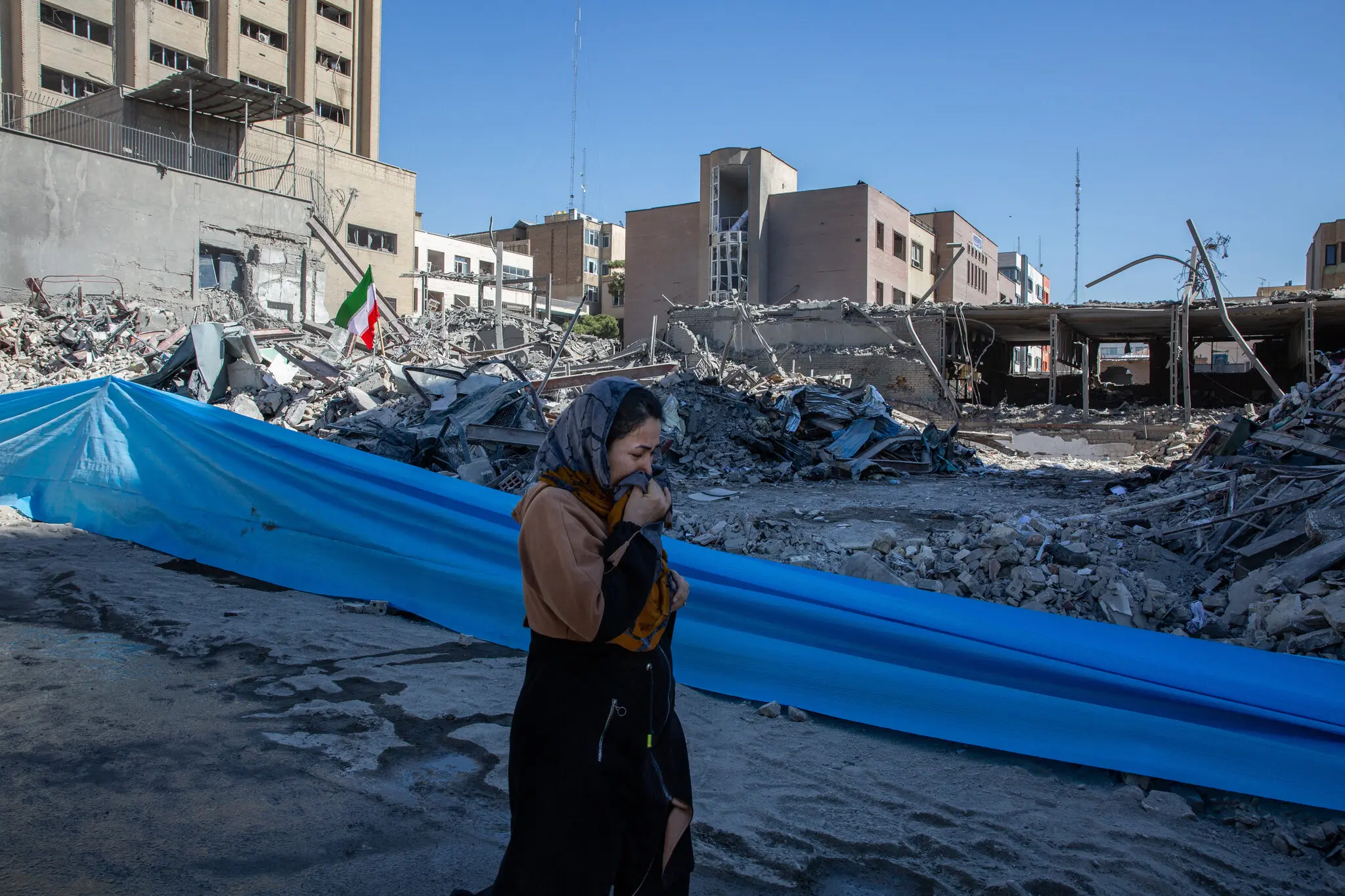
Three days after the world marked the fourth anniversary of Russia’s full-scale invasion of Ukraine, a new military crisis erupted. The United States and Israel launched coordinated airstrikes on targets inside Iran, opening another chapter of instability at a moment when global markets and political systems were already under strain. The escalation has raised immediate concerns about energy supplies, financial volatility, and the durability of international alliances.
The shockwaves have extended far beyond the Middle East. Governments in countries as geographically distant as Japan, Canada, and the United Kingdom are grappling with the implications. Many were already contending with the economic aftereffects of the war in Ukraine, the ongoing conflict in Gaza, trade disputes driven by tariff policies, and diplomatic tensions linked to President Donald Trump’s recent statements on Greenland and Venezuela. The sudden expansion of hostilities involving Iran has compounded those pressures.

Tehran responded swiftly. Iranian missiles and drones were reportedly launched toward American-linked targets and infrastructure across the Gulf region, with security alerts stretching from Cyprus to Lebanon and beyond. The retaliation has forced governments worldwide to confront difficult questions about sovereignty, security, and their ability to influence events unfolding far from their own borders. Political reactions have varied significantly.
In Madrid, Prime Minister Pedro Sánchez described the airstrikes as a dangerous escalation. In contrast, leaders in Ottawa and Berlin signaled explicit support for Washington’s decision. During a meeting at the White House with German Chancellor Friedrich Merz, President Trump criticized Spain’s position and threatened economic consequences. He suggested that trade relations with Spain could be curtailed in response to its public condemnation of the strikes.
Other European leaders have attempted a more cautious approach. The heads of government in Britain and France, along with officials from the European Union, issued statements condemning Iran’s retaliatory actions while stopping short of fully endorsing the U.S.-led offensive. The language reflected a delicate balancing act: maintaining transatlantic ties while avoiding direct endorsement of a widening conflict.

Chancellor Merz acknowledged that the strikes were already affecting European economies, citing rising energy costs and market instability. At the same time, he criticized Spain for what he described as insufficient defense spending, arguing that European security requires greater shared responsibility. His remarks underscored a broader debate within Europe about strategic autonomy and collective defense.
For years, many of these same leaders have framed Russia’s war against Ukraine as a fundamental challenge to the international rules-based order. Now they face a more complicated diplomatic landscape. The strikes on Iran were launched while negotiations over Tehran’s nuclear program were reportedly still underway, and without a formal declaration of war by the U.S. Congress. That sequence has left allies uncertain about how to interpret Washington’s long-term strategy.
In London, Prime Minister Keir Starmer addressed Parliament to clarify Britain’s stance. He emphasized that the United Kingdom would not participate in offensive military action without a clear legal mandate. At the same time, he acknowledged that global conflicts inevitably affect domestic life, from higher food and fuel prices to rising public anxiety.
Starmer also alluded to lessons drawn from Britain’s role in the 2003 Iraq War. That intervention, undertaken alongside the United States under President George W. Bush, was later scrutinized in detail by the inquiry chaired by John Chilcot. The Chilcot Report concluded that the government had relied on flawed intelligence and had not exhausted diplomatic alternatives before committing troops. The political consequences of that episode continue to shape British foreign policy.

Across Europe and beyond, similar calculations are underway. Leaders must weigh the strategic risks of alienating Washington against the domestic and economic costs of prolonged conflict. Energy markets have reacted sharply, with oil and natural gas prices climbing amid reported disruptions to production and shipping through the Strait of Hormuz, a critical artery for global energy flows. Commercial flights across parts of the Middle East have been suspended, stranding travelers and foreign workers. Security services in multiple countries have raised their alert levels amid fears of retaliatory attacks.
Ursula von der Leyen, president of the European Commission, warned that the consequences could extend across multiple domains, including energy security, transportation, migration, and nuclear proliferation. Her comments reflected a growing recognition in Brussels that Europe may face another wave of instability if the conflict becomes protracted.
Iran’s countermeasures have included reported attacks on American military facilities in Gulf states and strikes on energy infrastructure in neighboring countries. Efforts to disrupt maritime traffic through the Strait of Hormuz have heightened concerns about a broader economic shock.
Michael B. Froman, president of the Council on Foreign Relations, noted that many countries have long viewed Iran’s regional activities with alarm, particularly since the 1979 Islamic Revolution established the current theocratic system. Concerns about Tehran’s support for armed groups and its nuclear ambitions have shaped diplomatic efforts for decades. Yet, according to Froman, most middle powers now find themselves with limited leverage over events.
That sense of constraint is particularly evident in Europe. Sharon Pardo of Ben-Gurion University of the Negev recently argued that Europe risks being seen not merely as militarily constrained, but as increasingly marginal in shaping outcomes in the Middle East. The European Union has long aspired to play a more independent diplomatic role in the region, but the current crisis may test that ambition more severely than any in recent memory.

Historical legacies further complicate the picture. France’s involvement in parts of the Levant under the 1916 Sykes-Picot agreement still shapes its political sensitivities in the region. President Emmanuel Macron’s initial response to the strikes emphasized the protection of French nationals and interests, while carefully avoiding rhetoric that could inflame tensions.
In the United Kingdom, memories of Iraq, Afghanistan, and Libya remain politically potent. Commentators such as Ben Judah have argued that the legacy of those interventions has left British policymakers wary of military solutions, even when allies pursue them. He also suggested that unpredictability in Washington’s decision-making has deepened uncertainty among traditional partners.
Managing relations with President Trump has become an additional layer of complexity. Prime Minister Starmer has sought to maintain a constructive relationship with Washington, particularly in negotiations over trade and security cooperation. However, his refusal to endorse the strikes on Iran publicly appears to have strained that effort. During remarks in the Oval Office, President Trump expressed dissatisfaction with Britain’s position and questioned the strength of its leadership.
As the conflict unfolds, governments around the world face limited options. Few possess the military capacity to shape events directly. Many are economically interdependent with both the United States and China, reducing their room for maneuver. The central challenge now is not only how to prevent further escalation, but how to preserve economic stability and diplomatic cohesion in an increasingly volatile international environment.

Whether this new confrontation becomes a brief exchange or a prolonged regional war may depend on decisions taken in Washington, Tehran, and Jerusalem in the days ahead. For the rest of the world, the task is to prepare for consequences that are already reverberating across borders and markets alike.




Leave a Reply