
Before American and Israeli airstrikes struck Iranian targets on Saturday, Iran’s highest authority, Ali Khamenei, had already taken steps to ensure that the Islamic Republic would endure in the event of his death. For nearly four decades, he stood at the center of Iran’s theocratic system, consolidating power and shaping the country’s political and military direction. Anticipating the risks posed by escalating regional tensions, he reportedly put in place contingency plans for a smooth transfer of authority.
At 86 years old, Khamenei had led Iran since 1989, succeeding Ruhollah Khomeini, the architect of the 1979 Islamic Revolution. As supreme leader, he wielded ultimate authority over the armed forces, the judiciary, state broadcasting, and key levers of government. Supporters regarded him as both a spiritual guide and the final decision-maker on matters of state. Over the years, he cultivated an image of unwavering resolve, positioning himself as the principal guardian of the revolutionary system.
Throughout his tenure, Khamenei resisted reformist pressures and responded harshly to dissent. Protest movements were met with force, and critics accused his government of suppressing opposition voices to preserve ideological unity. Central to his worldview was the belief that he bore responsibility for safeguarding the revolution’s legacy. In line with that conviction, he is said to have identified potential successors capable of maintaining continuity after his passing.
Those preparations may now face their first real test.
On Sunday, Iranian officials announced that U.S. and Israeli military operations had resulted in Khamenei’s death, a development that followed an earlier public statement by former U.S. President Donald Trump declaring that the Iranian leader had been killed. Shortly thereafter, the state-run news agency IRNA reported that a transitional leadership structure would be formed, consisting of Iran’s president, the head of the judiciary, and a jurist from the Guardian Council. Specific details about the long-term succession process, however, were not immediately disclosed.
Iran’s constitution stipulates that the supreme leader must be selected by the Assembly of Experts, a body of senior clerics. The position requires both religious credentials and political legitimacy within the Islamic system. During a 12-day confrontation with Israel last June, when Khamenei reportedly took shelter for security reasons, he is said to have identified three individuals whom he believed could assume leadership swiftly if circumstances required.
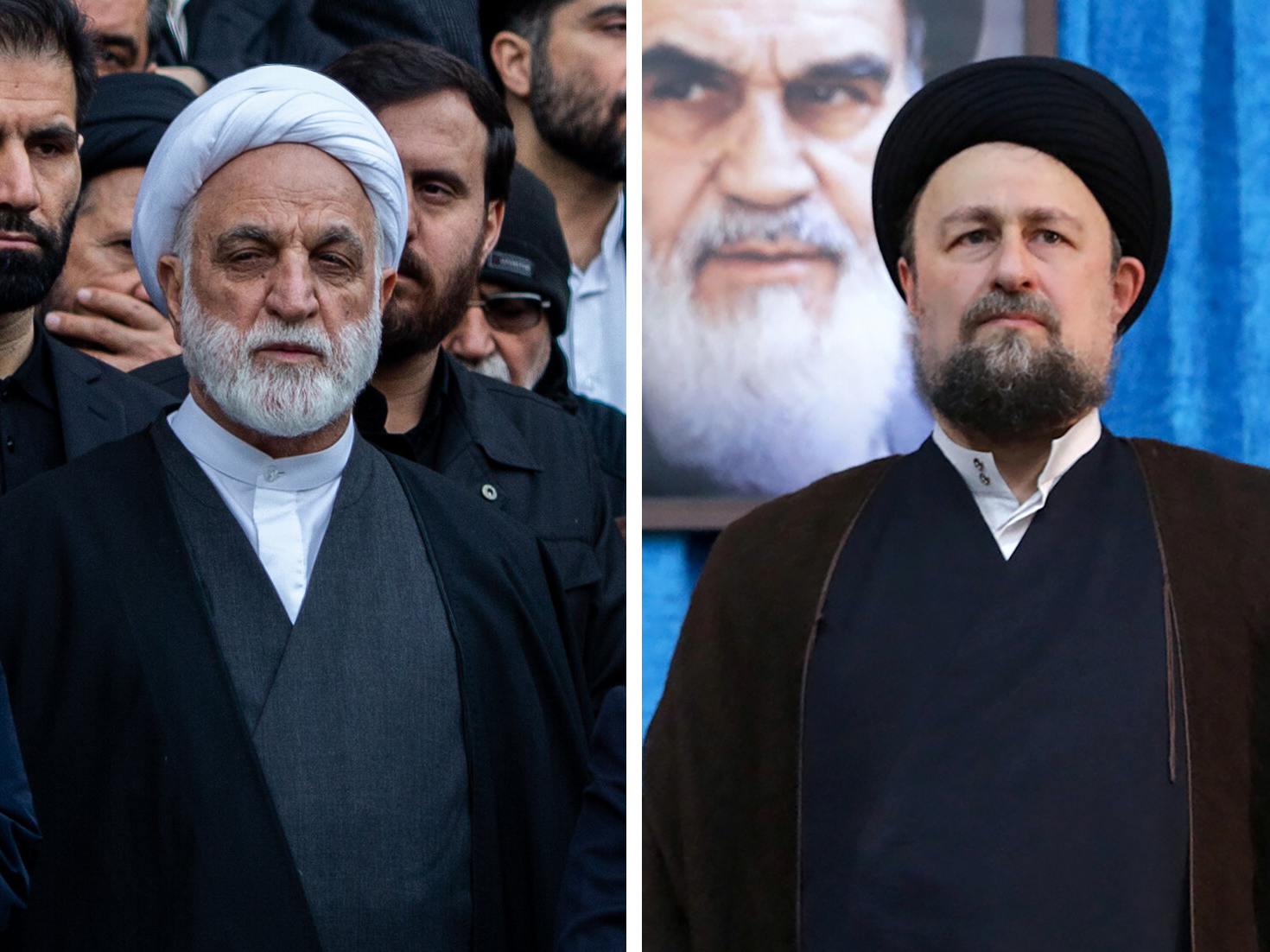
According to senior Iranian officials and clerical sources familiar with internal discussions, those figures included Gholam-Hossein Mohseni-Eje’i, the head of the judiciary; Ali Asghar Hejazi, Khamenei’s longtime chief of staff; and Hassan Khomeini, a relatively moderate cleric aligned with reformist elements and the grandson of the Islamic Republic’s founding leader. Israeli military sources later stated that Hejazi had been killed during recent hostilities.
Another frequently mentioned name in succession debates has been Mojtaba Khamenei, the supreme leader’s son, who has long been viewed as an influential figure operating behind the scenes. While some political factions reportedly favored him, Khamenei himself had previously indicated that he did not intend for the leadership to become hereditary, signaling opposition to dynastic succession within the Islamic Republic.
As Iran enters a period of uncertainty, the country’s internal divisions have become more visible. In parts of Tehran, reports emerged of residents celebrating the news of Khamenei’s death. Witnesses described scenes of cheering, clapping, and even fireworks in certain neighborhoods. These reactions stood in stark contrast to the official rhetoric emphasizing unity and resistance.
In anticipation of potential instability, Khamenei had delegated significant responsibilities to close allies. Among them was Ali Larijani, a veteran political figure and head of Iran’s National Security Council, who was tasked with overseeing key state affairs amid rising tensions. This move effectively reduced the public role of President Masoud Pezeshkian during the crisis.
Larijani responded to the strikes with defiant language, vowing retaliation against what he described as hostile foreign powers. He asserted that Iran’s military forces and citizens would deliver a forceful response, framing the conflict as a struggle against external aggression.
In addition to civilian arrangements, Khamenei reportedly established a multi-layered contingency structure within the military and political hierarchy. A small inner circle of trusted advisers was authorized to make urgent decisions if he were incapacitated or unreachable. Among those named in succession planning for senior positions were Ali Asghar Hejazi, Brigadier General Mohammad Bagher Ghalibaf, the speaker of parliament and former Revolutionary Guards commander, and General Yahya Rahim Safavi, a former commander in chief of the Islamic Revolutionary Guard Corps and senior military adviser.
As of early Sunday, it remained unclear which individuals were exercising effective authority. The fluid situation underscored both the centralized nature of Iran’s political system and the challenges of managing leadership transition during wartime.
Days before the airstrikes, Iran’s foreign minister, Abbas Araghchi, had acknowledged the possibility of losing senior officials in a conflict with the United States. In remarks to Iranian media, he stated that while such losses would be significant, they would not cripple the country’s ability to function. He emphasized that Iran would defend itself without limitation if confronted militarily.
With the reported death of its long-serving supreme leader, Iran now faces a critical juncture. The coming days are likely to determine not only who will assume formal authority, but also whether the Islamic Republic can maintain internal cohesion amid external pressure and domestic polarization.




Leave a Reply