
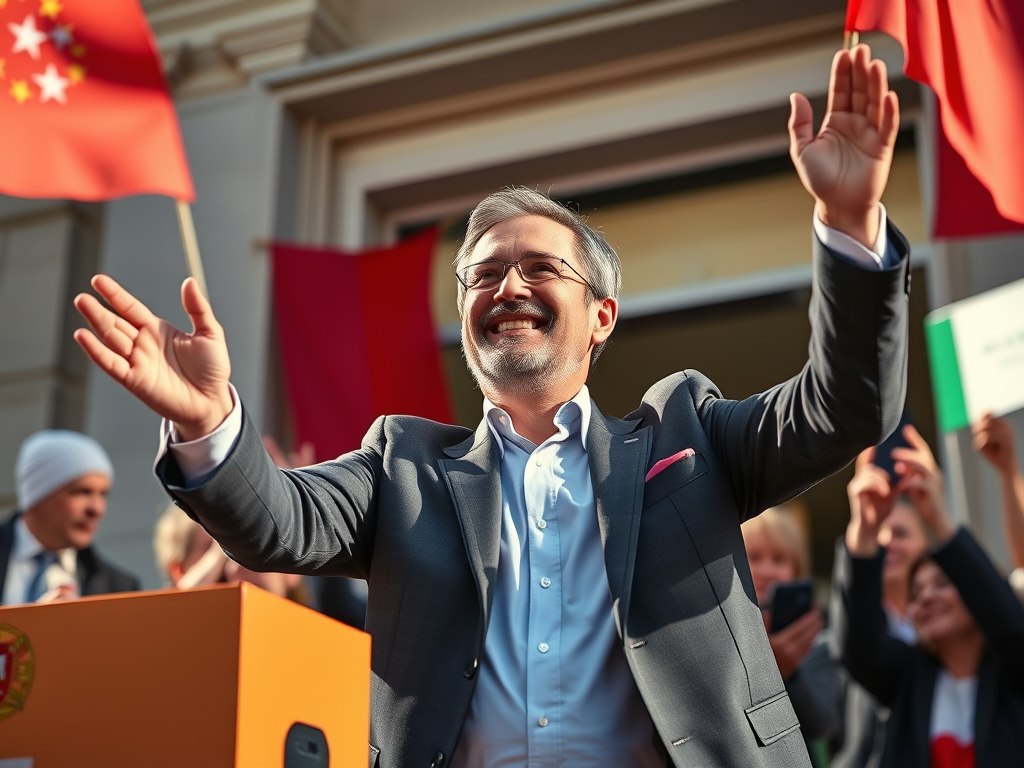

Portugal chose a new president on Sunday, delivering a decisive victory to António José Seguro, a former leader of the country’s Socialist Party who enjoys broad support from political elites, over his far-right challenger André Ventura.
According to the government’s official election results portal, more than 90 percent of voting districts had reported by late evening, showing Seguro securing over 65 percent of the vote compared with Ventura’s roughly 34 percent.
Speaking to journalists outside his home in Caldas da Rainha in central Portugal, Seguro praised the electorate, describing the Portuguese people as “the best in the world.” He said voters had demonstrated “extraordinary civic responsibility” and reaffirmed their commitment to democratic values.
For Portugal’s political establishment, both domestically and across Europe, the outcome was widely viewed as a relief amid the broader rise of far-right movements on the continent. Still, Ventura’s strong performance signaled that nationalist populism has taken firm root in Portugal. Preliminary results suggested he would surpass 33 percent of the vote, likely exceeding the share recently won by the governing center-right conservatives in parliamentary elections.

This development challenged Portugal’s longstanding reputation as one of Europe’s last strongholds resistant to hardline nationalism. Speaking after the results, Ventura vowed to continue pushing his agenda, insisting that meaningful change was necessary for the country.
Political analysts attributed Seguro’s landslide partly to strategic support from mainstream conservative figures, who rallied behind him to prevent Ventura and his Chega party from gaining power. In the first round of voting in January, Ventura captured nearly 25 percent of the vote in a crowded field, earning him a place in the runoff against Seguro, who led that round with close to one-third of the ballots cast.
João Cancela, a political science professor at NOVA University Lisbon, argued that the election marked a turning point. In his view, Portugal could no longer be considered immune to Europe’s far-right wave. Although Ventura lost decisively, his performance showed that Chega now had significant national reach, even in regions that have benefited from recent economic growth, tourism, and foreign investment.

Yet that growth has also produced new social tensions, including soaring housing costs and rising living expenses, which have fueled resentment among many voters. Cancela described the shift as structural rather than temporary.
Portugal’s election took place against a broader European backdrop in which nationalist movements have gained ground. Italy is led by Giorgia Meloni, France’s National Rally is increasingly mainstream, Germany’s Alternative for Germany has risen sharply in polls, and Nigel Farage’s Reform UK party has become a serious political force in Britain.
In the days leading up to the vote, severe storms and flooding disrupted campaigning and delayed voting in some areas, though officials said this was unlikely to affect the overall outcome. Ventura had argued that the entire election should have been postponed due to the weather, claiming some communities felt neglected.
The Portuguese presidency is largely ceremonial, but it carries important powers during political crises, including the ability to veto laws or dissolve Parliament. Throughout the campaign, Seguro emphasized that he would avoid acting like a “shadow prime minister,” while Ventura advocated for a more assertive and interventionist presidency.
Sunday’s election was widely seen as another test of populism’s strength in Europe. Chega represents the most significant far-right surge in Portugal since the end of the Salazar dictatorship decades ago.

Ventura, who entered Parliament for the first time in 2019, has built his party’s momentum through social media, anti-corruption rhetoric, and strong opposition to immigration and minority communities. His message has resonated particularly with young voters and those facing economic hardship, including residents of traditionally left-leaning working-class areas frustrated by housing shortages and job insecurity.
During the first round, Chega’s campaign posters featured the slogan “This is not Bangladesh,” reflecting concerns among some supporters about rising immigration over the past decade.
In response, Portugal’s mainstream parties attempted to form a broad alliance to block the far right. Prominent center-right figures publicly endorsed Seguro, framing the election as a choice between liberal democracy and authoritarian populism. Former president Aníbal Cavaco Silva also spoke out against Ventura.
Carlos Moedas, Lisbon’s center-right mayor, said he voted for Seguro to defend Portugal’s democratic traditions and send a clear message to Europe. However, he warned that continued political polarization could push more disillusioned voters toward Chega.
In southern Portugal, João Banza, a farmer who typically supports the center-right, said before the vote that he was considering backing Ventura. He noted widespread frustration over corruption and immigration, even if many voters recognized the far right’s policy limitations.

Prime Minister Luís Montenegro chose not to endorse either candidate, reflecting the delicate balance of Portuguese politics, where Chega has become an influential parliamentary force. Analysts suggested he wanted to avoid alienating conservative voters or provoking Ventura, whose support could be needed for future legislation.
Ventura has repeatedly claimed that the political establishment is trying to silence him, echoing similar rhetoric used by populist leaders elsewhere in Europe. Nonetheless, Sunday’s result indicated that most Portuguese voters were not yet ready to dismantle the political firewall against the far right.
For Lisbon lawyer Margarida Garcia, stopping Chega was a personal priority. She said she would have voted for almost anyone running against Ventura.
In the end, Portugal reaffirmed its democratic center, even as it grapples with the same political currents reshaping much of Europe.




Leave a Reply