
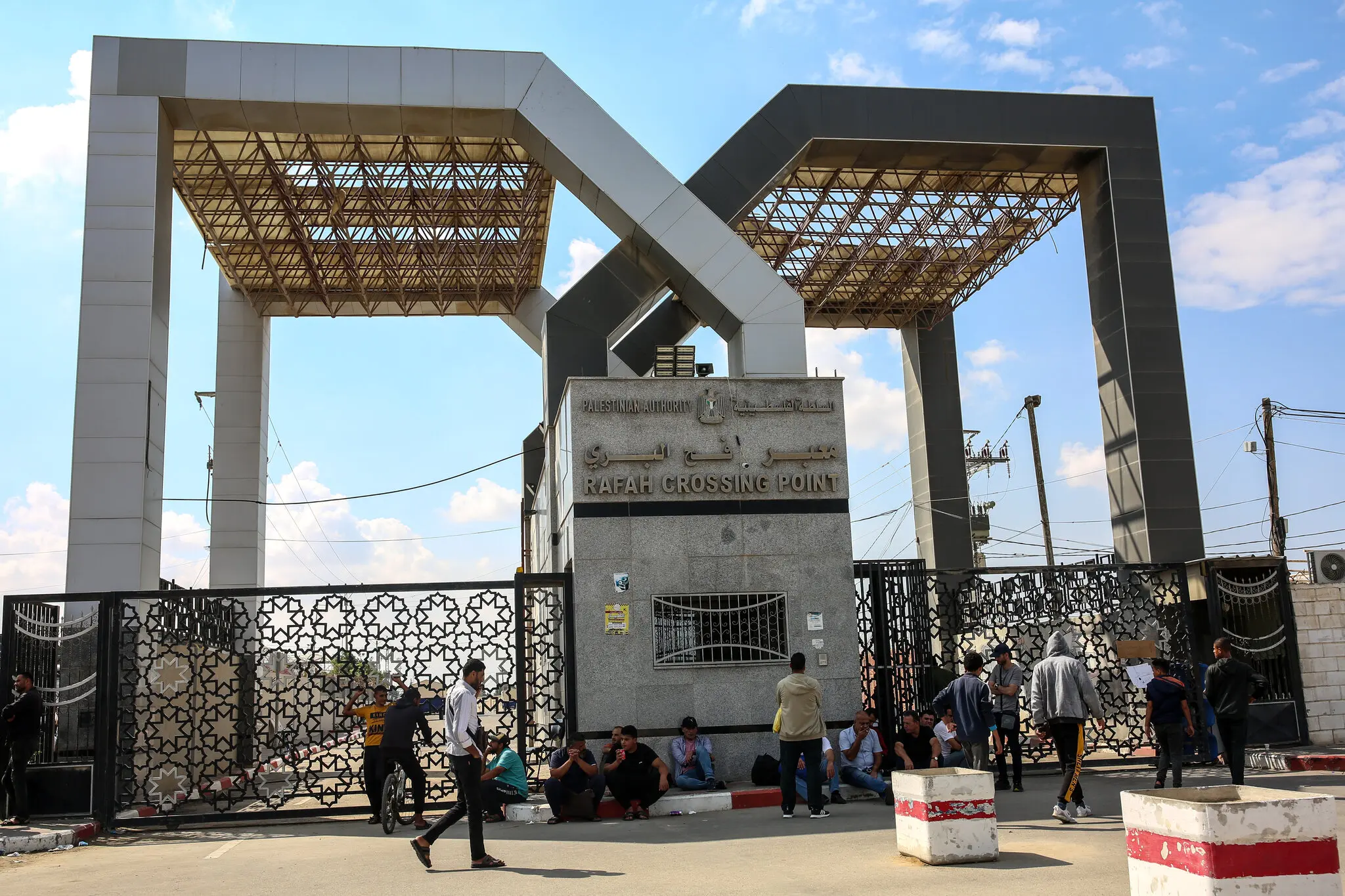
The sole border passage between Gaza and Egypt was set to reopen on Sunday for the first time in almost twelve months, a development that could offer a crucial escape route for Palestinians seeking medical treatment abroad or hoping to reunite with family after two years of conflict.
Israeli officials confirmed that the Rafah crossing, located near southern Gaza, had begun limited operations to test security and administrative systems ahead of full reopening. They said regular movement of people in both directions was expected to resume by Monday.
The crossing has remained largely shut since Israeli forces took control of the area in May 2024, with only a brief reopening during a temporary cease-fire last winter. Although an October cease-fire agreement called for the border to be restored, Israel delayed implementation until the return of the last hostage’s remains from Gaza, which occurred earlier this week.
Tensions remain high despite the cease-fire. On Saturday, Israeli airstrikes hit several locations in Gaza, killing at least 26 people, including children, according to local health authorities. The Israeli military stated that the strikes targeted Hamas and Palestinian Islamic Jihad operatives and weapon sites, describing them as retaliation for militants emerging from a tunnel in Rafah the previous day. Both sides have accused each other of repeatedly violating the cease-fire.
Who Can Cross the Border?
At least in the initial phase, the Rafah crossing will be used only for people, not humanitarian supplies. Aid deliveries will continue to rely on other routes.
Israeli Prime Minister Benjamin Netanyahu said the reopening would be limited to pedestrian movement, with strict daily quotas. He suggested that around fifty people per day would be allowed to enter Gaza from Egypt, while a somewhat larger number would be permitted to leave.
Israel’s government has openly encouraged Palestinians to depart Gaza, though it has not announced any formal policy preventing return. Netanyahu stated that no one would be stopped from leaving.
Who Will Manage the Crossing?
Egyptian authorities will maintain control on their side of the border. Anyone wishing to reenter Gaza must first receive Egyptian approval, followed by Israeli clearance at least 24 hours in advance.
Israeli security personnel will not be stationed directly at the crossing, but will conduct screening at a separate checkpoint inside Gaza, including identity verification and physical inspections.
For those seeking to leave Gaza, the process will involve multiple parties. European Union monitors, who previously supervised the crossing during the last cease-fire, will resume their role alongside Palestinian officials. Travelers will also need authorization from the Palestinian Authority in the West Bank before departing.
Growing Need for Medical Evacuations
Gaza’s Health Ministry reported that roughly 20,000 people are waiting for permission to travel abroad for medical care, warning that prolonged closure of the border has placed many lives at risk.
The United Nations estimates that about 18,500 patients, including 4,000 children, are currently awaiting evacuation, typically accompanied by a family member or caregiver. During the war, the World Health Organization helped coordinate around 7,600 medical evacuations, nearly 2,700 of which occurred after Rafah closed in May 2024.
Among those waiting is 30-year-old Ola Abu al-Naser from Beit Lahiya in northern Gaza, who hopes to accompany her injured mother-in-law abroad for surgery after she was trapped under rubble during a 2024 airstrike. She said she checks the news constantly for updates on the border.

Since the war began, at least 100,000 Palestinians have managed to leave Gaza, often with assistance from humanitarian organizations. Others paid high fees to an Egyptian intermediary company, an option inaccessible to most residents of the territory.
Humanitarian Groups Call for Broader Access
Aid organizations have welcomed the reopening but insist that pedestrian passage alone is not enough. They are urging authorities to allow humanitarian supplies to flow freely through Rafah and to remove restrictions on movement.
A United Nations spokesperson said the agency is ready to send significant amounts of relief through the crossing once permitted. He emphasized that, under international law, Palestinians should be able to enter and exit Gaza without undue barriers.
Save the Children warned that many students are waiting to leave for scholarships, families are separated across borders, and essential supplies remain desperately scarce inside Gaza. The organization called for the immediate opening of Rafah and all border crossings to ensure safe and unrestricted delivery of humanitarian aid.




Leave a Reply