
A sweeping crackdown by Iranian authorities on nationwide demonstrations has driven the country into one of its most severe crises in decades, with the reported number of deaths rising sharply in recent days. Human rights organizations now estimate that hundreds of people have been killed, as security forces intensify their response and show little indication of backing down.
Although Iran has imposed an almost total internet shutdown and severe restrictions on phone communications across its population of more than 80 million, fragments of information have still managed to escape the blackout. Verified videos and eyewitness accounts have begun circulating, depicting fatal encounters between protesters and security forces, as well as rows of bodies placed in black bags outside medical facilities.
What initially began as protests driven by economic frustration has rapidly evolved into a broader political challenge to Iran’s ruling system. Analysts say the scale and intensity of the unrest now represent one of the most serious threats to the Islamic Republic since the 1979 revolution that brought the current clerical leadership to power.
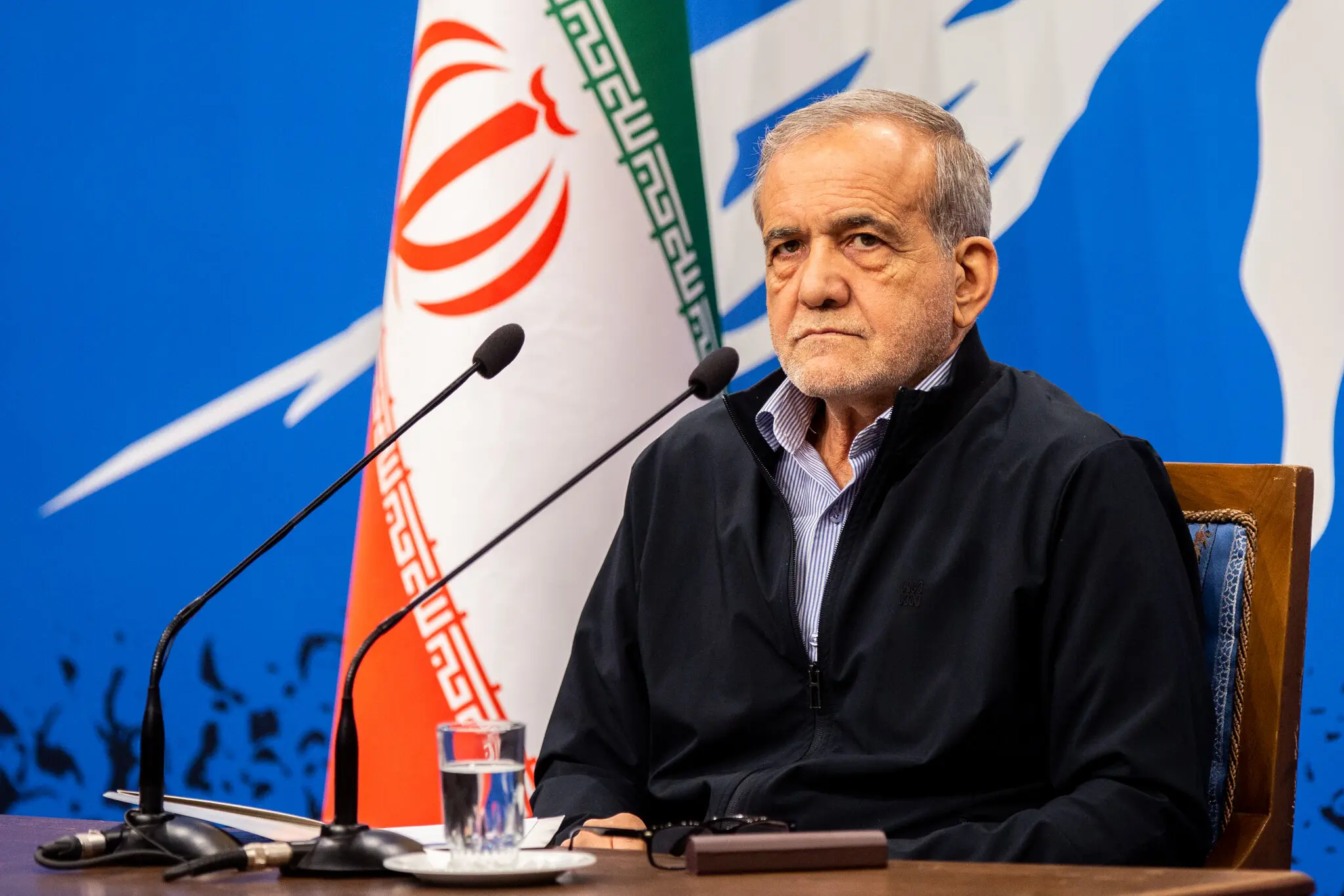
In the early days of the demonstrations, President Masoud Pezeshkian adopted a comparatively conciliatory tone, acknowledging public anger over inflation, unemployment, and the collapsing currency. However, his stance hardened over the weekend. In a televised interview on state media, he said the government was working to address economic concerns but insisted that it would not tolerate what he described as attempts to destabilize the country. He drew a clear distinction between peaceful protest and what he labeled as riots.
The protests first erupted on December 28, following a sudden and dramatic fall in the value of Iran’s national currency. As prices soared and savings evaporated, frustration spilled into the streets. Within days, the demonstrations expanded beyond economic grievances, with chants increasingly calling for the removal of Iran’s clerical rulers. What followed was a rapid escalation, as protests spread from major cities such as Tehran, Isfahan, and Mashhad to smaller towns and rural areas that have long suffered from poverty and neglect.
Over the past several days, the movement has grown into a nationwide uprising, drawing large crowds across diverse regions and social classes. With each passing day, confrontations between demonstrators and security forces have become more violent, even as the government sought to limit the flow of information.
On Sunday, as limited communications began to reemerge after a three-day blackout, human rights organizations reported a sudden spike in fatalities. The Norway-based group Iran Human Rights said it had documented at least 192 deaths. Meanwhile, HRANA, a Washington-based monitoring organization, stated that it had verified nearly 500 protester deaths, along with close to 50 fatalities among security personnel.
Videos circulating on Iranian social media platforms and later authenticated by international media showed scenes from Kahrizak, a town south of Tehran. In the footage, dozens of black body bags could be seen arranged on the ground or on stretchers outside a forensic center. Large crowds gathered around the bodies, with anguished family members attempting to identify loved ones. Some people collapsed in grief, while others clung to one another for support.
Determining the true scale of the violence remains extremely difficult. Iran’s authorities have enforced strict controls over information, making independent verification slow and dangerous. With internet access blocked or heavily throttled, it can take hours or even days for videos and testimonies to surface, and many incidents likely remain undocumented.
Hadi Ghaemi, director of the New York–based Center for Human Rights in Iran, said the level of violence has surged since the internet shutdown was imposed. He warned that the confirmed death toll may only reflect a fraction of the true number. According to him, hundreds or possibly thousands may have been killed, with the full picture unlikely to emerge until communications are fully restored.
As unrest intensified, senior Iranian officials shifted blame outward, accusing the United States and Israel of orchestrating or supporting the protests. These claims come amid heightened regional tensions. Iran’s military and nuclear infrastructure was damaged during a 12-day conflict with Israel last June, and the country’s economy has continued to deteriorate following the reimposition of United Nations sanctions last year.
External pressure has further complicated the situation. Former U.S. President Donald Trump publicly warned that Iran could face military action if peaceful protesters were killed. Several U.S. officials indicated that new military options had been presented to him. Such statements have carried particular weight in light of recent U.S. actions abroad, including the capture of Venezuelan leader Nicolás Maduro earlier this month.

Iranian officials responded sharply to these threats. Mohammad Ghalibaf, the speaker of Iran’s parliament, said that any U.S. military intervention would make American forces, shipping routes, and allied military bases legitimate targets. He also suggested that Israeli installations could be struck in retaliation.
Domestically, the Iranian government declared a three-day period of national mourning, officially honoring those killed by what it described as “urban terrorist criminals,” a phrase widely interpreted as referring to fallen members of the security forces. State-affiliated media reported that President Pezeshkian expressed deep sorrow over the deaths and called on citizens to participate in a government-backed “National Resistance March.”
Another factor fueling the recent surge in protests has been calls to action from activist networks and opposition figures abroad. Among them is Reza Pahlavi, the son of Iran’s last shah, who was overthrown in 1979. Over the past decade, open support for the Pahlavi family had been rare within Iran’s protest movements. Now, chants praising the former monarchy have become increasingly audible in demonstrations across the country.
From exile, Pahlavi released a video message urging protesters to remain in the streets despite the escalating violence. He praised their courage and claimed that international leaders were closely watching events in Iran. His message marked a notable shift in the symbolic landscape of Iran’s opposition, signaling a break from previous protest narratives.
For much of the unrest, Iranian authorities attempted a careful balancing act. On one hand, they acknowledged economic hardship and announced limited measures aimed at easing public anger. On the other, they framed the protests as being hijacked by foreign-backed agitators. As the movement expanded, however, the situation grew increasingly volatile.

In several cities, government buildings were set on fire, and clashes intensified. Iran’s police chief, Brigadier General Ahmadreza Radan, rejected claims that security forces were responsible for the majority of deaths. He asserted that many victims had been killed by knives or bladed weapons and claimed that shootings occurred at close range, implying that trained infiltrators, rather than police or military units, were responsible.
Human rights organizations strongly dispute these claims. HRANA reported that more than 10,000 people have been detained since the protests began. Skylar Thompson, the group’s deputy director, said there was credible evidence that authorities were removing injured protesters from hospitals and transferring them directly to detention centers.
According to Thompson, medical records show injuries consistent with tear gas exposure, rubber bullets, and live ammunition. In many cases, she said, wounded individuals were denied proper medical treatment before being taken into custody.
Ghaemi also described alarming conditions inside hospitals. He said facilities in Karaj, near Tehran, and in the western province of Kermanshah were effectively under the control of security forces. In some regions, including Kermanshah and the northern city of Mashhad, injured protesters were reportedly too afraid to seek hospital care and instead turned to secret, informal treatment.
International concern has continued to grow. United Nations Secretary-General António Guterres expressed shock at reports of excessive force. His spokesman emphasized that Iranians must be able to voice their grievances peacefully, without fear of violence or retaliation.
President Pezeshkian’s position has remained complex. Unlike some senior security officials and even Supreme Leader Ayatollah Ali Khamenei, he has previously spoken of government accountability and introduced modest reform proposals. Economists, however, argue that these measures fall far short of what is needed to address Iran’s deep structural problems.

During a visit to southwestern Iran last week, Pezeshkian told residents not to blame foreign powers for domestic failures, saying that the government must perform better to earn public trust. Yet his tone shifted again on Sunday, when he accused foreign enemies of bringing trained militants into the country and dismissed those involved in unrest as criminals rather than ordinary citizens.
On social media, Donald Trump reiterated his support for the protesters, saying Iran was closer to freedom than ever before and that the United States stood ready to help. Pezeshkian responded by warning Iranians not to be misled by such statements. Referring to U.S. actions in Venezuela, he questioned the sincerity of leaders who, in his words, openly admit to pursuing another country’s resources.
As Iran faces mounting casualties, deepening economic distress, and growing international scrutiny, the outcome of this confrontation remains uncertain. What is clear, however, is that the country has entered a pivotal moment, one that could reshape its political future in ways not seen for nearly half a century.




Leave a Reply