

As Hong Kong prepares for tightly managed legislative elections this Sunday, officials are intensifying efforts to boost voter turnout — even while the city continues to mourn a catastrophic apartment fire that has triggered widespread grief and mounting calls for government accountability.
The fire, which tore through Wang Fuk Court last month, claimed at least 159 lives, making it Hong Kong’s deadliest blaze in decades. Investigators have suggested that poor-quality building materials may have accelerated the flames, prompting serious questions about construction oversight and whether officials ignored earlier warnings.
Despite the somber mood across the city, the government has urged residents to vote in elections dominated entirely by pro-establishment candidates vetted and approved by Beijing.
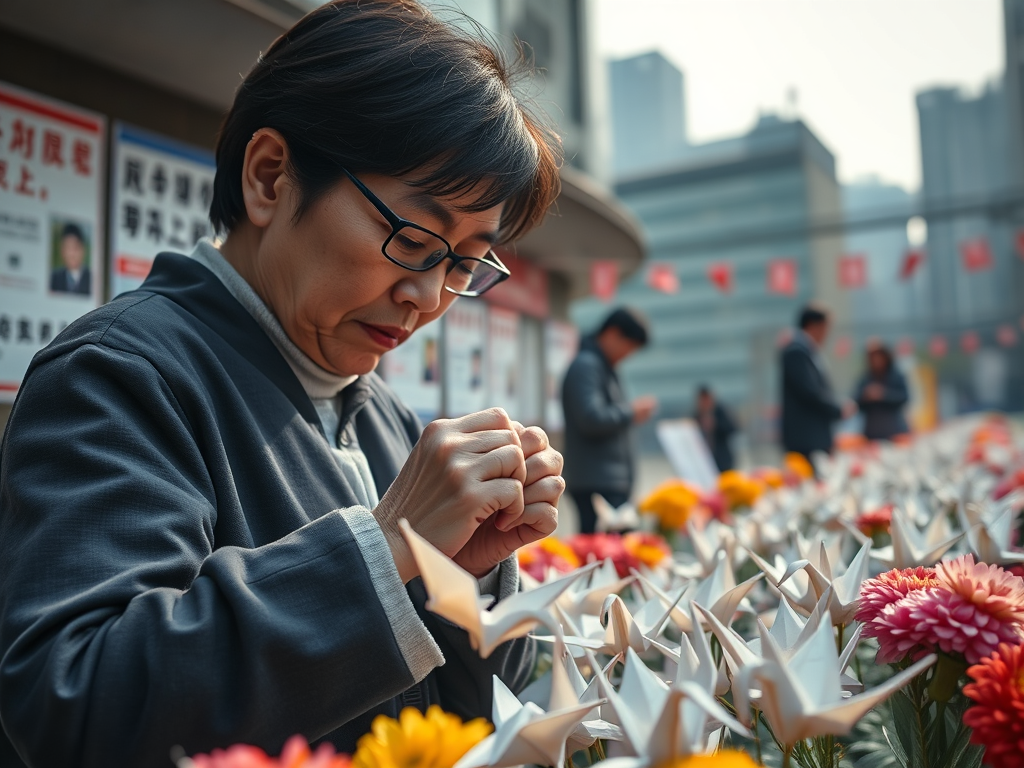
At a memorial near the fire site, 55-year-old Mary Chan folded paper cranes for the victims. She said she had no intention of voting. “What’s the point?” she said. “It only helps them pretend everything is normal.”
Authorities have treated the political atmosphere as highly sensitive. National security officials have warned that “anti-China elements” might try to use public anger over the fire to cause unrest. At least three people have been arrested under national security measures since the tragedy.

On Saturday, journalists from several international media organizations, including The New York Times, were summoned by Beijing’s national security office in Hong Kong and cautioned over their reporting on the disaster.
Debate erupted after the fire over whether the election should be postponed. Analysts said the poll had become a symbolic test of public support for the government. Campaign events were briefly halted following the blaze, but Chief Executive John Lee ultimately decided the vote should proceed, saying a new legislature was needed to accelerate recovery efforts and advance regulatory reforms.
“At this crucial stage of rebuilding, we must think long term,” Lee said earlier in the week. “Hong Kong must continue moving forward and restore normalcy.”
For weeks, the city has been flooded with campaign posters, government messages, and promotional videos urging residents to vote. Loudspeakers in public restrooms even played short jingles encouraging civic participation. Civil servants were mobilized, businesses were asked to incentivize employees, and a citywide “Election Fun Day” — complete with carnivals, open houses and a gala — was organized to drum up enthusiasm.
Even the thousands of residents displaced from Wang Fuk Court have been swept into the outreach. Officials assigned social workers to help each affected household navigate relief procedures — and also to guide them to their new polling stations and free transportation options.

Victoria Hui, a political scientist at the University of Notre Dame, said the dual purpose of this effort seemed clear. “It looks like they’re trying to boost turnout while also monitoring public sentiment,” she said.
Former district official Yam Kai-bong, who once served in Tai Po, the district where the tragedy occurred, said authorities wanted to use turnout as a measure of public backing. “They want to show the world that people still have faith in the system, in the government, and in pro-establishment candidates,” he said from his current home in Britain.
Eric Chan, the city’s No. 2 official, told reporters on Sunday morning that social workers were not being instructed to influence how displaced residents should vote.
Only 30 percent of registered voters cast ballots in the last election in 2021 — the lowest turnout in decades and a stark contrast with the record high participation in 2016. Since then, political life has been reshaped by the national security law imposed in 2020, which effectively dismantled the pro-democracy camp. Many opposition lawmakers resigned in protest, were arrested, or fled overseas.
In 2021, Beijing introduced sweeping electoral reforms requiring all candidates to undergo political vetting to ensure “patriotism.” Before the overhaul, opposition legislators played a major role in the chamber and frequently challenged pro-Beijing leadership. Now, only 20 of the 90 seats available in Sunday’s election are directly elected — sharply reduced from 35 before the reforms. The remaining seats are chosen by industry-based voting blocs dominated by loyalists.

“With so few genuinely competitive choices, many Hong Kong people may feel they do not have a real say,” said Emily Lau, a veteran pro-democracy figure who now hosts a YouTube interview program.
At the same time, China is increasing its influence over the legislature. Many long-standing pro-Beijing lawmakers abruptly announced in October they would not run again, opening the door to younger candidates with stronger personal or professional ties to the mainland. John Burns, an emeritus professor of politics at the University of Hong Kong, said Beijing’s liaison office has played a decisive role. “They curate these races carefully,” he said. “Candidates who are meant to win will win.”
Disillusionment appears to be growing. Voter registration has dropped eight percent since 2021, down to 4.1 million. In Tai Po, some residents said voting was the last thing on their minds. One woman said she was grateful for temporary housing but needed to focus on finding a long-term home and completing financial aid paperwork. Another resident said he planned to spend Election Day moving into a new apartment, adding that he had lost interest in politics once opposition candidates were barred.
A social worker assigned to assist Wang Fuk Court families said her supervisors instructed her to provide election information alongside mental-health support and financial assistance. She said the directive felt inappropriate, especially for families still grieving. She requested anonymity due to fear of government repercussions.
For some, however, the election still matters. Li Cheuk-man, a 42-year-old consultant displaced by the fire, said he intended to vote for candidates he believed would tackle the problems that led to the tragedy. He hopes the government will acknowledge his financial losses, support his family’s search for a new home, and hold those responsible accountable.
“The government is like our guiding north star,” he said. “Right now, our family feels lost at sea.”
He said the days since the fire had been overwhelming. “After my wife and kids fall asleep, I sit alone and cry,” he said. “I still don’t know what to do.”
Outside a polling station in Tai Po, 46-year-old clerk Billy Ho said he voted for candidates he believed could strengthen Hong Kong’s economy. Asked if he felt his vote could still make a difference with so few opposition voices left, he replied, “You have to hope. If you give up even that, you’re wasting the rights you still have.”




Leave a Reply