
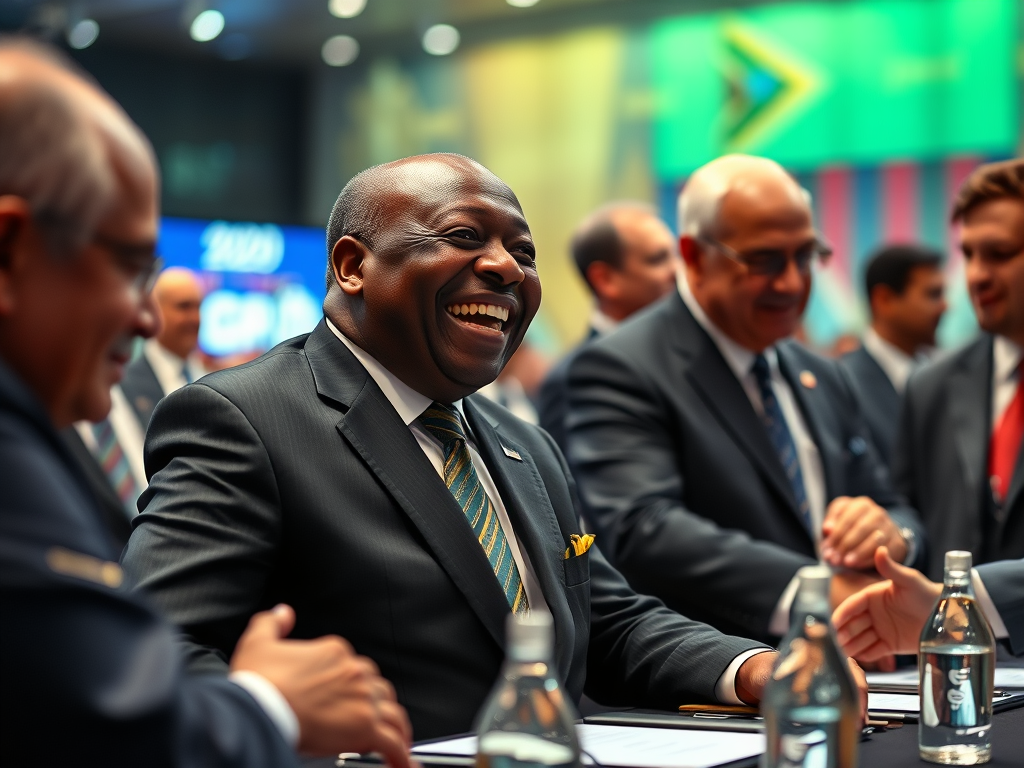

South African President Cyril Ramaphosa could not help but burst into laughter.
A journalist had asked him to confirm reports that the United States—after announcing a boycott—had abruptly requested to attend the Group of 20 summit in Johannesburg just two days before it opened. Ramaphosa barely began to answer before dissolving into laughter, later managing to explain that he had received a note from Washington signaling “a change of mind.”
Karoline Leavitt, spokesperson for President Trump, later responded that Ramaphosa’s remarks were “not appreciated by the president or his team.”
In the past, a sharp message from the White House might have sent South African officials scrambling to smooth things over. Such a rebuke could easily have resulted in clarifications or an apology for deviating from diplomatic restraint. But this year’s dynamic was different. With President Trump boycotting the summit over claims that South Africa discriminates against its white minority, several countries signaled their willingness to adopt a firmer posture toward Washington and demonstrate that global cooperation can continue regardless of American participation.
That shift was visible in the atmosphere around the summit: leaders shaking hands, signing agreements, announcing partnerships, and taking the stage at polished, globally broadcast events.
At a Bloomberg-hosted forum ahead of the summit, South Africa’s foreign minister Ronald Lamola summed up this mood. “The G20 should send a clear message that the world can move on with or without the U.S.,” he said. “We will mark them absent and continue with the business.”
South Africa also rejected a request from the Trump administration asking Ramaphosa to symbolically pass the G20 chairmanship to the acting American ambassador—since the United States will host the summit next year. The South African government declined, stating that Ramaphosa would not hand over leadership to a junior diplomat. Instead, U.S. officials were invited to visit the foreign ministry later in the week for a more routine transfer.
Ramaphosa proceeded with a summit agenda centered on African priorities. He broke precedent by opening the two-day gathering with the formal adoption of the final declaration. Traditionally, such statements are negotiated until the last minute and released only at the end. Ramaphosa announced that the document had unanimous approval from those present, even though Argentina’s foreign minister voiced dissent. Argentina, several attendees noted, had been aligning closely with U.S. positions throughout the year.
Responding to the objection, Ramaphosa said, “We note with deep respect the views expressed by Argentina. We will, with great respect, move ahead with the accepted declaration as the G20.”
The final declaration included several concepts the Trump administration had resisted in pre-summit negotiations, such as commitments to “just energy transitions,” references to “climate change,” and language supporting “gender equality.”
Nabil Ahmed, a senior director at Oxfam America who attended the meeting, said the summit sent an important signal. “Despite geopolitical bullying and the weight of U.S. influence, countries can still come together and accomplish things,” he said.
Brazil’s President Luiz Inácio Lula da Silva echoed that sentiment when the summit concluded. While acknowledging that Trump had leaned heavily on unilateral approaches, Lula expressed confidence that a multilateral system would prevail. “Everyone here understands that together we are stronger and more capable,” he said.
Still, few leaders believe they can simply ignore the global weight of the United States. Washington’s economic reach remains immense, and U.S. positions continue to shape critical issues such as renewable energy investment, trade policies, and international conflicts.

For instance, Brazil continues to wrestle with high tariffs imposed by Washington on some Brazilian goods. South Africa is locked in difficult talks with the Trump administration in hopes of reducing a 30 percent tariff affecting its exports. And although the G20’s final declaration offers guidance to influential organizations like the International Monetary Fund, the document is not legally binding. The United States retains substantial voting power in many of those institutions, giving it leverage that no summit communiqué can fully dilute.
The influence of Washington was felt even during the summit’s early sessions. On the first day, allies of Ukraine hastily convened a side meeting to address a controversial U.S.-supported proposal for a peace plan in the Russia-Ukraine conflict. It was one of several geopolitical rifts that leaders had to navigate throughout the event.
French President Emmanuel Macron observed that this year’s negotiations were unusually strained. “We are having trouble putting new compromises on the table,” he said, noting that discussions stalled on issues that participants once considered largely settled.
But in other respects, America’s retreat opened space for unexpected alignments. Countries that had previously clashed found new avenues for cooperation.
Recently, relations between South Africa and the European Union had grown tense, particularly over South Africa’s stance toward Russia after its invasion of Ukraine. Yet in the days leading up to the summit, Ramaphosa appeared on stage with European Commission President Ursula von der Leyen and European Council President António Costa. Smiling and energetic, the leaders announced a new minerals partnership and committed billions of dollars to expand renewable energy projects across Africa.

“We are a partner that plays by the rules,” von der Leyen said during the event. “We listen to our partners.”
Her remarks reflected a broader theme of this year’s G20: with the United States stepping back, other nations sought to demonstrate reliability, responsiveness, and willingness to collaborate. For South Africa and several other emerging economies, the summit became an opportunity to amplify their own priorities while crafting new alliances less overshadowed by Washington’s traditional dominance.
Whether this moment represents a permanent shift in global power dynamics or merely a temporary ripple caused by political tensions in the United States remains to be seen. Yet for now, the message from Johannesburg was clear.
Amid laughter, disagreements, side meetings, and unexpected partnerships, the leaders gathered at the G20 showed that the machinery of global diplomacy continues to function—even when one of its biggest players chooses to sit out.




Leave a Reply