
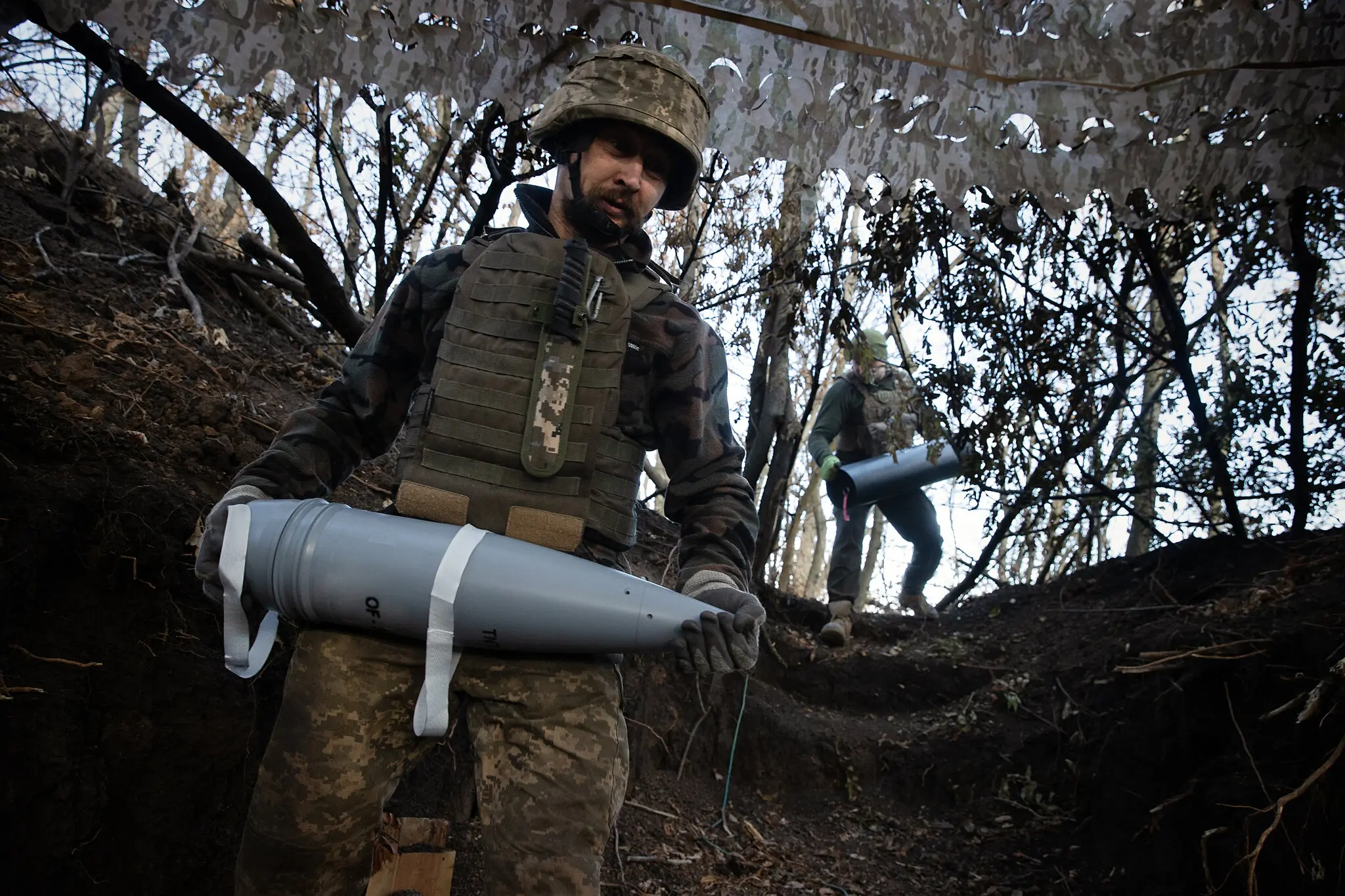

As Russian forces move closer to seizing Pokrovsk, a strategically important city in eastern Ukraine, Kyiv is once again forced to confront a painful and recurring strategic dilemma. Ukrainian commanders must decide whether to pull back to preserve their forces or to continue fighting in the hope of slowing Moscow’s momentum, even at the cost of heavier casualties.
Throughout the war, Ukraine has confronted similar moments. In places like Bakhmut and Avdiivka, Kyiv chose to defend the cities until the bitter end, even as conditions deteriorated. Both cities eventually fell after prolonged battles that drained Ukraine’s manpower. Critics have long argued that earlier withdrawals could have saved thousands of soldiers in a war where Ukraine’s most limited resource is its personnel.
Ukrainian leaders, however, maintain that defending key cities for as long as possible forces Russia to expend enormous numbers of troops, weakening its ability to attack elsewhere. They also acknowledge the political dimension: Ukraine wants to deny Moscow symbolic victories that could damage public morale or undermine Western confidence, particularly in Washington.
Today, analysts warn that history may be repeating itself. Russian troops have entered parts of Pokrovsk, and nearby Myrnohrad faces a growing threat of encirclement. Some Ukrainian commanders fear the country is again holding its ground for longer than the situation allows.
Rob Lee, a senior fellow at the Foreign Policy Research Institute who recently visited the front line, noted that Ukraine has previously maintained positions long after they became untenable. The potential fall of Pokrovsk — once home to 60,000 people — would mark the largest Ukrainian city lost since Bakhmut in 2023. Its capture could help Russia push further north and get closer to fully taking the Donetsk region, most of which it now occupies.
President Volodymyr Zelensky has openly acknowledged that Ukrainian forces around Pokrovsk are severely outnumbered. Despite this, he has shown no sign of ordering a withdrawal. He visited frontline soldiers last week to discuss their needs as they defend the region.
Continuing the fight risks dragging Ukraine into another drawn-out urban battle, where Russia’s numerical and material advantages are most decisive. Moscow has repeatedly demonstrated that it can replenish its ranks through aggressive recruitment campaigns. Ukraine, meanwhile, continues to struggle with staffing its units.
Vyacheslav Shevchuk, a drone battalion commander from the 68th Separate Jaeger Brigade, described the challenges of defending densely built environments. He said urban combat limits Ukraine’s ability to deploy drones effectively and provides Russian forces with many opportunities to conceal themselves. Heavy Russian guided bombs also threaten to break Ukrainian defensive lines.
According to Shevchuk, the outcome in Pokrovsk appears increasingly inevitable, and he believes Kyiv should prioritize preserving its soldiers by repositioning them while it still can. In his view, there is no dishonor in withdrawing to stronger defensive locations.
Pokrovsk and Myrnohrad have long been critical barriers to Russian advances. Moscow’s forces began attacking the region more than a year ago, only to be held back by strong Ukrainian fortifications and extensive drone surveillance. But over time, repeated assaults have eroded Ukraine’s defensive capabilities. Russia now frequently uses small assault groups to quietly slip through thinly manned positions, and recent poor weather has reduced Ukraine’s ability to detect enemy movements.

Recent footage circulating online showed Russian forces entering Pokrovsk from the south through dense fog, moving in a makeshift convoy of motorcycles and damaged vehicles along an unguarded road. Ukrainian troops may attempt to contain Russian units inside the city, but it remains unclear whether they can do so for long.
The experiences of Bakhmut and Avdiivka hang heavily over the present moment. In Bakhmut, both sides fought ferociously for months, destroying the city block by block. A report by the Royal United Services Institute concluded that Ukraine’s decision to hold the city initially had strategic value, inflicting heavy losses on Russia. But once Russian units threatened the supply routes, remaining in the city caused Ukraine to suffer disproportionate casualties. Even so, the Ukrainian high command chose to stay, hoping to avoid projecting weakness while lobbying for more Western assistance.
By the end of that battle, roughly 10,000 Ukrainian soldiers were killed or badly wounded, according to the report. Russian losses were estimated to be four times higher, though many of those fighters were recruited from prisons, making the casualties easier for the Kremlin to absorb.
A similar pattern unfolded in Avdiivka in late 2023 and early 2024. Russia adopted an encirclement strategy, forcing Ukraine into a dangerous withdrawal through a narrow corridor. Ukrainian forces faced intense fire during the escape, and many soldiers were reported missing or captured.
Some now fear that Myrnohrad could face a comparable outcome. Russian forces advancing from Pokrovsk and nearby areas have formed what appears to be a tightening pincer. A Ukrainian volunteer mapping group, DeepState, reported that Ukrainian troops may have only a narrow exit route remaining. Hundreds of Ukrainian soldiers are believed to still be inside the threatened zone.
Despite these dangers, Ukrainian commanders in Myrnohrad say they have not received orders to retreat. Soldiers report that some supply routes remain functional and that foggy conditions have allowed limited troop rotations into the city.
Oleksandr Bannikov, a sergeant with the 38th Marine Brigade, expressed cautious optimism, noting that reserves are being deployed and command structures remain responsive. For now, he said, the defensive line still holds.

As in earlier battles, Ukrainian troops are focused on inflicting maximum losses on the advancing Russian forces. The broader question is how long Ukraine can maintain the fight before the balance of attrition again turns decisively against it.
Recent Russian breakthroughs elsewhere reinforce the urgency. In the Zaporizhzhia region, southwest of Pokrovsk, Russian forces have captured several settlements in a rapid advance, partly due to gaps opening along the front.
Vitaliy Deinega, founder of the Come Back Alive foundation, warned that if troops are not repositioned from Pokrovsk and Myrnohrad in time, Ukraine could face a dangerous shortage of forces needed to reinforce weakened sectors. Should that happen, he said, defensive fortifications deeper in Ukrainian territory could quickly collapse.
For Kyiv, the decisions made in the coming days will likely shape the trajectory of the war in eastern Ukraine — either stretching Russian forces through costly urban fighting or preserving Ukraine’s limited manpower for future battles.





Leave a Reply