
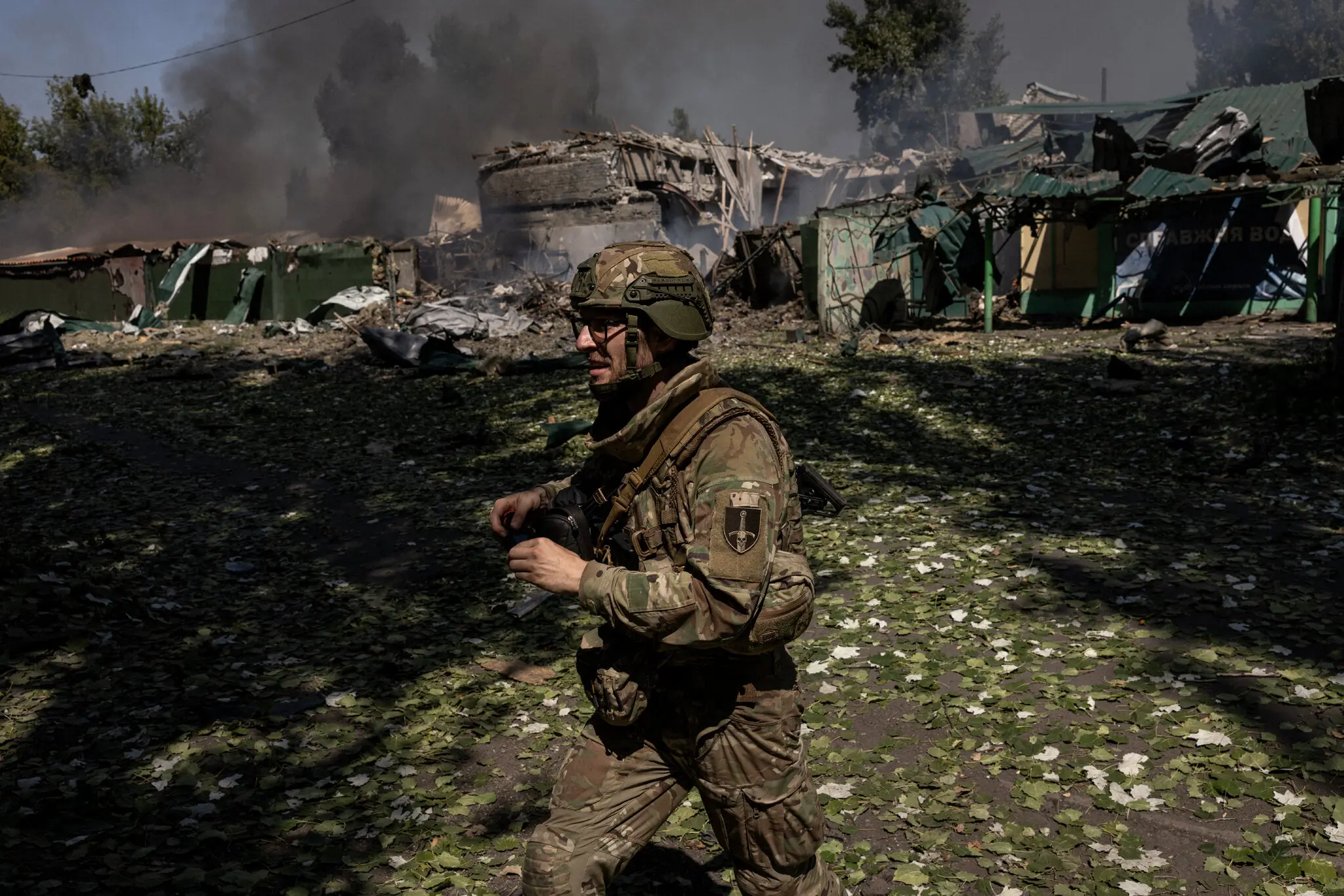

Russia’s military campaign in eastern Ukraine has intensified around the devastated city of Pokrovsk, turning it into the newest focal point of the war. Once a modest railway hub in the Donetsk region, the city has now become a symbolic and strategic battleground as Russian forces push closer to taking what many analysts view as a gateway to Ukraine’s most fiercely contested territory.
After more than a year of near-constant fighting, Pokrovsk has been reduced to ruins. Before the war, roughly 60,000 people lived there; now, fewer than 1,300 remain. Ukrainian defenders say street-by-street battles have become relentless. According to President Volodymyr Zelensky, nearly one-third of all engagements along the 750-mile front line are happening in this area, and half of Russia’s glide-bomb strikes are targeting the city. Those statistics could not be independently verified, but Ukrainian soldiers confirm the scale of combat.

Despite Ukrainian claims of taking back blocks in the city, Russian troops appear to have seized new ground in recent days, especially in southwestern areas. Battlefield maps analyzed by DeepState, a group with connections to the Ukrainian military, show Russian troops tightening their grip while other parts of the city remain heavily contested. The organization bluntly warned that Pokrovsk is being “gradually absorbed” as Russian units continue to reinforce positions.
If Pokrovsk falls, it will be the largest Ukrainian city lost to Moscow since Bakhmut in May 2023. Strategically, it represents one of the last significant defensive points before Russia could push toward Sloviansk and Kramatorsk — key urban centers still under Ukrainian control in Donetsk. Russian President Vladimir Putin has repeatedly expressed his ambition to take the entire region.
A Russian victory in Pokrovsk would also serve a powerful political purpose. It would allow the Kremlin to claim momentum on the battlefield and increase pressure on Ukraine to accept Moscow’s terms for ending the war. Even as former U.S. President Donald Trump has urged an immediate cease-fire, Russia has continued its offensive operations, signaling no interest in halting its advance.
Kyiv, meanwhile, is fighting not only to preserve territory but to protect its geopolitical standing. Ukrainian officials emphasize that special forces are clearing Russian troops block by block. Zelensky personally visited nearby units this week and awarded medals, stressing in a national address that Ukraine is still inflicting losses and intends to maintain control.

From a purely military perspective, however, some analysts argue that Pokrovsk’s fall may not dramatically change the overall balance of forces. Russia’s progress in the region has been slow and costly. Ukrainian commanders say the losses inflicted on Russian troops — which independent research estimates at nearly one million killed or wounded since the war began — undermine Moscow’s broader war effort.
Yet the situation underscores a deeper issue haunting Kyiv: Ukraine’s shortage of soldiers. Officials acknowledge Russian forces significantly outnumber Ukrainian troops in this sector. Zelensky recently revealed that around Pokrovsk, Ukraine has been outmatched eight to one in manpower, forcing defenders to constantly shift units to plug gaps in the line. This has created vulnerabilities, giving Russian troops opportunities to exploit thinly defended areas.
The neighboring town of Myrnohrad could also soon be threatened, DeepState warned, heightening concerns among military officials. Ukrainian commanders on the ground say that if Pokrovsk collapses, surrounding positions may fall soon after.
Civilians are increasingly caught in the danger zone. Pokrovsk sits less than 50 miles from Kramatorsk, and Russian attack drones can now reach both it and neighboring Sloviansk — turning routine errands into life-threatening decisions. Residents describe the ominous hum of drones before they strike suddenly and without warning. Many families are fleeing while they still can.
Both armies continue to grapple with a battlefield transformed by technology and attrition. The front has become a vast kill zone where drones and precision weapons make it dangerous to move even small distances. Tanks and armored vehicles rarely appear, and soldiers are often forced to shelter in underground positions, emerging only briefly to avoid detection.

Russian tactics increasingly involve dispatching small squads — sometimes just pairs of soldiers — to infiltrate Ukrainian lines. These maneuvers, while risky, become harder to detect when the environment offers cover. Winter, however, will soon strip foliage and complicate stealth movements, forcing troops into exposed terrain.
Earlier attempts to encircle Pokrovsk illustrate the high-stakes cat-and-mouse game along the front. In August, Russian units launched a sudden advance near Dobropillia, carving out two narrow spearheads. Ukrainian commanders scrambled elite forces to eliminate the threat, achieving success but leaving other areas vulnerable. Russian soldiers quickly exploited these gaps, slowly pressing forward into Pokrovsk and other contested regions.
As the fight drags on, many Ukrainian troops express frustration that political considerations might delay necessary tactical withdrawals. Past battles — including in Avdiivka and Russia’s Kursk region — have shown the risks of holding positions too long. Some officers warn that if Kyiv insists on defending every inch of territory, it may incur losses it cannot afford.
Inside Pokrovsk, ruined buildings and burned-out vehicles mark the latest stage of the war’s devastating toll. Soldiers describe surreal urban combat where opposing forces can occupy different floors of the same building without realizing it — a grim reminder of how fragmented and unpredictable fighting has become.

Ultimately, the battle for Pokrovsk symbolizes the broader conflict’s direction: a grinding war of attrition where territory changes slowly, yet the human cost rises quickly. For Russia, capturing the city would mark a symbolic victory and bolster its narrative of inevitable progress. For Ukraine, losing Pokrovsk would represent a painful setback but not necessarily a decisive turning point — unless Moscow can leverage momentum to push deeper into the remaining Ukrainian-held strongholds of Donetsk.
As winter approaches and international diplomacy hangs in the balance, the fate of Pokrovsk may shape not only the next chapter of this war but also global perceptions of who holds the upper hand. For now, both sides continue to fight for every street, building, and trench — in a city that has become the latest epicenter of a conflict with no clear end in sight.




Leave a Reply