

In a ruling that has shocked the French political landscape, a Paris court on Thursday declared former President Nicolas Sarkozy guilty of criminal conspiracy, concluding that he sought illegal funding for his 2007 presidential campaign from the regime of Libya’s late strongman, Colonel Muammar el-Qaddafi. The judgment marks an unprecedented moment in modern French history, as no other former president has faced such a severe sentence.
The court handed down a five-year prison term to Mr. Sarkozy, with instructions that the sentence should be enforced in the coming weeks regardless of appeal proceedings. For the once-powerful conservative leader who governed France from 2007 to 2012, this outcome represents a dramatic fall from grace.
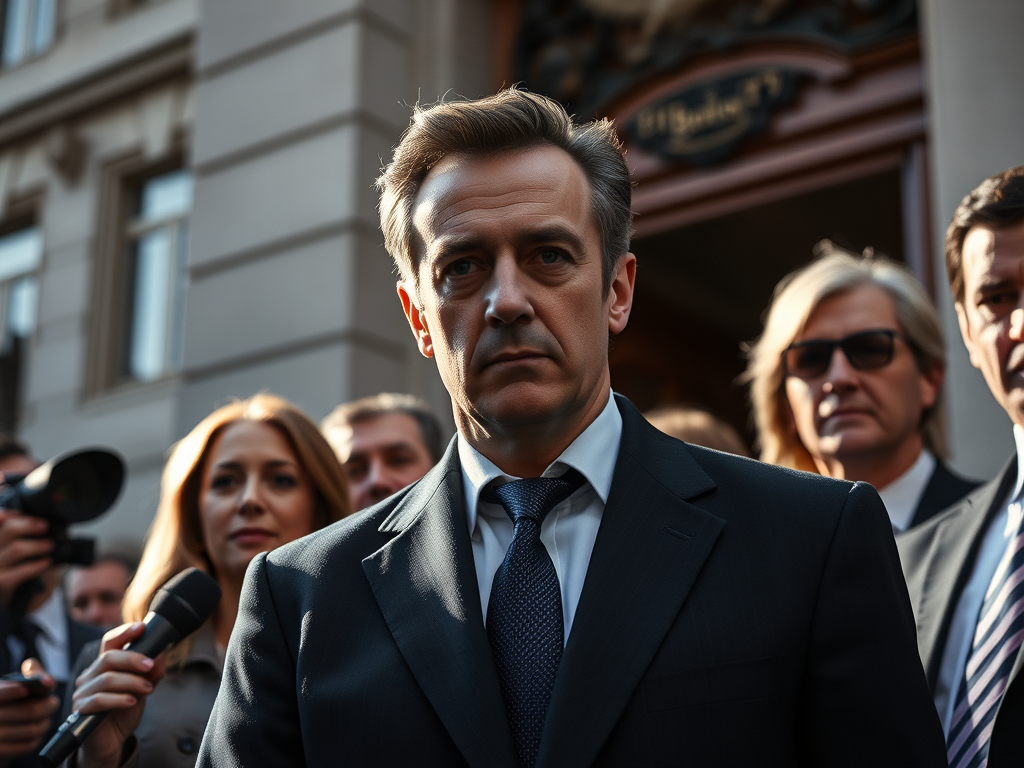
Standing before reporters after the verdict, Sarkozy, flanked by his wife and legal team, spoke defiantly. “If they want me to sleep in prison, I will sleep in prison, but I will do so with my head held high,” he said. He denounced the ruling as a “scandal,” reiterating his long-held position that he has committed no wrongdoing. “Those who hate me may think they have humiliated me,” he declared, “but the ones they have truly humiliated are France and its international image.”
A Shocking Judgment with Historic Weight
The courtroom was stunned as the decision was read. While Sarkozy has faced legal challenges before, this was the most damaging blow yet to his political legacy. Unlike his previous convictions, this case carried the real possibility of prison time—a stark contrast to his years as a powerful figure known for his tough stance on law and order.
The ruling makes Sarkozy the second French head of state since World War II to be convicted of a crime. The first was Jacques Chirac, who in 2011 was found guilty of misusing public funds during his tenure as mayor of Paris. Chirac, however, never served time in prison. Sarkozy, at age 70, now faces the prospect of incarceration, making this case truly without precedent.

The Libyan Connection: A “Faustian Pact”
At the heart of the prosecution’s case was the allegation that Sarkozy entered into what prosecutors described as a “Faustian corruption pact” with Libyan officials. Investigators argued that millions of euros were funneled to Sarkozy’s campaign through cash transfers, offshore accounts, and shell companies, with the expectation that Libya would benefit politically and economically in return.
According to prosecutors, the Libyan regime sought French diplomatic recognition, favorable economic deals, and even potential assistance in dropping an arrest warrant against Abdullah Senoussi, Colonel Qaddafi’s brother-in-law. Senoussi was wanted for orchestrating the 1989 bombing of a French airliner that killed 171 people.
The court also convicted seven other defendants, including two of Sarkozy’s closest allies, Claude Guéant and Brice Hortefeux, both of whom held senior positions when Sarkozy was France’s interior minister from 2005 to 2007. Records revealed that they had traveled to Libya and met with Senoussi in the years leading up to the 2007 election.
Insufficient Evidence of Direct Payments
Despite the sweeping accusations, the court stopped short of ruling that Libyan money had definitively reached Sarkozy’s campaign coffers. Presiding Judge Nathalie Gavarino explained that while evidence showed Libyan funds entered France in 2006, the money trail remained murky. “The path was opaque,” she noted, “and the court found no firm proof that the funds were directly used in Sarkozy’s campaign.”
As a result, Sarkozy was acquitted on charges of illegal campaign financing, concealing the misuse of public money, and passive corruption. Nonetheless, Judge Gavarino emphasized that Sarkozy allowed his closest aides to act on his behalf in seeking Libyan funding, and this was sufficient to establish a criminal conspiracy under French law.
“These acts constitute corruption at the highest levels,” the judge said. “They are extremely serious and undermine the trust of citizens in those who represent them.”
Although prosecutors had sought a seven-year sentence, the court opted for five years, underscoring both the gravity of the offense and the symbolic weight of imprisoning a former head of state.
A Decade-Long Legal Saga
The verdict concludes a legal saga that has stretched for more than a decade, filled with twists and controversy. The investigation began in 2013 after several former Libyan officials claimed Sarkozy’s campaign had received millions in cash from Qaddafi’s government. Sarkozy, who played a central role in the NATO-led military campaign that toppled Qaddafi in 2011, has always argued that the accusations were politically motivated and driven by revenge from Qaddafi loyalists.
His lawyers also pointed to the lack of concrete proof, insisting that no direct evidence of large Libyan transfers ever surfaced during the years of investigation. Still, the court found enough circumstantial evidence to support the charge of conspiracy.
Sarkozy’s Legal Troubles: A Pattern of Convictions
This latest conviction adds to Sarkozy’s growing list of legal problems. In 2021, he was found guilty of attempting to bribe a judge in exchange for confidential information regarding another case against him. That conviction resulted in a one-year house arrest sentence, enforced through an electronic bracelet, which he completed earlier this year.
The same year, Sarkozy was also convicted for overspending during his unsuccessful 2012 re-election campaign, a violation of France’s strict campaign finance laws. That case is still under appeal.
These repeated convictions have eroded Sarkozy’s image as a tough, law-and-order politician and have tarnished his standing within France’s conservative movement, even though he continues to retain influence among certain factions of the right.

Broader Implications for French Politics
The ruling has been hailed by anti-corruption activists as a turning point in French politics. Sandra Cossart, director of the advocacy group Sherpa, which was one of the plaintiffs in the case, described the judgment as both severe and necessary. “It’s a historic decision,” she said. “France has long been accused of leniency toward white-collar crime. This verdict sends a powerful message that even the most powerful figures are not above the law.”
Observers note that the case underscores deep public frustrations with corruption in politics. For many French citizens, the notion that their president could have sought money from a foreign authoritarian regime raises troubling questions about the integrity of the country’s democratic system.
The Road Ahead
While Sarkozy has vowed to appeal the ruling, legal experts say the chances of overturning the conviction remain slim. French courts typically move quickly to enforce sentences in cases of corruption, and the precedent set by this ruling suggests that Sarkozy may indeed face time in prison—an outcome once considered unthinkable for a French president.
The case also leaves an indelible mark on Sarkozy’s legacy. Once celebrated as a reformer and global statesman, he will now be remembered as the first French leader likely to serve time behind bars. His downfall serves as a stark reminder of how political ambition, unchecked power, and questionable alliances can reshape history.




Leave a Reply