

When American diplomat Robert S. Ford sat across from Syrian rebel leader Abu Mohammed al-Jolani in 2023, he could hardly have imagined the twist of history that would soon unfold. Their conversation was surprisingly calm, even reflective, given that they had once fought on opposing sides of two Middle Eastern wars.
The man Ford knew as al-Jolani reminisced about the early 2000s, when as a young fighter he had targeted the Baghdad compound where Ford and other U.S. officials lived during the aftermath of the Iraq invasion. Ford, recalling his time as U.S. ambassador to Syria in 2012, reminded his counterpart that he had been forced to shut down the embassy in Damascus, fearing attacks from the same Al Qaeda-linked faction.

At the time of their meeting, al-Jolani spoke confidently about his ambitions: capturing Damascus and ruling Syria. Ford admitted later that he dismissed the claim as far-fetched. Yet by December of that year, the unimaginable had happened.
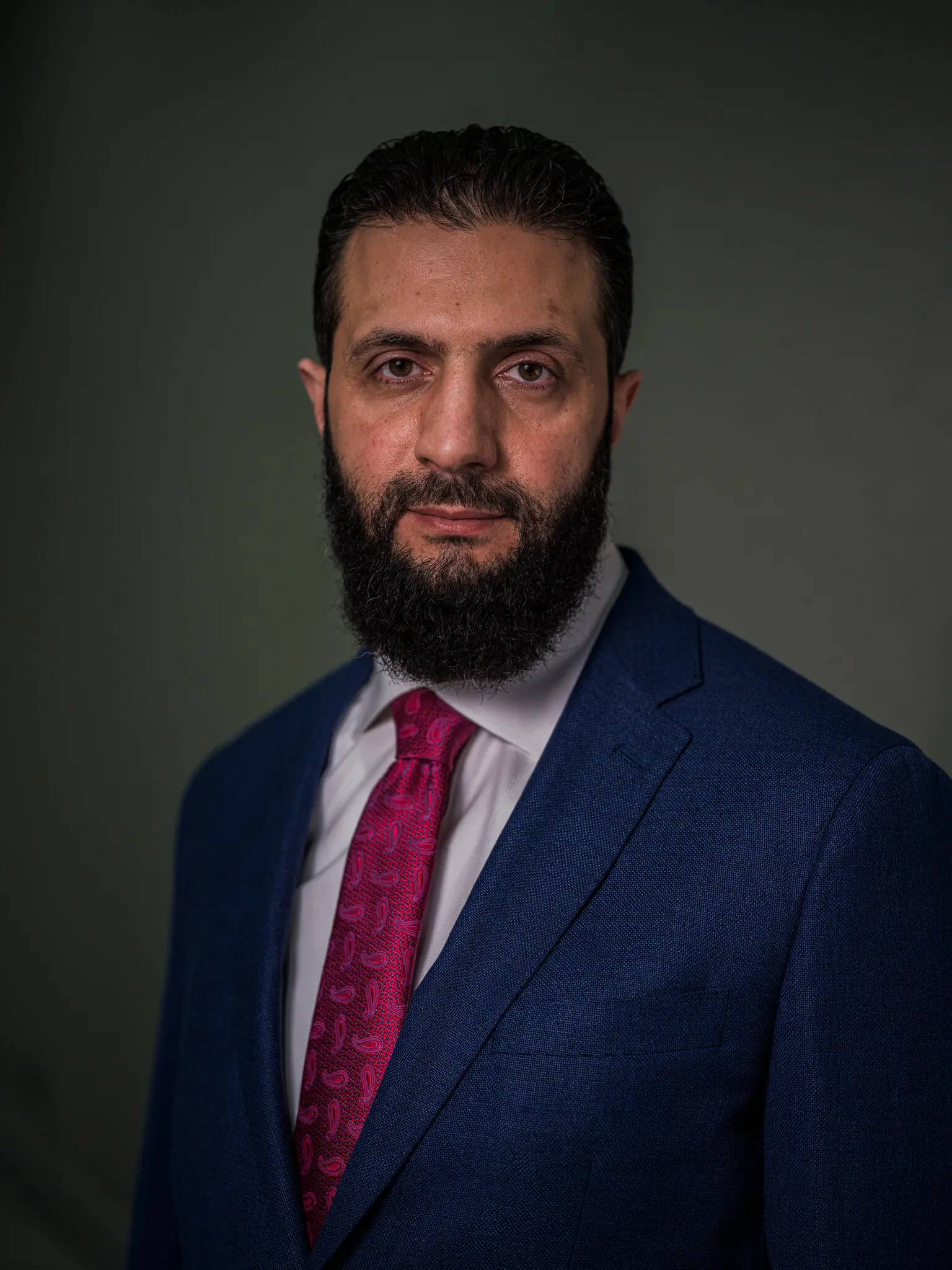
Abu Mohammed al-Jolani shed his militant persona, emerged under his real name, Ahmed al-Shara, and successfully led an offensive that toppled President Bashar al-Assad. He quickly traded his fatigues for suits, presenting himself as the new face of Syria. On Wednesday, al-Shara is expected to become the first Syrian leader in nearly six decades to address the United Nations General Assembly — a stunning development for a man still formally listed as a terrorist by both Washington and the U.N.

A Shape-Shifting Political Survivor
To many observers, al-Shara is less an Islamist firebrand than a calculating opportunist, intent on consolidating power at any cost. Robert Ford described him as “a power seeker” who evolved from jihadist insurgent into pragmatic politician.
Interviews with over 70 individuals who encountered him throughout his rise depict a man of unusual adaptability. At various stages, he aligned himself with Al Qaeda in Iraq, established a Syrian affiliate of the group, and later reinvented himself as a nationalist rebel leader advocating reconciliation. This flexibility has left many wondering what he truly believes — ideology, survival, or simple ambition.
Al-Shara’s trajectory is full of contradictions. He once pledged allegiance to global jihadist leaders and used suicide bombings to spread terror. Years later, he apologized to Christian leaders in Syria and returned confiscated property. He cultivated ties with Turkey, sought dialogue with the West, and even hinted at peaceful coexistence with Israel. Yet his rule has also been marked by violent crackdowns, sectarian clashes, and allegations of human rights abuses committed by his forces.
From Damascus Classroom to Iraqi Prison
Born in 1982 to a middle-class Syrian family living in Saudi Arabia, Ahmed al-Shara grew up in Damascus after his parents returned home. His father was an economist and his mother a teacher. Childhood acquaintances remember him as quiet and studious, with little sign of extremism.
By his teenage years, however, he had embraced a more devout lifestyle, dressing in traditional Islamic garb. Then, around 2003, he vanished. Unbeknownst to his neighbors, he had slipped into Iraq as U.S. forces prepared for invasion.
There, he linked up with jihadist insurgents and eventually found himself in American custody in Mosul. Detained under the alias Amjad Mudhafar, he concealed his Syrian origins so effectively that Iraqi records treated him as a local recruit. Released in 2011 due to lack of charges, he returned home just as the Arab Spring protests ignited Syria’s civil war.

Building a Rebel Power Base
With funds and guidance from Abu Bakr al-Baghdadi, who would later lead ISIS, al-Shara launched the Nusra Front, Syria’s Al Qaeda affiliate. The group made its mark with deadly bombings in major cities, introducing jihadist extremism into what had begun as a popular uprising against Assad.
While ISIS pushed for a global holy war, al-Shara focused on Syria, aligning instead with Al Qaeda’s central leadership. His forces gained dominance in Idlib Province, where they imposed strict religious laws and suppressed minorities. Human rights activists documented executions, kidnappings, and the seizure of Christian property.
But by the mid-2010s, al-Shara began recalibrating his image. He sought reconciliation with religious minorities, halted suicide attacks, and emphasized Syrian nationalism over transnational jihad. This shift won him quiet backing from Turkey, which saw him as a stabilizing partner in the war-torn north.
Rebranding as a Statesman
In 2016, al-Shara unveiled his face publicly for the first time, declaring a break from Al Qaeda and forming Hayat Tahrir al-Sham (HTS). Over the next several years, HTS became the dominant rebel force, ultimately driving Assad from power. During this time, al-Shara allowed limited civilian governance in Idlib, invited researchers and NGOs to observe, and quietly built channels of communication with Western officials.
His evolving strategy attracted foreign interest. Jonathan Powell, now the UK’s national security adviser, met with him through a conflict resolution initiative. Robert Ford returned to Syria and was struck by al-Shara’s confidence that he would soon reach Damascus — a claim that, at the time, seemed improbable.
By late 2023, however, the improbable had become reality. Assad was ousted, and al-Shara declared himself Syria’s new leader.

Challenges of Power
Now seated at the helm of a fractured nation, al-Shara faces daunting challenges. Sectarian tensions remain raw, and his own security forces stand accused of fresh atrocities. Critics argue that he has centralized authority around himself and a small circle of loyalists, raising fears that Syria may simply be trading one authoritarian ruler for another.
Al-Shara insists that his past prepared him uniquely for this moment. Speaking to journalists in Damascus, he argued that his experiences — from underground militancy to surviving years in Iraqi prisons — gave him the resilience to defeat Assad when no one else could.
Supporters, including some Western officials, cautiously view him as a potential stabilizer for a region still reeling from over a decade of bloodshed. Others, however, question whether his moderation is genuine or merely tactical.
A Balancing Act on the Global Stage
Al-Shara’s appearance at the U.N. General Assembly represents both an opportunity and a risk. For the first time in nearly 60 years, Syria will be represented not by the Assad dynasty but by a leader once branded a terrorist.
In recent months, U.S. officials — including President Trump — have expressed guarded optimism, even lifting certain sanctions in hopes of encouraging further reform. Yet outbreaks of violence across Syria suggest that extremist elements within al-Shara’s own ranks may still hold sway.
Observers warn that if he cannot restrain these forces, Syria risks slipping back into civil war. Iraqi politician Ezzat Alshabandar, a longtime acquaintance, described al-Shara’s dilemma bluntly: “Maybe I have no control over the palace that I’m in,” al-Shara allegedly admitted to him.

Looking Ahead
Ahmed al-Shara’s rise from obscure student to militant, from prisoner to president, is one of the most extraordinary political transformations in modern Middle Eastern history. His story underscores the volatility of a region where yesterday’s insurgent can become today’s head of state.
Whether he will steer Syria toward stability or perpetuate authoritarian rule remains an open question. What is clear is that the world will be watching closely as al-Shara steps onto the U.N. stage — no longer a shadowy jihadist, but the international face of a country struggling to rebuild from the ashes of war.




Leave a Reply