
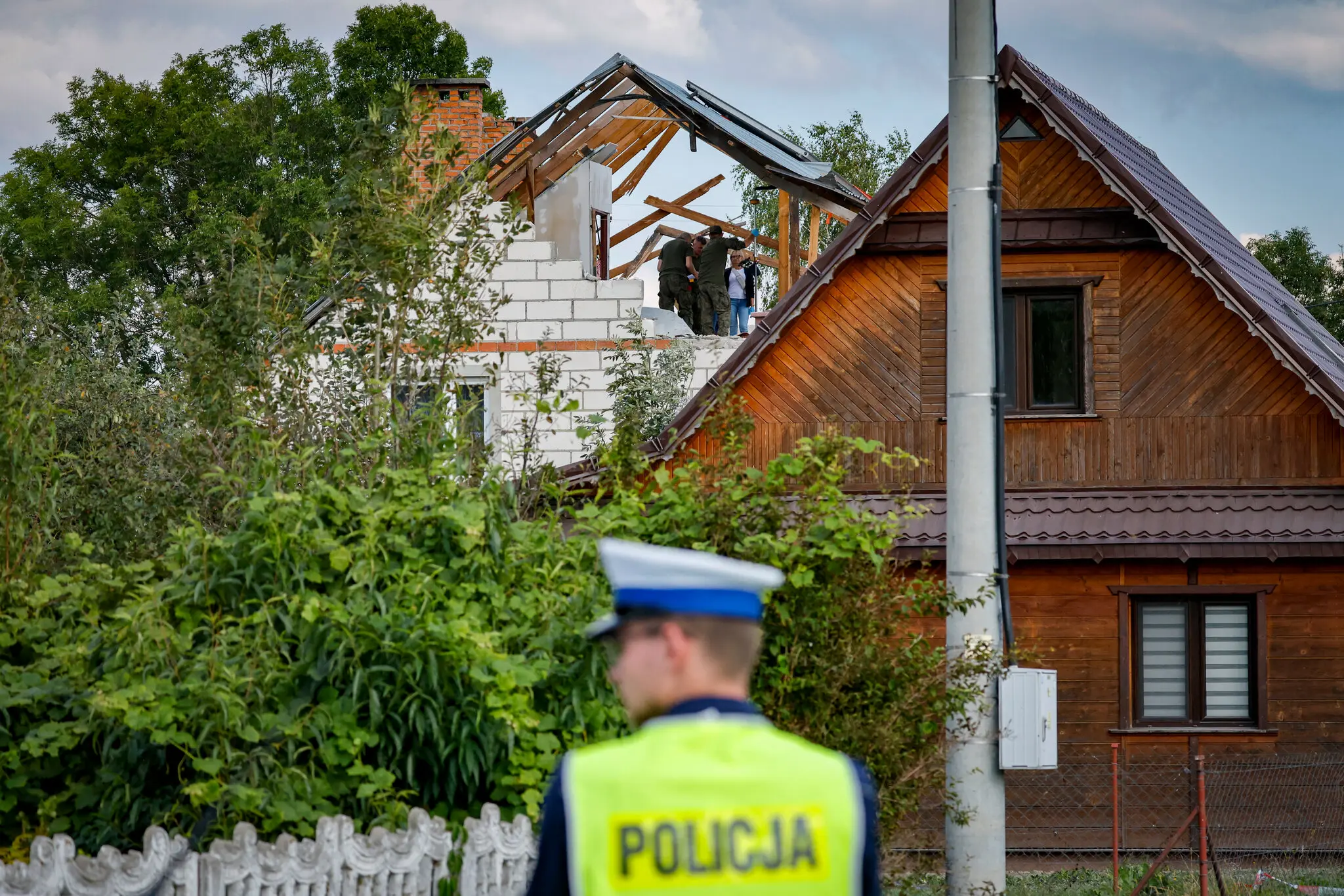

Over the past month, Russia has steadily raised the stakes in its war against Ukraine, striking targets of increasing sensitivity and even extending its reach beyond Ukrainian borders. What began with attacks on factories and government buildings has now escalated to Russian drones breaching Polish airspace—a development that marks the first direct engagement between NATO forces and Russian weaponry since the invasion began in 2022.
This shift in Moscow’s tactics underscores a dangerous trend: rather than launching a sudden large-scale assault, Russia is gradually crossing Western red lines, testing responses while maintaining plausible deniability. Ukrainian officials and Western analysts say this slow escalation strategy allows Moscow to avoid immediate retaliation, while steadily expanding the boundaries of its aggression.
A Pattern of Escalation
In recent weeks, the targets of Russian strikes have grown steadily more provocative. A U.S.-owned factory in western Ukraine—primarily manufacturing coffee machines—was badly damaged, though Russian officials implied it could have served dual military purposes. Soon after, missiles hit close to the offices of the European Union and the British Council in Kyiv, shattering windows and scattering shrapnel, though not directly hitting the diplomatic compounds. Days later, a missile struck Ukraine’s Cabinet of Ministers building, an attack that Ukrainian officials say was intentional, despite initial speculation that the strike may have gone off course.
And then came Poland. In a bold escalation, Russian drones entered NATO territory during a wider assault on Ukrainian cities. NATO scrambled fighter jets to intercept and destroy the drones, marking the first instance of direct military engagement between the alliance and Russian drones since the conflict began.
Despite the severity of these actions, responses from the United States and European capitals have been limited to strongly worded condemnations. Analysts warn that the lack of concrete consequences risks reinforcing the Kremlin’s perception of impunity.
Warnings from Kyiv and Brussels
Ukraine’s foreign minister Andrii Sybiha bluntly described the incident: “Russian drones flying into Poland during the massive attack on Ukraine show that Putin’s sense of impunity keeps growing. He was not properly punished for his previous crimes.”
European officials echo this concern. Katarina Mathernova, the European Union’s ambassador to Ukraine, noted that Russia has faced no meaningful repercussions for its continued escalation. Speaking from her Kyiv office—still bearing damage from a recent strike—she argued that President Vladimir Putin is “emboldened” by the lack of decisive pushback.
Indeed, analysts suggest that Russia, constrained by the limits of its conventional military capabilities, is relying on symbolic and psychological moves to maintain pressure. Drone incursions into NATO territory, missile strikes near Western diplomatic facilities, and attacks on Ukrainian government buildings all send a calculated message: Russia is willing to test red lines, but it prefers to do so in ways that leave room for ambiguity.
Russia’s Strategy of Plausible Deniability
This reliance on ambiguity is nothing new. Since the early days of its military interventions, Russia has consistently used strategies of misdirection, disguise, and denial to confuse adversaries and buy time. When Russian forces seized Crimea in 2014, they did so with masked soldiers in unmarked uniforms, later dubbed “little green men.” The uncertainty over their identity delayed Western responses and allowed Moscow to consolidate control.
This playbook has been deployed repeatedly over decades. During the Prague Spring in 1968, the invasion of Afghanistan, the Chechen wars, and the Syrian intervention in 2015, Russia disguised or downplayed its involvement. Humanitarian missions, peacekeeping operations, and denials of responsibility have often served as cover stories until Moscow was ready to admit its role.

The current war in Ukraine is no different. After drones crossed into Poland, Belarus—Russia’s closest ally—issued a statement suggesting the aircraft had strayed across the border by accident. Meanwhile, Russian diplomats quickly shifted blame, with Andrey Ordash, chargé d’affaires at the Russian Embassy in Poland, telling state media: “We know one thing, these drones flew from Ukraine.”
For Western observers, these denials are predictable. As Polish Deputy Prime Minister Radoslaw Sikorski remarked: “Lies and denials are default Soviet responses.”
NATO’s Dilemma
The incursion into Poland has reignited questions about how NATO should respond if Russia continues to push boundaries. While the alliance has consistently supported Ukraine with financial aid, weapons, and training, it has so far sought to avoid direct confrontation with Moscow. The drone incident challenges this strategy by forcing NATO into a limited but tangible engagement.
NATO allies must now weigh their next moves carefully. Should the alliance treat the drone incursion as an accident and avoid escalation? Or should it establish firmer consequences to deter further Russian provocations?
So far, the pattern has been cautious escalation on both sides. Western governments have gradually provided Ukraine with more advanced weapons—such as long-range missiles—initially under strict conditions that they not be used against Russian territory. Over time, those restrictions have eased, with limited strikes inside Russia now permitted.
The result is a dangerous game of incremental moves, where both sides carefully test each other’s red lines without triggering a full-scale confrontation.

The “Escalate to De-escalate” Approach
Ukrainian officials believe Moscow’s provocations may also serve a broader diplomatic purpose. According to an adviser to Ukraine’s presidential office, who spoke anonymously, the Kremlin could be pursuing an “escalate to de-escalate” strategy. By raising tensions—such as by sending drones into Poland—Russia creates leverage for future negotiations.
Under this approach, Moscow could later offer assurances against similar incidents as a bargaining chip in peace talks, framing restraint as a concession while still maintaining its military pressure on Ukraine.
The Road Ahead
Russia’s gradual erosion of red lines presents a growing challenge for the West. Each attack on sensitive targets—whether a U.S.-owned factory, European diplomatic buildings, Ukrainian government offices, or NATO airspace—tests the limits of Western patience and resolve. Without concrete consequences, Moscow is likely to continue probing, confident that ambiguity and denial will shield it from severe retaliation.

For NATO and its allies, the risk is clear. Failing to respond decisively could embolden Russia further, encouraging even riskier moves in the future. Yet responding too forcefully risks escalation into a broader conflict that the alliance has long sought to avoid.
What remains certain is that Russia’s strategy of gradual escalation and plausible deniability has put Europe in a precarious position. The drone incursions into Poland have exposed vulnerabilities that Moscow is eager to exploit, while Kyiv continues to demand stronger action to hold Russia accountable.
As the war grinds on, the question for NATO is no longer whether Russia will test its resolve, but how far it is willing to go—and whether the alliance is prepared to meet that challenge head-on.




Leave a Reply