
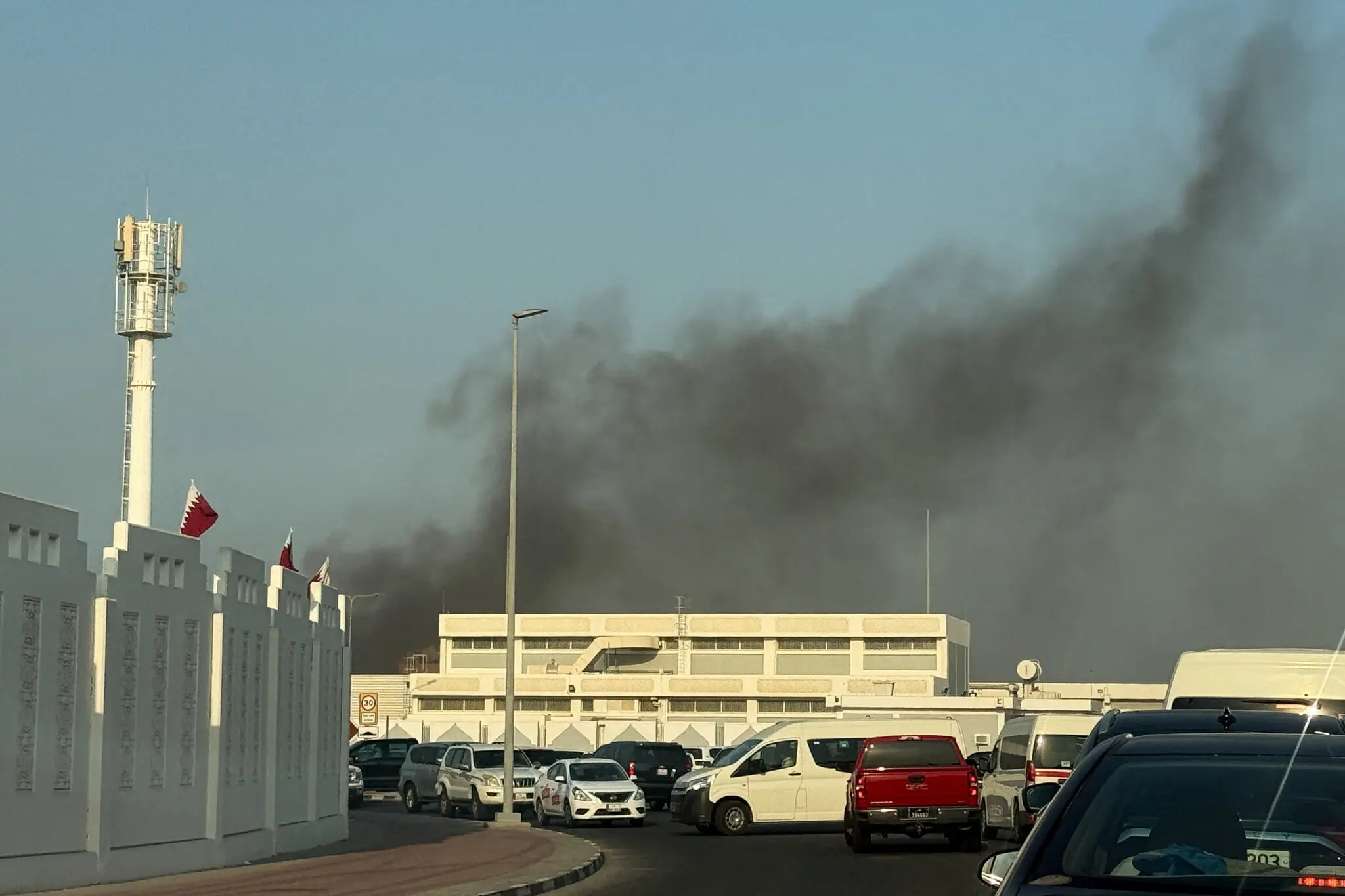
On Tuesday, Israel carried out a high-profile airstrike in Doha, Qatar, targeting senior Hamas officials in what has been described as one of the most dramatic escalations of the Gaza war so far. The strike took place just as Hamas leaders were reportedly holding talks over a potential cease-fire proposal backed by U.S. President Donald Trump.
The decision to attack inside Qatar — a key U.S. ally and mediator in the conflict — shocked the region and threatened to destabilize diplomatic negotiations that had been underway for weeks. Qatar, often viewed as a safe political hub in the Persian Gulf and a major center for international business and tourism, suddenly found itself at the center of the war’s most dangerous turn.
The Strike and Its Immediate Impact
Witnesses in Doha reported seeing plumes of black smoke rising into the sky near schools and foreign embassies after the Israeli Air Force launched its strike. According to Hamas, the operation failed to eliminate the top leaders Israel was targeting, though the son of Khalil al-Hayya, Hamas’s chief negotiator, was killed, along with his office manager and several other Hamas affiliates.
Qatar’s Interior Ministry later confirmed that the attack also killed a member of the country’s internal security forces and injured multiple civilians. The incident marked the first time Israel had directly attacked Qatari territory, a move that risks undermining the Gulf nation’s longstanding role as a mediator between Israel, Hamas, and international powers.
Qatar’s Response
Prime Minister Sheikh Mohammed bin Abdulrahman condemned the strike as a “barbaric action” and warned that the entire region must take notice of the escalation. He stated that while Qatar would continue to act as a mediator in the conflict, his government had already formed a legal team to consider options for a formal response against Israel.
“We are at a decisive moment,” Sheikh Mohammed declared. “The international community must take a stand against these violations of sovereignty and against actions that sabotage every attempt to create opportunities for peace.”
The Qatari prime minister also claimed that the United States had not informed Doha about the strike until ten minutes after it had occurred — a detail that further complicated Washington’s already strained position in the conflict.
Trump’s Contradictory Statements
President Trump issued conflicting accounts about when his administration became aware of the Israeli strike. On social media, he claimed that U.S. military officials had informed him Israel was planning to hit Hamas officials in Qatar and that the decision was made by Israeli Prime Minister Benjamin Netanyahu without U.S. involvement.
Trump said he had directed his Middle East envoy, Steve Witkoff, to warn Qatari officials of the impending strike, but admitted the message came “too late” to prevent casualties. Later, however, Trump told reporters that he had not been briefed ahead of the attack at all.
“I view Qatar as a strong ally and a friend of the United States,” Trump wrote online. “I feel deeply saddened by the attack’s location. I want all hostages released, the dead returned, and for this war to end immediately.”
Hamas and Israel’s Uncompromising Positions
Hamas confirmed that its officials were discussing Trump’s cease-fire proposal when the strike occurred. The group vowed that the attempt to assassinate its leaders would not alter its negotiating stance. Hamas continues to demand a full Israeli withdrawal from Gaza, unrestricted humanitarian aid, and an exchange of hostages for Palestinian prisoners.
Israel, on the other hand, has insisted that the war will not end until Hamas releases all hostages, disarms completely, and Gaza is demilitarized. These conditions remain unacceptable to Hamas, leaving negotiations at a standstill.
For months, Israeli leaders have publicly declared their intent to eliminate Hamas officials wherever they may be located, not only in Gaza. Lt. Gen. Eyal Zamir, Israel’s military chief, recently told troops that Israel was operating “across the entire Middle East” to ensure that Hamas leaders had no safe haven.

Regional and Global Reactions
The decision to strike within Qatar rattled governments across the Gulf and beyond. Qatar had long been viewed as neutral ground because it maintains relations with both Israel and Hamas. The emirate had hosted senior Hamas officials at the request of the United States to facilitate dialogue, and it also provides a base for thousands of American soldiers at Al Udeid Air Base.
United Nations Secretary General António Guterres condemned the strike as a “flagrant violation of Qatar’s sovereignty” and urged all parties to work toward a permanent cease-fire rather than actions that threaten diplomacy.
The United Arab Emirates, which normalized relations with Israel in 2020 as part of the Abraham Accords, issued a statement denouncing the airstrike as an “irresponsible escalation that endangers regional and international security.”
Analysts warned that the strike risks unraveling Israel’s years-long effort to build diplomatic and economic ties with Gulf Arab states. According to Ghaith al-Omari of the Washington Institute for Near East Policy, “The entire diplomatic structure built since the October 7 attacks has collapsed. Israel’s willingness to attack in Doha reinforces the perception that it is becoming a destabilizing force in the region.”
U.S. Credibility in Question
Perhaps the most significant fallout is the blow to U.S. credibility in the Gulf. Despite being Israel’s closest ally and primary arms supplier, Washington appeared unable to prevent the strike or even adequately warn Qatar in time.
Bader Al-Saif, a professor at Kuwait University, said the United States risked looking “either unwilling or unable” to control Israeli actions. “The biggest loser in this crisis is the U.S.,” he explained. “Its role as the Gulf’s security guarantor is being undermined.”

The Future of Peace Talks
Hamas leaders had met with the Qatari prime minister just a day before the strike to discuss Trump’s cease-fire plan. According to Qatari officials, Tuesday’s meeting was intended to refine the group’s response. Instead, the airstrike turned the session into a deadly confrontation and further entrenched the positions of both sides.
In a defiant statement, Hamas called the strike a “cowardly assassination attempt” and said it would not deter the group from its demands. Israeli officials, meanwhile, claimed that the operation — code-named “Judgment Day” — was a purely independent mission. Netanyahu’s office stressed that “Israel initiated, conducted, and takes full responsibility” for the attack.
Broader Implications
The strike’s significance extends far beyond the immediate casualties. By targeting Hamas leaders on Qatari soil, Israel has effectively shifted the battlefield into one of the most politically sensitive capitals in the world. This raises concerns about whether Qatar and other Gulf states could be drawn more directly into the conflict.
The attack also underscored the vulnerability of Gulf nations, even those with significant U.S. military protection. Qatar has invested heavily in advanced defense systems and hosts the largest U.S. base in the region, yet it still could not prevent a direct strike in its capital.
For Israel, the gamble may yield short-term tactical advantages but at the cost of diplomatic isolation. For Hamas, the strike may rally sympathy among Palestinians and some Arab nations, but it does little to change the military imbalance on the ground in Gaza. For the U.S., the episode raises tough questions about its influence, reliability, and strategic direction in the Middle East.
Conclusion
The Israeli strike in Qatar represents far more than just another battlefield maneuver in the Gaza war. It challenges the diplomatic framework that has underpinned negotiations, tests the resilience of U.S.-Qatari relations, and risks destabilizing a Gulf region already on edge.
As international pressure mounts, the path forward looks increasingly uncertain. Without trust between mediators and combatants, efforts to achieve a cease-fire could collapse entirely, leaving the Middle East on the brink of wider confrontation.




Leave a Reply