

For decades, American intelligence and private companies have accused China of penetrating U.S. networks, stealing intellectual property, and siphoning off sensitive data ranging from advanced chip blueprints to military research. These intrusions, once considered sporadic and opportunistic, have now escalated into a coordinated campaign with global reach.
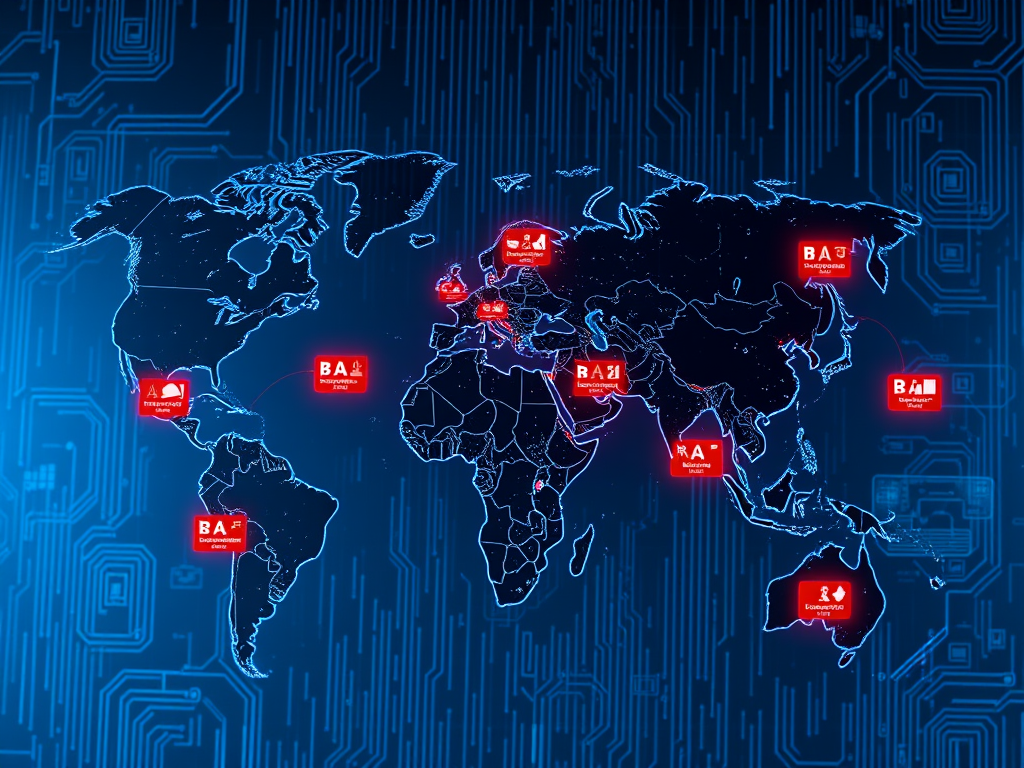
A massive cyber operation, attributed to a Chinese state-backed hacking collective known as Salt Typhoon, is being described by Western officials and cybersecurity analysts as Beijing’s most ambitious offensive to date. After a year-long investigation, experts revealed that the hackers successfully infiltrated the networks of more than 80 countries, extracting vast amounts of information that may have affected nearly every American citizen in some way. Officials say the scale of the campaign demonstrates that China’s cyber capabilities now rival, and in some cases surpass, those of the United States and its closest allies.
A Campaign of Global Proportions
According to a rare joint statement issued by multiple governments, Salt Typhoon orchestrated a multi-year, highly sophisticated operation aimed at breaching the backbone of global communications. Investigators discovered that the attackers infiltrated major telecommunications providers, transportation systems, government agencies, lodging networks, and even elements of military infrastructure.
Western security officials stressed that this was not a typical hack seeking trade secrets or classified files. Instead, the hackers embedded themselves deeply into digital infrastructure, gaining the ability to monitor conversations, track movements, and collect real-time intelligence on political leaders, activists, diplomats, and intelligence personnel.
British and American authorities characterized the operation as “unrestrained” and “indiscriminate,” underscoring how little effort the hackers made to avoid sweeping up the private data of ordinary people. Canada, Finland, Germany, Italy, Japan, and Spain also endorsed the statement, a coordinated diplomatic rebuke intended to publicly shame Beijing for sponsoring the operation.

The Unprecedented Scope of Salt Typhoon
Cynthia Kaiser, a former senior FBI cyber official who oversaw counterintelligence operations, explained that the breadth of the Salt Typhoon campaign left few Americans untouched. “Given how vast this campaign was, I can’t imagine any American’s data was spared,” she said. While earlier Chinese cyberattacks tended to focus on narrowly defined targets such as defense contractors or individuals tied to national security, Salt Typhoon appeared to cast a much wider net.
Investigators remain uncertain whether the group deliberately sought the personal data of millions of civilians or whether such information was incidentally captured as part of the broader espionage effort. Regardless, the volume of compromised information represents a sharp departure from Beijing’s previous digital strategies.
A New Era in Chinese Cyber Power
Jennifer Ewbank, former deputy director for digital innovation at the CIA, framed Salt Typhoon as a turning point. A decade ago, Western governments worried primarily about Chinese theft of trade secrets, corporate blueprints, or government personnel records. Those operations, while serious, often relied on relatively unsophisticated methods.
Now, Ewbank warned, Beijing’s cyber campaigns have evolved into patient, stealthy, and highly technical operations that can remain hidden for years within the critical infrastructure of dozens of nations. “What we are seeing now is a state-backed campaign with enormous persistence and technical depth,” she noted. “Salt Typhoon marks a new chapter in how China projects influence through cyberspace.”
The timing of the revelations is significant. On the same day that the joint statement was issued, China staged a grand military parade in Beijing, showcasing fighter jets, tanks, and thousands of soldiers marching through Tiananmen Square. To many observers, the event underscored China’s parallel ambitions: expanding its conventional military power while simultaneously building dominance in the digital domain.

The Mechanics Behind the Attack
Investigators traced the Salt Typhoon intrusion back to at least three Chinese technology firms, each with ties to the country’s military and civilian intelligence agencies. Although these companies have operated since at least 2019, the coordinated operation was only uncovered last year. The hackers reportedly exploited outdated vulnerabilities in telecommunications systems, some of which had remained unpatched for years, enabling them to compromise U.S. telecom providers, hotel chains, and transportation networks.
Western intelligence agencies warned that the hackers had gained the ability to monitor sensitive communications, including phone calls and text messages sent by senior politicians. Among the alleged targets were the mobile devices of Donald Trump and Vice President JD Vance during their campaign trail, as well as communications linked to Democratic leaders.
Senator Mark Warner, chair of the Senate Intelligence Committee, confirmed that the attackers were capable of listening in on calls and intercepting unencrypted text messages, raising concerns about the vulnerability of American political institutions to foreign surveillance.
Building on Past Precedents
Experts argue that Salt Typhoon is the culmination of years of Chinese data collection. Jamie MacColl, a cybersecurity researcher with the Royal United Services Institute, said Beijing has long been amassing massive databases of personal information, waiting for the moment to fully weaponize that data. “If you’re striving to be a dominant cyber power, it’s only logical to compromise the world’s communications systems,” he explained.
This strategy is not without precedent. In the past decade, Chinese hackers have been linked to high-profile breaches of Marriott International, several American health insurers, and even the U.S. Office of Personnel Management, which stored sensitive files on government employees with security clearances. In 2021, the Biden administration accused China of breaching widely used Microsoft Exchange email systems, a move that affected thousands of organizations worldwide.
Other powers, including Russia, have also engaged in large-scale hacking campaigns. Still, Western officials argue that Salt Typhoon stands out for its global reach, technical sophistication, and clear alignment with China’s long-term geopolitical ambitions.

Implications for the Future
Anne Neuberger, the White House’s deputy national security adviser for cyber and emerging technology, summarized the implications in Foreign Affairs. She warned that Salt Typhoon should not be seen as an isolated event but rather as part of China’s broader strategy to dominate the digital battlefield of the future.
“This wasn’t just a one-time intelligence success,” Neuberger wrote. “It reflected a deeper reality: China is positioning itself to exert control over the digital infrastructure that underpins global communication.”
As governments and companies scramble to patch vulnerabilities and defend against similar intrusions, the Salt Typhoon operation has become a case study in how cyber warfare is reshaping international relations. The hack illustrates that digital espionage is no longer confined to stealing secrets—it is about gaining systemic control, the ability to monitor adversaries continuously, and the leverage to disrupt or manipulate global communication flows at will.
Conclusion
The Salt Typhoon cyberattack represents far more than another data breach. It underscores how China’s cyber capabilities have matured into a formidable strategic weapon capable of undermining the security of dozens of nations simultaneously. By embedding themselves in the infrastructure that powers modern life, Chinese state-sponsored hackers demonstrated both technical prowess and long-term strategic vision.
For the United States and its allies, the challenge now is not just repairing the damage but rethinking how to safeguard critical networks in an era where cyber operations are a primary instrument of state power. The revelations about Salt Typhoon have made one fact clear: the future of international competition will not only be fought with tanks, ships, and missiles but also within the invisible realm of code, networks, and digital infrastructure.




Leave a Reply