
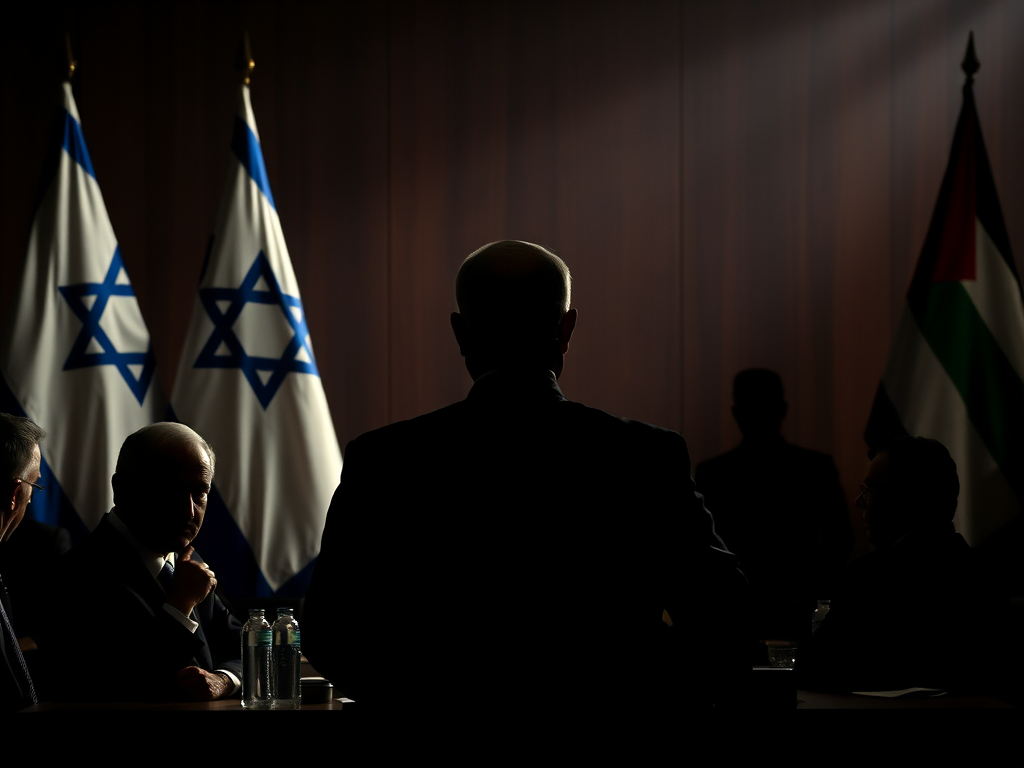

A new cease-fire proposal between Israel and Hamas has reignited fierce debate inside Prime Minister Benjamin Netanyahu’s fragile governing coalition, exposing deep divisions over whether a limited truce is a necessary step toward ending the war or a dangerous concession that could empower Hamas.
The deal, brokered by Egyptian and Qatari mediators, envisions the release of some Israeli hostages still held in Gaza in exchange for Palestinian prisoners. Hamas announced on Monday that it had accepted the terms, raising cautious hopes of progress in negotiations. Yet in Israel, the proposal has triggered a political storm. Right-wing members of Netanyahu’s coalition have denounced the plan, accusing the prime minister of betraying his own pledge to push deeper into Gaza City and eliminate Hamas militarily.
Resistance From Netanyahu’s Right-Wing Allies
Hard-line lawmakers and ministers close to Netanyahu immediately signaled their opposition. Moshe Saadeh, a parliament member from the prime minister’s Likud party, described the arrangement as both a “moral folly” and a “serious strategic mistake,” warning that partial compromises would only serve to strengthen Hamas.
National Security Minister Itamar Ben Gvir echoed this sentiment, declaring that Netanyahu had “no mandate” to pursue what he labeled a weak and incomplete truce. Finance Minister Bezalel Smotrich went further, denouncing the agreement as a retreat that “abandons half of the hostages” and risks halting the war in what he called “a posture of defeat.”
Both Ben Gvir and Smotrich lead influential factions whose support is critical to Netanyahu’s political survival. Their rejection highlights the precarious balance Netanyahu faces—if he moves forward with even a partial cease-fire, his coalition could fracture, leaving his government vulnerable.
Why It’s Called a “Partial Deal”

The current proposal has been widely described, both by Israelis and Palestinians, as a “partial deal.” It does not settle the broader questions that lie at the heart of the conflict. The plan envisions a temporary truce but does not guarantee the release of all hostages nor an end to the war. Instead, those issues would theoretically be addressed in a second stage of negotiations.
Hamas has indicated willingness to eventually free all hostages but insists that Israel must commit to ending the war entirely. Netanyahu, however, has demanded Hamas’s disarmament as a prerequisite—something the group has firmly rejected. This gap, analysts say, makes a comprehensive agreement unlikely for now, leaving incremental arrangements as the only realistic option.
Terms of the Agreement
According to officials familiar with the talks, the terms Hamas approved mirror elements of earlier proposals Israel had previously considered. They involve a limited cease-fire period paired with a framework that could potentially pave the way toward a broader resolution.
So far, Netanyahu has not publicly clarified his stance on the newly revised offer. In recent weeks, he has suggested that Israel was no longer interested in deals involving the release of only a fraction of the hostages, raising questions about whether he can accept the current structure without contradicting himself.
The Role of the United States
International players, especially the United States, have also tried to mediate. In July, former President Donald Trump claimed Israel had agreed to conditions for a 60-day cease-fire. That plan called for the release of ten living hostages along with the return of the bodies of 18 others, in exchange for Palestinian prisoners. However, those talks ultimately collapsed, demonstrating how fragile and politically charged the process has become.
More recently, Steve Witkoff, Trump’s envoy for peace missions, reportedly told families of Israeli hostages that the U.S. now supports an “all or nothing” approach—meaning all surviving captives should be freed at once. “No piecemeal deals,” Witkoff said in remarks later published by Israeli media. “Everybody comes home.” His comments underscored Washington’s shifting strategy, though practical challenges remain.

Human Cost of the Conflict
As the war approaches its third year, the humanitarian toll continues to mount on both sides. The conflict began on October 7, 2023, when Hamas launched a deadly attack that left 1,200 people dead and resulted in the abduction of 251 others, according to Israeli authorities.
Since then, Gaza’s health ministry reports that over 60,000 Palestinians have been killed, though the figures do not distinguish between civilians and fighters. The staggering casualty numbers have fueled international calls for de-escalation, increasing the urgency for mediators to find even partial compromises.
Egypt and Qatar’s Influence
Behind the scenes, Egyptian and Qatari negotiators have played a critical role in drafting the latest framework. Both nations have long opposed Netanyahu’s stated objective of sending Israeli forces into Gaza City. Analysts say the mediators’ priority was to create terms that would delay or even prevent such an invasion, focusing instead on securing incremental progress through a partial cease-fire.
“They are trying to prevent Israel from carrying out a full-scale invasion of Gaza City,” explained Tamer Qarmout, a professor of public policy at the Doha Institute for Graduate Studies. “That is the central goal of their mediation efforts.”
By anchoring the deal in stages, Cairo and Doha hope to keep dialogue alive while reducing immediate violence, even if the broader political dispute remains unresolved.
Netanyahu’s Calculations
For Netanyahu, the decision is fraught with political risk. On one hand, he faces mounting international pressure to demonstrate flexibility, particularly as civilian casualties in Gaza climb. On the other, his coalition partners have warned that agreeing to a partial truce could destabilize his government.
Last week, Netanyahu himself downplayed the idea of an incomplete agreement, saying Israel had moved beyond that stage. Yet his allies within the security cabinet, such as Gila Gamliel, have signaled openness to at least reviewing the current offer. “There is a proposal,” she acknowledged in a television interview, adding that Israel would carefully evaluate its options.
This balancing act leaves Netanyahu in a difficult position: if he rejects the plan, critics may accuse him of prolonging the war unnecessarily; if he accepts, he risks alienating the hard-liners who keep his coalition afloat.

Looking Ahead
The latest cease-fire proposal underscores the immense challenges of negotiating peace in a war now stretching into its third year. The fundamental disputes between Israel and Hamas—hostage releases, the future of Gaza, and the question of Hamas’s military presence—remain unresolved.
For many families of the hostages, the promise of even a partial agreement represents a glimmer of hope. Yet for others, the fear is that accepting an incomplete deal will prolong the suffering and fail to deliver meaningful closure.
As Egypt, Qatar, and the United States continue their mediation efforts, the spotlight remains on Netanyahu. His decision in the coming weeks could determine not only the direction of the conflict but also the stability of his own political career.
What is clear is that both sides remain far apart on the core issues. Until that gulf is bridged, any cease-fire—whether partial or comprehensive—will be fragile, temporary, and vulnerable to collapse.




Leave a Reply