
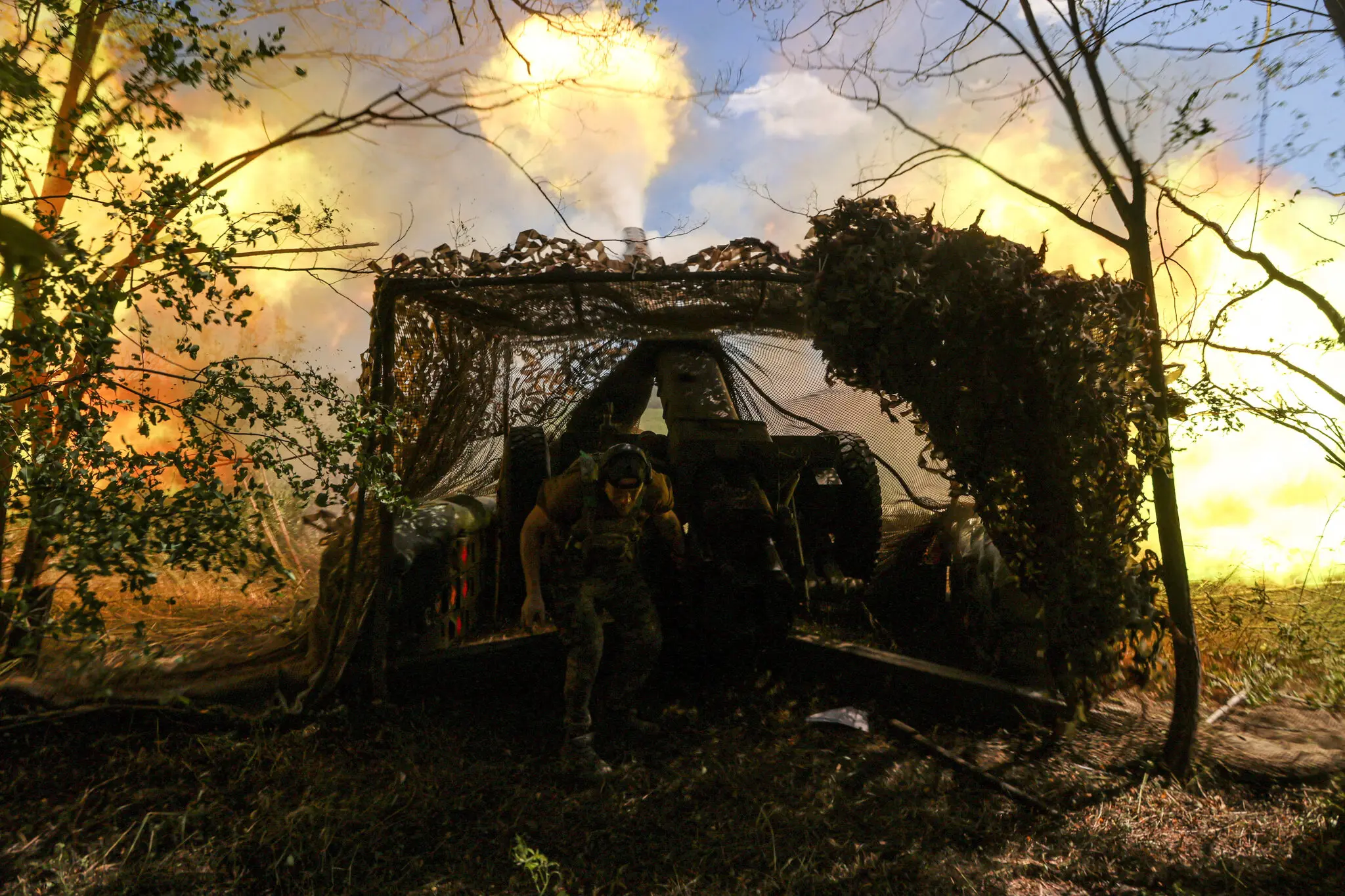

As a high-stakes summit between U.S. President Donald Trump and Russian President Vladimir V. Putin draws near, Russian forces are moving aggressively to secure a favorable position on the battlefield. In a rapid push after months of slow, attritional fighting, Moscow’s troops have advanced in eastern Ukraine, breaking through near the strategic city of Pokrovsk.
In recent days, Russian units breached a section of Ukraine’s defensive network around Pokrovsk — long regarded as a key Ukrainian stronghold — and advanced several miles into Ukrainian-held territory. This maneuver threatens to outflank Ukrainian positions and could change the dynamics of both the war and the upcoming diplomatic talks.
A Ukrainian military-linked group known as DeepState, which monitors the war’s progress, described the situation as “chaotic,” warning that Russian forces are exploiting vulnerabilities in Ukraine’s defenses to push deep into contested areas. “The enemy, having identified gaps in the defense, is infiltrating quickly, establishing footholds and concentrating forces for further moves,” the group reported.
Ukrainian President Volodymyr Zelensky confirmed in his nightly address on Monday that Moscow’s troop movements indicate preparations for “new offensive operations” rather than any shift toward a cease-fire. “They are not preparing for peace or the end of the war,” Zelensky said.

Ukraine’s Counterstrategy: Targeting Russia’s Economy
Kyiv, too, is working to shape events ahead of the Friday summit in Alaska. Ukrainian forces have escalated strikes against Russian oil refineries, a strategy aimed at undermining one of the Kremlin’s primary sources of wartime revenue. By putting economic pressure on Moscow, Ukrainian officials hope to force Putin into making concessions during negotiations.
This approach — intensifying military pressure right before peace talks — has been a recurring feature of both the current war and earlier phases of the conflict dating back to 2014. In June of this year, Ukraine launched bold drone attacks deep inside Russia, destroying several strategic bombers just one day before talks in Istanbul. In 2015, Russia adopted a similar tactic by intensifying fighting during cease-fire discussions, surrounding the eastern town of Debaltseve to compel Kyiv into political concessions.

Pokrovsk Under Threat
Pokrovsk, situated in the Donetsk region, was once a crucial logistical hub for Ukrainian operations in the east. Now, it faces partial encirclement from the northeast to the southwest. Ukrainian troops entering or leaving the city are forced to navigate a narrow 10-mile corridor — a route vulnerable to Russian drones and artillery.
Military analysts believe Russian forces are attempting to further tighten this encirclement to force a Ukrainian withdrawal, a tactic they have successfully used in past battles. Pasi Paroinen of the Finland-based Black Bird Group, which tracks battlefield developments, noted that Russian troops penetrated roughly 10 miles into Ukrainian-held territory over the last three days — a much faster pace than their typical methodical advance.
“The next 24 to 48 hours will be decisive in determining whether Ukraine can contain the Russian push,” Paroinen wrote on X.
Calibrating the War for Diplomacy
Both sides are balancing military action with an eye toward influencing President Trump. The American leader has repeatedly criticized the war as a costly and unnecessary drain on lives and resources, but his views can shift depending on the conduct of the warring parties.
Last month, during Moscow–Washington discussions, Russia ramped up drone strikes on Ukrainian cities, prompting a rare show of frustration from Trump. “He talks nice and then bombs everybody in the evening,” Trump said of Putin. “There’s a little bit of a problem there. I don’t like it.”
Since early August, however, Russia has dramatically scaled back its drone assaults — a move many analysts see as an effort to win Trump’s goodwill before the Alaska summit. Data from Ukraine’s Air Force, analyzed by The New York Times, shows the nightly drone launch average has dropped from 201 in July — the highest monthly average since the war began — to 78 so far this month.
“They know how to read Trump,” said Oleksandr Kraiev, director of the North America program at Ukrainian Prism. “The timing of the reduced attacks is no coincidence.”
Kyiv, which endured some of its heaviest bombardments this summer, has seen a marked decrease in air-raid alerts in recent weeks. Most alarms now last only about an hour during the night.
The change was particularly noticeable during the visit of Trump’s special envoy to Ukraine, retired Army General Keith Kellogg, last month. Ukrainians jokingly dubbed him the “Kellogg shield” after two consecutive nights passed without major strikes during his stay. “When General Kellogg was here, there were no massive bombings,” Zelensky told Newsmax. “That means one thing: Putin fears America.”

The Summit Stakes
Despite the pause in some Russian attacks, Kyiv remains wary. With Trump’s history of warmer rhetoric toward Putin, Ukrainian officials fear that a one-on-one meeting between the two leaders could lead to concessions at Ukraine’s expense, possibly sidelining Zelensky entirely.
The Kremlin has long insisted that any end to the war must address what it calls the “root causes” of the conflict — language often understood to mean limiting Ukraine’s sovereignty and reducing its alignment with the West.
To prevent a deal dictated by Moscow, Kyiv has worked closely with European allies to ensure Ukraine has a seat at the table. A joint statement released Tuesday by every European Union member except Hungary declared: “The path to peace in Ukraine cannot be decided without Ukraine.”
Zelensky said Tuesday that a trilateral meeting between himself, Trump, and Putin will eventually take place, though no date has been confirmed. The Trump administration has acknowledged efforts to arrange such a session.
On Wednesday, Zelensky will join several European leaders in an online conference with Trump to discuss strategies for pressuring Russia, preparing for possible peace negotiations, and addressing disputes over territorial claims and security guarantees.
Territorial Concessions: A Red Line for Kyiv
One of Kyiv’s major concerns is Trump’s recent suggestion that a peace deal might involve “some land swapping.” Zelensky has been unequivocal in rejecting that idea, declaring, “Ukrainians will not gift their land to the occupier.”
Both Ukraine and its European allies insist that serious negotiations can only begin after a formal cease-fire, using the current front line as the basis for talks. However, Russia’s recent gains in the east could shift that line — potentially giving Moscow more leverage — before the Alaska summit even begins.
Outlook
The days leading up to Friday’s Trump–Putin meeting are likely to be marked by intensified maneuvering on the battlefield and in diplomatic circles. For Russia, quick gains near Pokrovsk may strengthen its bargaining position; for Ukraine, targeting Russia’s economic lifelines and rallying international support are key strategies to avoid being outflanked at the negotiating table.
The Alaska summit may prove to be a turning point — either toward a cease-fire that preserves Ukraine’s sovereignty or toward a settlement that rewards Moscow’s military advances. What happens in the next 48 hours on the ground in Donetsk could well determine the tone, and possibly the outcome, of those historic talks.




Leave a Reply