

For months, Israel’s strategy in Gaza has centered on negotiating a limited agreement—a two-stage plan involving a 60-day pause in fighting and the release of a subset of hostages. However, as negotiations have stalled and the humanitarian crisis in Gaza has escalated, officials in both Israel and the United States are now indicating a dramatic shift toward pushing for a broader, all-encompassing agreement.
Yet despite the change in tone, analysts warn that significant obstacles remain. The gap between Israel and Hamas remains wide, and any plan aiming for a permanent resolution will face daunting political and logistical challenges.

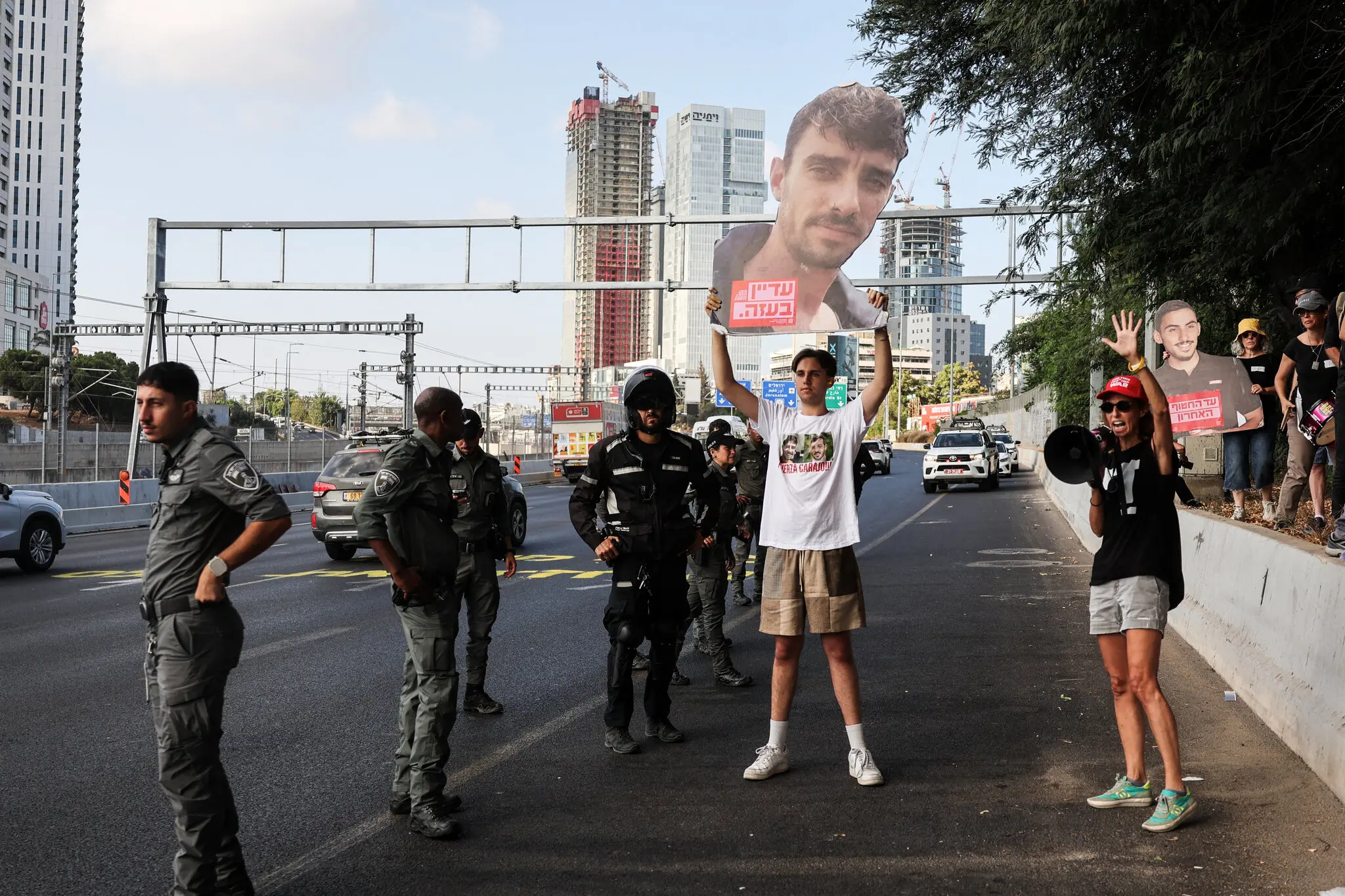
This strategic pivot comes amid mounting domestic and international pressure on the Israeli government. Israeli citizens, especially the families of hostages still believed to be alive in Gaza, are increasingly vocal in their demands for action. According to Israeli estimates, around 20 hostages are still living, while the bodies of 30 others remain in Hamas-controlled territory.
Over the weekend, videos released by Hamas showing two surviving captives in visibly deteriorating health shocked the Israeli public and intensified calls for a swift resolution. The footage prompted renewed scrutiny of the government’s current strategy and reignited debate over whether incremental agreements are adequate.
At the same time, Israel has come under growing global condemnation for the severe humanitarian situation in Gaza. Over two million people in the enclave are facing hunger, with aid organizations warning of widespread starvation due to Israel’s restrictions on humanitarian access. While Israel has recently allowed more aid trucks into Gaza, its military has continued to conduct airstrikes.
On Sunday, the Palestine Red Crescent Society reported that its offices in Khan Younis were struck by Israeli artillery, killing one staff member and injuring several others. The Israeli military did not immediately comment on the incident.
In the midst of this deteriorating situation, former U.S. envoy to the Middle East under President Donald Trump, Steve Witkoff, visited the region and met with the families of hostages. In a recorded conversation published by the Ynet news outlet, Witkoff emphasized that the U.S. is no longer supporting partial hostage deals. Instead, he said, the Trump team is advocating for a full-scale release of all hostages simultaneously.
“No more piecemeal solutions,” Witkoff stated. “Now we believe in an ‘all or nothing’ approach—everyone comes home together.” He also hinted that there is a specific strategy in place, though he declined to share details.

Israel and Hamas have never negotiated directly. Instead, Qatar, Egypt, and the United States have acted as intermediaries in all past talks. Reports from Israeli media—confirmed by individuals familiar with the matter—suggest that Prime Minister Benjamin Netanyahu and Donald Trump are drafting a new proposal that would present Hamas with a stark ultimatum.
Under this plan, Hamas would be expected to release all remaining hostages in return for the release of Palestinian prisoners and a formal end to the war. Crucially, the proposal also demands that Hamas disarm—a condition that Hamas has repeatedly rejected.
Speaking by phone, senior Hamas official Mahmoud Mardawi confirmed that the group has not received a new formal offer via mediators. However, he said that while Hamas is not opposed to a comprehensive agreement in principle, any deal that requires disarmament is a non-starter.
“Our consistent demand has been clear: a complete end to the war, the release of prisoners on both sides, and a long-term plan for the future of Gaza,” Mardawi said.
The likelihood of swift progress appears low. Hamas continues to insist that any discussion of disarmament must follow the establishment of a sovereign Palestinian state—an outcome Israel has staunchly opposed. In fact, over the weekend, the group reiterated its position that weapons would not be surrendered under any circumstances short of statehood.
This hardline stance is mirrored on the Israeli side. On Sunday, Israel’s far-right national security minister, Itamar Ben-Gvir, made a provocative visit to the Al-Aqsa Mosque compound in Jerusalem—sacred to both Muslims and Jews—praying openly at the site in defiance of longstanding protocol. Arab leaders condemned the visit as a deliberate provocation.
From the site, Ben-Gvir delivered a recorded message: “We must take full control of Gaza immediately, enforce Israeli sovereignty, and eliminate Hamas down to the last member.”
Although a growing number of Israelis support a deal that could secure the release of all hostages and end the war, many remain doubtful that such an agreement is achievable under the Netanyahu government, which continues to pursue a military solution. There is also skepticism that Hamas would voluntarily release all remaining hostages—their primary leverage in the ongoing conflict.
Prime Minister Netanyahu addressed the issue Sunday night, asserting that Hamas is not genuinely interested in reaching a deal. He pledged that Israel would keep fighting “to free our sons and daughters, to dismantle Hamas, and to ensure that Gaza will never again pose a threat to Israel.”
Analysts argue that this rhetorical pivot toward a comprehensive agreement may not actually move the situation forward. The demands from Hamas—particularly regarding recognition of Palestinian sovereignty and the group’s refusal to disarm—are far beyond what Netanyahu’s administration is willing to accept.
“Hamas is effectively saying, ‘If you want your 20 living hostages, then give us a total victory,’” said Ehud Yaari, a senior fellow at the Washington Institute for Near East Policy. “That’s something Netanyahu can’t accept, but he also has to keep reassuring the Israeli public and the hostage families that he is doing everything in his power.”
Mardawi echoed a grim perspective, noting that with Gaza’s population facing mass starvation, negotiations appear futile. “Why talk when people are dying from hunger?” he asked.
The humanitarian crisis in Gaza has only worsened in recent months. Israel has accused Hamas of diverting aid, and some officials have criticized international agencies for poor oversight. However, some military sources have acknowledged that there is no concrete evidence that Hamas has systematically stolen UN aid shipments—undermining one of the central arguments for restricting access.
The death toll in Gaza has surpassed 60,000 since the start of the war, according to figures from the Gaza Health Ministry, which does not differentiate between civilians and militants. Among the casualties are thousands of children.

The conflict began after Hamas launched a surprise attack on southern Israel on October 7, 2023, killing approximately 1,200 people and abducting around 250 more. More than 100 hostages were released during earlier cease-fires, and Israeli operations have recovered the remains of others.
One of those captives was American-Israeli soldier Itay Chen, whose father, Ruby Chen, met with Witkoff during the recent visit. Israeli authorities now believe Itay is dead. His father expressed frustration over the government’s failure to secure a broader agreement sooner.
“It took six months for them to realize that partial deals aren’t working,” Ruby Chen said. “That’s six months wasted.”
As international players step up their efforts to mediate a comprehensive deal, the path forward remains highly uncertain. What’s clear, however, is that time is running out—not only for the hostages but for the millions suffering on both sides of the conflict.




Leave a Reply