

After Backlash, Ukraine Votes to Restore Watchdogs’ Powers

Ukraine’s Parliament has reinstated the powers of the country’s key anti-corruption agencies, marking a major political reversal that comes amid mounting domestic protests and growing international criticism. The dramatic turnaround unfolded just a week after President Volodymyr Zelensky endorsed a controversial law that would have weakened the independence of those very institutions. The reversal underscores not only the intensity of public sentiment but also Ukraine’s reliance on its democratic image to maintain Western support during its war with Russia.
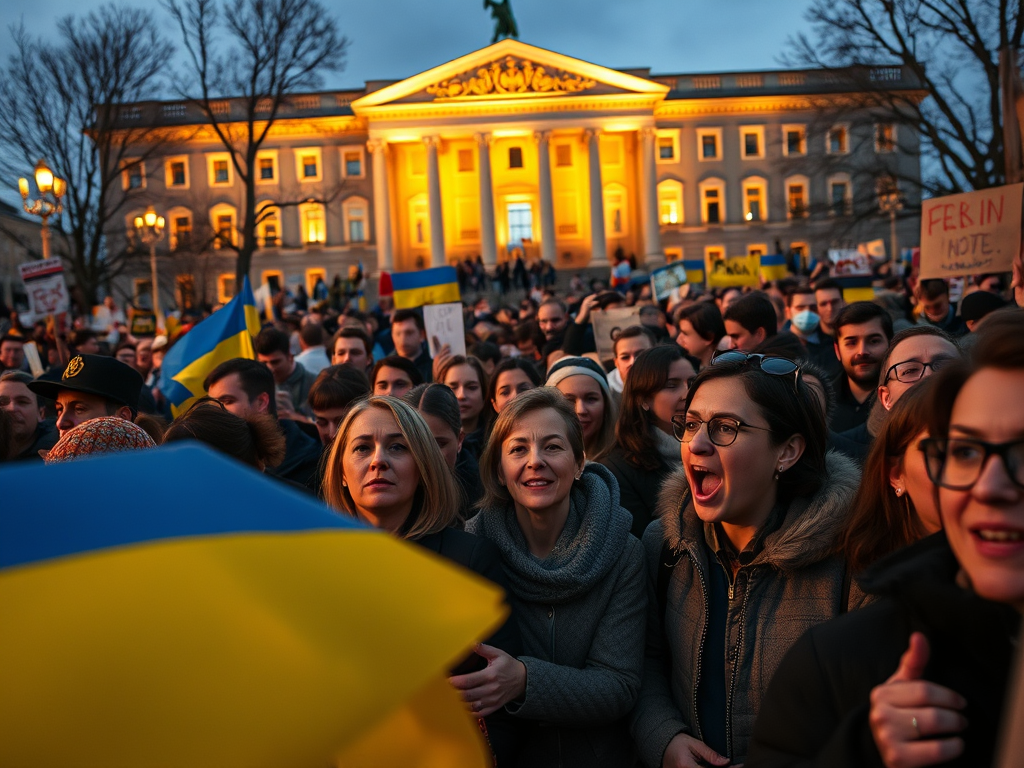
In a rare move since the outbreak of Russia’s full-scale invasion in 2022, Ukraine’s lawmakers broadcast the parliamentary session live. The televised vote served as a symbolic gesture of transparency, with 331 out of 340 lawmakers present voting in favor of reinstating the anti-corruption bodies’ authority. Outside Parliament, a crowd of citizens who had assembled—despite an earlier round of explosions in the capital—cheered when the results were announced.
Zelensky, who had originally signed the law curbing the agencies’ power just days earlier on July 22, swiftly signed the new legislation to undo that decision. The initial law had placed Ukraine’s two primary anti-corruption institutions—the National Anti-Corruption Bureau of Ukraine (NABU) and the Specialized Anti-Corruption Prosecutor’s Office (SAPO)—under the jurisdiction of the prosecutor general, effectively bringing them under political control. Both agencies had become thorns in the side of Zelensky’s party, filing corruption charges against over 10 of its lawmakers and three cabinet ministers, including a deputy prime minister.
The controversial July legislation sparked Ukraine’s first widespread anti-government protests since the war began. Citizens across major cities took to the streets, demanding the government reverse course. Analysts warned that Zelensky’s move risked fracturing national unity and jeopardizing crucial foreign aid—warnings that proved prescient. European Union leaders swiftly responded, issuing statements emphasizing that Ukraine’s fight against corruption was essential to continued financial and political support.
In a particularly forceful measure, the European Union announced it would suspend €1.5 billion (approximately $1.7 billion) in disbursements from a larger €4.5 billion fund. While technically unrelated to the anti-corruption bill, the delay sent a clear message: failure to meet governance benchmarks could result in material consequences. For a country heavily reliant on international aid to sustain its government during wartime, this warning carried significant weight.
Facing mounting pressure at home and abroad, Zelensky reversed course. In a video address following the new bill’s passage, he stated that the legislation guaranteed the independence of Ukraine’s anti-corruption bodies. “It is very important that the state listens to public opinion,” he said. “Ukraine is a democracy—without any doubt.”

The European Commission welcomed the legislative U-turn. A spokesperson, Guillaume Mercier, stressed that safeguarding the independence of anti-corruption bodies is essential for Ukraine’s hopes of joining the EU. “Ukraine’s EU accession will require continuous efforts to guarantee a strong capacity to combat corruption and uphold the rule of law,” he noted.
The anti-corruption institutions at the center of this political storm were originally established around a decade ago with backing from Western governments. Since their inception, they have been viewed as cornerstones in Ukraine’s effort to fight the endemic corruption that has long plagued its political and economic systems. NABU and SAPO, in particular, have pursued high-level cases involving lawmakers and government officials. According to NABU, the bureau has brought charges against 71 lawmakers since 2016, with 42 of those cases initiated after Russia’s 2022 invasion. Among the most frequent charges were embezzlement, bribery, abuse of office, and illicit enrichment.
In a public statement issued shortly before the legislative reversal, NABU emphasized that their work proves “the law applies equally to everyone” and that parliamentary immunity should not serve as a shield for corruption. The agencies’ credibility had become a symbol of Ukraine’s democratic resilience during wartime.
Zelensky’s initial move to curtail their powers was especially jarring given his 2019 presidential campaign platform, which emphasized his outsider status and firm commitment to ending corruption. For many citizens, his support of the July 22 law felt like a betrayal of the very values that had propelled him to power.

This sense of betrayal helped fuel a grassroots protest movement that sprang to life almost overnight. In Kyiv alone, around 10,000 people gathered for a spontaneous demonstration—many of them young adults who were children during the 2014 Euromaidan revolution that ousted a pro-Russian president. These demonstrators saw themselves as guardians of that revolution’s democratic legacy.
Their demands were singular and specific: the reinstatement of full authority to NABU and SAPO. Rather than calling for Zelensky’s resignation or radical governmental change, protesters emphasized the need for institutional integrity during wartime. They saw anti-corruption mechanisms as vital not only for national unity but also for Ukraine’s international credibility and long-term stability.
One of the key figures to emerge from the protests was Zinaida Averina, a 23-year-old consultant working in the green energy sector. Previously uninvolved in politics, Averina felt that Zelensky’s move crossed a “red line” and signaled a drift toward authoritarianism. She created a Telegram group chat with friends that quickly swelled to over 3,000 members. The group became a nucleus of protest coordination, organizing everything from water distribution and first aid to logistics, city permit notifications, and even chat rooms for social interaction and humor.
Importantly, organizers were careful to assert that their protests were not a call for regime change. Rather, they expressed unwavering support for Ukraine’s war effort, arguing that corruption undermines national defense by hampering procurement and mobilization while creating openings for Russian influence.
Inside Parliament, the strength of this citizen movement was not lost on legislators. One lawmaker, Yaroslav Zhelezniak, held up a cardboard sign during the session that read, “People with cardboard signs are the power,” acknowledging the protesters who had helped force the government’s hand.
Ultimately, the successful passage of the new legislation reaffirmed a key democratic principle: accountability to the public. While Ukraine continues to battle external aggression, the episode serves as a powerful reminder that internal governance and the rule of law remain essential pillars of the country’s resilience. For President Zelensky, the reversal not only calms domestic unrest but also ensures that Ukraine remains in good standing with its Western partners—a crucial necessity as the war drags on and the road to EU accession continues.
In the eyes of many Ukrainians, democracy is not something to be suspended during war but something to be protected through it.




Leave a Reply