
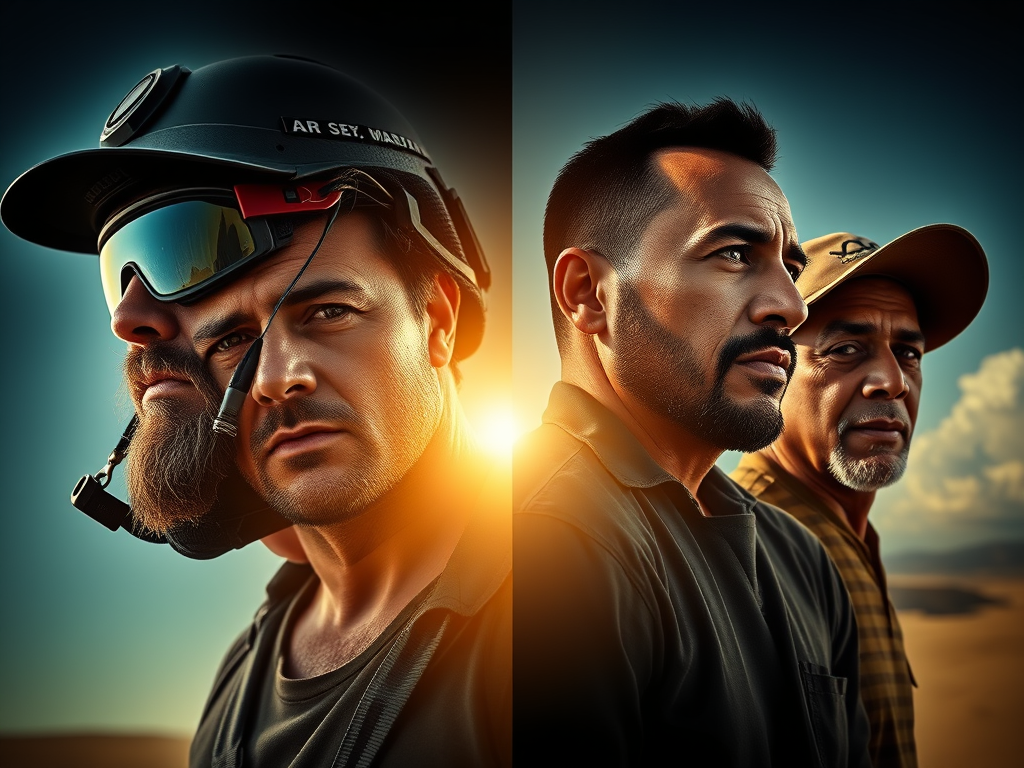

A Kite Surfer, Navy SEAL and Makeup Artist: Freed in a U.S.-Venezuela Swap

A kiteboarding enthusiast on a thrilling journey through South America. A former Navy SEAL whose loved ones said he was chasing love across borders. A gay makeup artist who sought refuge and dignity in the north. A Venezuelan bicycle parts vendor striving to survive in a collapsing economy. Despite their vastly different backgrounds and motivations, these men all became entangled in an unexpected international deal: a large-scale prisoner exchange between the governments of the United States and Venezuela.
On Friday, the two nations completed a high-stakes negotiation that resulted in the release of 10 Americans and U.S. permanent residents who had been detained by Venezuelan authorities. In exchange, the U.S. deported 252 Venezuelan nationals, who were imprisoned in a maximum-security facility in El Salvador, back to Venezuela.
Each individual caught up in this exchange has their own story — unique in context, yet eerily similar in outcome.

One of the Americans, 37-year-old Lucas Hunter, had a career in finance in London. During a vacation in Colombia, he was reportedly detained by Venezuelan officials near the Colombia-Venezuela border. His family believes he was simply in the wrong place at the wrong time. Another, Wilbert Castañeda, also 37, had dedicated his adult life to military service in the United States as a Navy SEAL. He traveled to Venezuela, according to his brother, to visit a romantic partner — a trip that would lead to his arrest.
On the Venezuelan side, the motivations for traveling northward were rooted not in leisure or love, but in desperation. Many of these individuals had made the harrowing journey through the Darién Gap, an unforgiving jungle passage between Colombia and Panama, in search of safety and opportunity away from Venezuela’s worsening economic crisis and political repression.
Andry Hernández Romero, a makeup artist, fled Venezuela fearing persecution not only for his political beliefs but also due to his sexual orientation. His legal team said he faced danger from multiple angles in his homeland. Meanwhile, Alirio Belloso, 30, a modest vendor who sold bicycle parts, left Venezuela because he could no longer afford to support his family. He struggled to buy even basic supplies for his daughter’s education or insulin for his mother, who suffers from diabetes.
Despite the different reasons that drew these individuals into unfamiliar countries, their fates converged in a similar form of state-driven detainment. Both American and Venezuelan detainees found themselves accused of political interference or conspiracy, often without substantial evidence or due process. Many were locked away, unable to speak with loved ones, their exact whereabouts unknown.
The justifications from political leaders varied but shared a similar tone of nationalist protectionism. Former President Donald Trump, who advocated for strict immigration enforcement, utilized the Alien Enemies Act — a law rooted in wartime measures — to justify detaining and deporting Venezuelan immigrants. On the other side, Venezuelan President Nicolás Maduro, under international pressure and struggling under U.S.-imposed oil sanctions, appeared to see the arrest of Americans as a strategic move to negotiate sanctions relief.
Human rights advocates have condemned both governments for practices considered forms of enforced disappearance. These groups argue that the failure to disclose the names or locations of detainees constitutes a violation of international law, specifically referencing definitions outlined by the United Nations. Latin America, with its history of political disappearances, has witnessed similar tactics during darker chapters of its past.
As the exchange concluded, families on both sides experienced emotional reunions — though the road to recovery remains uncertain.
In Caracas, 24-year-old barber Francisco García Casique was finally reunited with his mother, Mirelis Casique, after months of silence. She said her life crumbled the moment she learned he had been arrested by U.S. authorities. Her worst fears were confirmed when she saw a video online of her son, shackled and hunched, as he appeared in a Salvadoran prison broadcast by El Salvador’s president. “I couldn’t believe this was happening in a country like the United States,” she said. Their reunion brought tears and relief: “The nightmare is finally over,” she told him.

Liz Cathcart, who heads Hostage US, an organization dedicated to supporting Americans wrongfully detained abroad, explained that returning prisoners often face severe physical and mental challenges. These range from malnutrition and weakened muscles to emotional trauma and deep psychological scars. Dental issues, vitamin deficiencies, and anxiety are also common after months or even years in substandard confinement.
Currently, the recently released Venezuelans are being housed in a hotel near Caracas’s main airport. There, they are receiving basic medical evaluations and undergoing interviews with local officials, according to three family members of the detainees. The Americans, meanwhile, briefly stopped in El Salvador to meet with President Nayib Bukele before boarding planes back to the U.S.
For many families, the past year has been marked by relentless efforts to locate and advocate for their detained relatives. Some quit jobs, moved cities, or took on new roles just to keep up with the logistical nightmare of trying to find someone who had seemingly vanished without explanation. In some cases, family members in Venezuela said they lost a critical financial lifeline when their loved one — often the primary breadwinner — stopped sending money from the U.S.

Sophie Hunter, the sister of Lucas Hunter, described the toll it took on her own life. She left her job at the United Nations to dedicate herself full-time to the campaign to bring her brother home.
In Venezuela, Noemí Briceño, the wife of Alirio Belloso, lived in fear every single day since her husband was deported to El Salvador in March. “I was constantly afraid,” she said. “I didn’t know if he was eating, if he was safe, or if anyone was even treating him like a human being.” Now that he has returned, she says her first instinct is to give thanks. “God returned my husband to me. The weight of fear and uncertainty has finally lifted.”
In the U.S., Americans returning from wrongful detention are typically given access to reintegration programs, often facilitated on military bases. These programs aim to provide psychological counseling, medical care, and assistance in readjusting to daily life after imprisonment.
Six more Americans had previously been freed from Venezuelan custody earlier this year after a rare diplomatic visit from a Trump administration representative — the first official contact between the two countries in years. Some of those released described horrific experiences inside Venezuelan detention centers, recounting abuse, cramped cement cells, beatings, pepper spray, and intense psychological manipulation.
But for the Venezuelans who were just returned to their country, it’s unclear whether any kind of support will be offered at all. Venezuela’s economy has deteriorated even further in the past year, and the same authoritarian tactics that imprisoned them in the first place remain intact. Those with past involvement in anti-government protests — according to family members — may still be vulnerable to re-arrest.
One of the deportees, 25-year-old Neri Alvarado, had a pending political asylum application in the U.S. Before fleeing Venezuela, he was a university psychology student. His future is now clouded by uncertainty.

Roughly half of the individuals released from Venezuelan detention were U.S. citizens, while the rest held legal permanent resident status, according to Foro Penal, a Venezuelan human rights group. Among them was 48-year-old Renzo Huamanchumo, a father of seven originally from Peru. He had traveled to Venezuela to visit his partner’s family when he was arrested near the Colombia border last September.
For months, his family had no idea what had happened to him. “We didn’t even know if he was alive,” said his aunt, Patricia Castillo. His mother, who is Ms. Castillo’s sister, is now en route to Houston to reunite with her son, who is being treated at a military hospital.
Ms. Castillo described the emotional toll the separation took on her sister. “She couldn’t eat, couldn’t sleep. Her hair started falling out from the stress,” she said. “This news came just in time. We thought we were going to lose her, too.”
Now, as these individuals return home, their challenge shifts from survival to recovery. The political chess game that led to their imprisonment may be over, but the emotional consequences are only beginning to unfold.




Leave a Reply