

Trump’s Shift: Increased Military Aid to Ukraine Explained

On Tuesday, Ukrainians expressed guarded relief following President Donald Trump’s unexpected announcement that the United States would increase military aid to Ukraine in light of renewed Russian aggression. Despite the commitment to deliver additional weaponry, many in Kyiv remain wary due to Trump’s inconsistent stance on the conflict.
Political leaders and policy analysts in Ukraine’s capital noted that they had not anticipated a significant change in Trump’s overall approach to the war. His repeated reservations about U.S. financial support for Ukraine and his erratic decisions regarding military assistance have led to an environment of uncertainty.
Just last week, the Trump administration halted certain arms deliveries that had already been approved by Congress. The official explanation given at the time was that the Pentagon needed to assess the levels of available weaponry in American arsenals. However, the decision triggered concern among Ukrainian officials, who feared waning support from one of their most vital allies.
On Monday, in what appeared to be a dramatic reversal, President Trump addressed the escalating violence initiated by Russian forces and declared that the worsening attacks on Ukrainian cities had forced his hand. “We’re left with no choice,” he stated. “Ukraine must have the means to protect its people.” He further voiced his growing discontent with Russian President Vladimir Putin, accusing him of stalling in cease-fire negotiations that began several months ago.

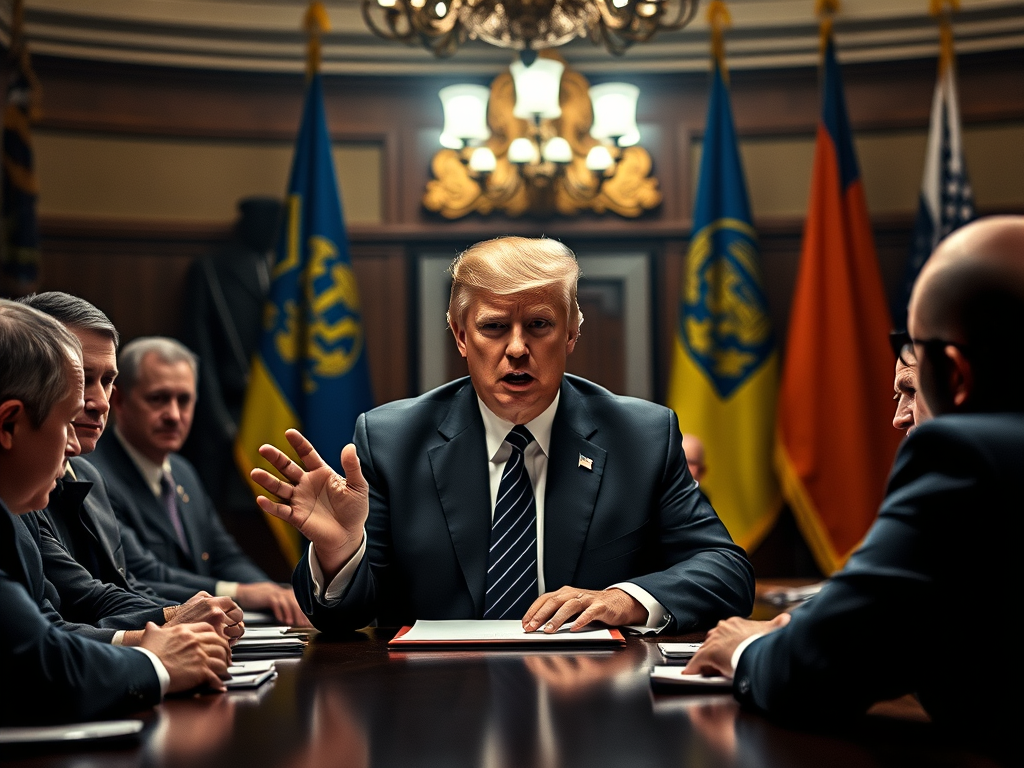
The following day, during a cabinet meeting broadcast from Washington, Trump reiterated his displeasure with Putin. In characteristically blunt language, he said, “Putin keeps feeding us lies. He’s always polite in public, but it never leads to anything real.” Trump’s harsh remarks underscored a change in tone that many in Ukraine had long hoped for but had not come to expect.
Iryna Gerashchenko, a lawmaker with the pro-European opposition party European Solidarity, welcomed Trump’s shift in position. In a social media post, she described the move as a sign of “a political shift taking shape.” She added that Russia’s intensifying attacks and growing diplomatic pressure from key European nations—especially Germany and France—had likely contributed to the White House’s reconsideration.
Former Ukrainian Prime Minister Arseniy Yatsenyuk also responded positively, posting a brief but pointed message: “Thank you, Mr. President!”
Still, not everyone was convinced that Trump’s pivot would result in consistent or long-term support. Many officials and observers pointed to Trump’s previous wavering on weapon shipments and his indecisiveness over sanctions targeting the Kremlin.
Maksym Skrypchenko, head of the Kyiv-based think tank Transatlantic Dialogue Center, emphasized that under Trump, Ukraine can no longer take American support for granted. “The United States seems increasingly focused on other strategic arenas, especially the Middle East and the Pacific,” he said. “While this may not align with what we would hope for, we must adapt and find a way for Ukraine to remain relevant within that broader strategy.”
Trump’s sudden policy shift came at the end of a devastating week for Ukraine. In addition to the suspension of weapons deliveries, Russia launched its most extensive aerial assault since the war began. Civilian casualties soared, and infrastructure damage intensified.
This recent pause in arms transfers marked the second such delay under the Trump administration this year. A similar disruption occurred in March, when military and intelligence cooperation was temporarily frozen. That incident followed a contentious meeting between Trump and Ukrainian President Volodymyr Zelensky in the Oval Office, during which Trump sharply criticized Kyiv’s wartime efforts.
Throughout his term, Trump’s administration has sent mixed messages about its stance on Ukraine. While Trump has occasionally condemned Russian actions—at one point calling Putin “insane” for bombing Kyiv—his government has also made puzzling decisions that appear to favor Moscow. These include voting alongside Russia at the United Nations, imposing tariffs on Ukraine while sparing Russia, hesitating to implement new sanctions, and even restoring diplomatic ties with Moscow amid stalled cease-fire negotiations.
Despite these contradictions, Trump’s latest reversal has renewed hope that Ukraine’s air defense systems may soon receive desperately needed reinforcements, including Patriot missile interceptors capable of countering ballistic threats. Ukrainian troops on the front lines are also hoping for fresh supplies of ammunition to resist further Russian advances.
Rather than requesting resumed donations of military equipment, President Zelensky is now pushing for the green light to purchase U.S. arms directly from American manufacturers, using financial backing from European partners. This strategy, Ukrainian officials argue, would help create a more sustainable flow of weapons, less vulnerable to Washington’s political turbulence.
Adding to Ukraine’s cautiously optimistic outlook, U.S. Senator Lindsey Graham posted on social media Monday that a sanctions bill is progressing in the Senate. This legislation could introduce harsh secondary sanctions targeting countries that continue trading with Russia—sanctions designed to strengthen the negotiating position of the West in future cease-fire talks. “We must put an end to this senseless bloodshed,” Graham declared.
In an effort to strengthen American support, President Zelensky recently met with executives from U.S. companies operating in Ukraine, including Boeing and Baker Hughes. Following those discussions, the American Chamber of Commerce in Ukraine issued a public statement on July 4 calling for increased U.S. military assistance.
The statement urged President Trump to defend American commercial interests in Ukraine by ensuring the provision of crucial defense resources to counter Russian strikes. According to the chamber, over half of its 600 member companies have sustained damages to their offices, production facilities, or other assets due to the ongoing conflict.

For several weeks, Ukrainian lawmakers have been openly critical of the Trump administration’s negotiation strategy, which they argue has failed to achieve any meaningful progress. Many now insist that tougher measures must be taken to hold Russia accountable.
Halyna Yanchenko, an independent member of Parliament affiliated with Zelensky’s political bloc, said in an interview that Ukraine had finally succeeded in convincing U.S. officials that the responsibility for stalled peace talks lies with Moscow, not Kyiv.
According to Oleksandr Merezhko, head of the Ukrainian Parliament’s foreign affairs committee, Russia’s military strategy has focused on exhausting Ukraine’s air defense resources while attempting to seize territory in the eastern part of the country. Despite the Trump administration’s shifting attention to geopolitical developments in the Middle East and China, Kyiv has maintained open lines of communication with Washington, even as expectations for a rapid resolution have dimmed.
“Trump now understands that Putin is not genuinely interested in a diplomatic solution,” Merezhko said. “There won’t be a quick cease-fire, no matter how much we wish for one.”
In the eyes of many Ukrainians, the U.S. decision to resume arms transfers, though welcome, does not guarantee future stability or peace. However, it represents a crucial step forward in ensuring the country can continue to resist Russian aggression—and that Ukraine’s strategic importance remains visible on the global stage.




Leave a Reply