

Over nearly a month of testimony, federal prosecutors presented a dramatic and unsettling narrative of abuse, coercion, and sexually charged encounters involving the music mogul Sean Combs. Witness after witness shared vivid accounts of disturbing violence, threats, and extravagant, voyeuristic scenes in hotel rooms, often described as drenched in baby oil. According to the prosecution, Combs—known to the public as Puff Daddy or Diddy—was not just involved but orchestrated the entire operation.
The trial featured evidence from high-profile raids at Combs’s lavish homes in Miami Beach and Los Angeles. Investigators reportedly discovered several weapons resembling AR-15 rifles, along with illegal drugs. Employees of Combs came forward under oath, admitting that they had supplied him with narcotics or witnessed him being physically abusive to an ex-girlfriend.

Despite this mountain of evidence, the defense took a surprisingly brief approach. Their case lasted less than thirty minutes. Combs himself declined to take the stand, and his legal team chose not to call any witnesses. After six weeks of intense proceedings, the brevity of the defense presentation was startling.
However, in hindsight, the decision reflected a strategic calculation: Combs’s attorneys evidently believed the prosecution had not met the legal burden required to convince a jury that Combs was guilty of leading a criminal organization.
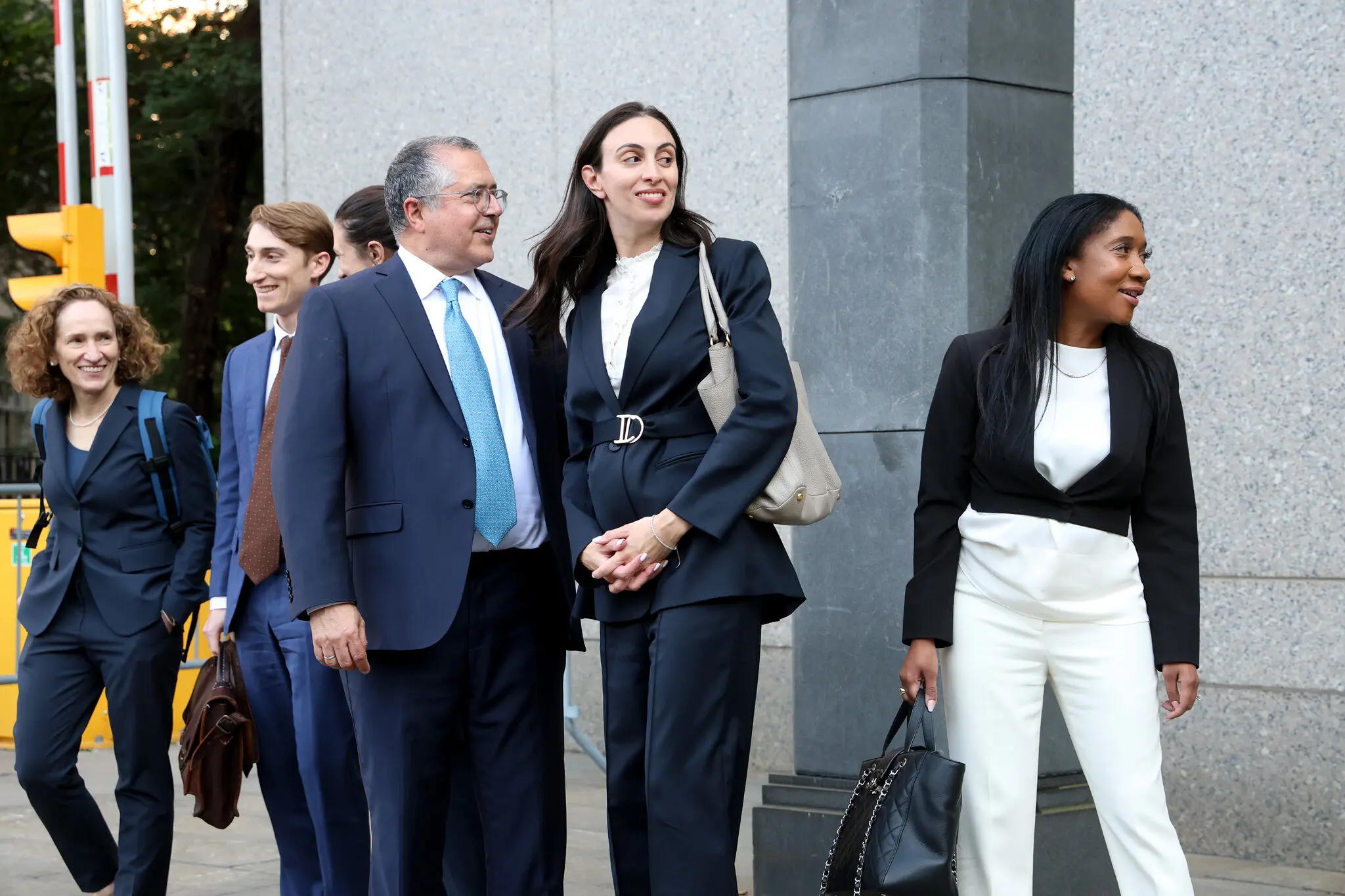
That sense of control briefly seemed to falter when, late on a Tuesday afternoon, eight members of Combs’s defense team clustered around their client in solemn discussion after the jury indicated it had reached decisions on all charges except racketeering. But on Wednesday, the mood shifted dramatically. Joy and relief swept over the defense as the jury declared Combs not guilty of sex trafficking and racketeering conspiracy—the gravest charges he faced.
Although he was convicted of two lesser counts involving the interstate transportation of individuals for prostitution, those charges carry significantly lighter penalties compared to the potential life sentences that could have resulted from convictions on the more serious allegations.
“He fought for his innocence,” said lead defense attorney Marc Agnifilo during his remarks in court. “The jury listened to the evidence and acquitted him on the most serious counts.”
To many of Combs’s supporters, the verdict was a moment of vindication. Yet the outcome has also raised concerns among advocacy groups focused on the rights and safety of women. The verdict sparked debate over whether the government overreached in its portrayal of Combs—not merely as an abusive partner, but as the mastermind of a racketeering enterprise.

During his closing arguments, Agnifilo urged the jury, composed of eight men and four women, to recognize what he characterized as a significant exaggeration. “The first conclusion I’m going to ask you to draw,” he told them, “is that this case has been drastically overstated.”
The charge of racketeering conspiracy was filed under a statute originally created to tackle Mafia-style organized crime. In recent years, however, this law has been applied more broadly to include cases involving sexual exploitation, such as those against R. Kelly and cult leader Keith Raniere.
Prosecutors attempted to argue that Combs had manipulated and coerced two women into prolonged sexual sessions with male sex workers. They alleged that he used drugs to keep them conscious, threats to ensure obedience, and loyal staff members to coordinate the logistics.
The defense, by contrast, insisted that the sexual encounters in question were entirely consensual, albeit unconventional. Combs’s team emphasized that the women involved were long-term partners who willingly participated in what the defense described as adventurous, albeit “kinky,” sex. They further argued that the group of employees surrounding Combs bore little resemblance to an organized crime syndicate and acted more like personal assistants and bodyguards.
Long before the defense formally presented its case, much of its strategy had already been carried out through aggressive cross-examinations. Combs’s attorneys challenged the prosecution’s narrative, working to reframe what had been described as coercion and abuse into complex but voluntary adult relationships.
They introduced a large volume of text messages exchanged between Combs and his former partners—some indicating enthusiasm, flirtation, or even excitement about the encounters in question. In one notable instance, the defense so effectively dismantled a witness’s timeline that the judge described the moment as worthy of a television courtroom drama—a “real Perry Mason moment.”
While prosecutors showed the jury edited clips from what were dubbed “freak-offs” and “hotel nights,” the defense countered by offering a broader set of footage—material the public was not permitted to see in full, leaving its total impact on the jury largely speculative.

One focal point of the prosecution’s case was the testimony of Casandra Ventura, the star witness, who had begun a relationship with Combs when she was just 21. He was 37 at the time. Over four days of testimony, Ms. Ventura described frequent and unpredictable physical abuse that left her battered and fearful. She claimed the violence compelled her to participate in sex with male escorts.
According to Ms. Ventura, “Make the wrong face and the next thing I knew, I was getting hit in the face.”
The defense took a blunt but tactically honest stance. On the very first day of the trial, attorney Teny Geragos acknowledged the existence of domestic violence in the relationship. However, the defense firmly rejected the notion that this abuse was used as a method of sexual coercion.
The prosecution presented a 2016 incident at a Los Angeles hotel as a clear example of sex trafficking. Surveillance footage showed Combs allegedly throwing Ventura to the ground and dragging her along a hallway. Prosecutors claimed he was attempting to force her back into a sexual scenario. The defense, however, countered that the fight stemmed from a dispute over a phone—pointing to a moment in the footage when Combs appears to grab a phone from Ventura’s hand.
When cross-examining Ventura and a second woman, identified only as “Jane,” the defense struck a notably restrained tone, avoiding aggressive tactics. Instead, they carefully guided the witnesses through their own messages to Combs—many of which expressed affection or sexual anticipation.
One message from Ventura read, “Baby, I want to FO sooooo bad,” using the abbreviation for “freak-off.” She later added, “So let’s do it.”
In his closing remarks, Agnifilo painted the prosecution’s case as an unjustified intrusion into private adult relationships. He scoffed at the inclusion of kidnapping and arson allegations in the racketeering conspiracy, calling them implausible. He described Ventura as a confident and sexually expressive woman, adding, “She actually likes sex. Good for her.”
To secure a conviction on the racketeering charge, prosecutors had to prove that Combs led a structured and ongoing criminal enterprise. They named his assistants and aides as co-conspirators, claiming they facilitated illegal acts like smuggling drugs and covering up assaults.
One aide, Kristina Khorram—who was neither charged nor called to testify—allegedly coached Jane on how to hide drugs on a plane. Prosecutors also said she helped purchase surveillance footage of the 2016 hotel assault.
But Agnifilo argued that these individuals often tried to calm Combs rather than support his outbursts. After the hotel incident, Combs allegedly showed up at Ventura’s home with a hammer, attempting to force entry. Rather than call the police, she contacted Khorram and a security guard nicknamed D-Roc.

“If John Gotti were at your door,” Agnifilo asked the jury, referencing the infamous mobster, “would you call Sammy the Bull to get rid of him?”
He also mocked the dramatic presentation of the March 2024 raids on Combs’s homes, which yielded not only guns and drugs but large amounts of baby oil and personal lubricants. “Whew, I feel better already,” he quipped. “The streets of America are safe from the Astroglide!”
The one area where the jury did side with the government was in the prostitution-related charges. They concluded that Combs had arranged the transportation of men hired to have sex with his partners—disagreeing with the defense’s portrayal that they were simply being compensated for their time.
Still, after the verdict, Agnifilo expressed deep appreciation for the jury. “One thing stands between any of us and a prison cell: a jury of our peers,” he said. “We had a remarkable jury. They listened to everything, and they got it right—or at least, right enough.”




Leave a Reply