
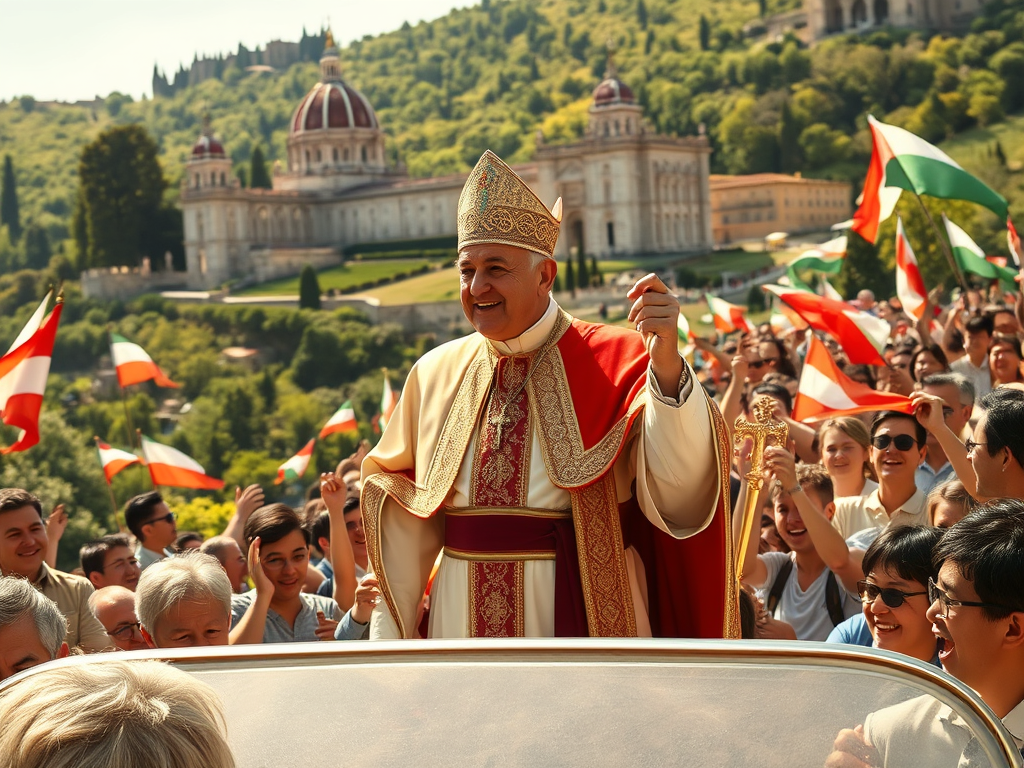

Pope Leo Returns to Tradition: A Summer Break at a Papal Villa

For centuries, the sweltering summers of Rome drove successive popes to seek refuge in the tranquil hill town of Castel Gandolfo, located about 18 miles southwest of the Vatican. There, nestled in the cooler highlands, stood the papal summer residence — a historic palace that offered both a serene retreat and a functional workspace. Pontiffs such as John Paul II and Benedict XVI frequently retreated to the palace for several months each year, using the time not only to rest but also to continue their duties from a more peaceful setting.
That tradition, however, came to an abrupt halt with the arrival of Pope Francis.
In 2013, the year of his election, Francis made three visits to Castel Gandolfo. Two of these were to celebrate Mass, and the third was a visit to his predecessor, Benedict XVI, who had briefly retired there after stepping down from the papacy. Yet after that year, Francis never returned.
The decision left the townspeople feeling abandoned.
“We felt like we were left without a father,” said Maurizio Carosi, a long-time resident. Many in the community expressed similar sentiments of disappointment and loss over the absence of the pope, whose presence had been a cherished part of local life for centuries.

Therefore, it came as no surprise that when the Vatican recently announced that Pope Leo XIV would be spending two weeks in Castel Gandolfo this July for a period of rest, the town reacted with excitement and joy. Preparations quickly kicked off, including last-minute renovations to papal properties in anticipation of the pope’s arrival, expected this coming Sunday.
“Our town has always been intertwined with the Vatican — it’s like a second Vatican,” explained Mayor Alberto De Angelis. “Just as St. Peter’s Basilica is unimaginable without the pope, so too is Castel Gandolfo. The presence of the pope is woven into our identity.”
This enthusiasm was echoed by many locals.
“The news brought a sense of life back to the town,” said Stefano Carosi, Maurizio’s brother and the owner of a café situated in the town square. “For the past 12 years, we’ve lacked the international spotlight that the pope brings when he delivers the Angelus here.” He referred to the pope’s traditional Sunday prayer and blessing, which is broadcast globally and historically drew both attention and pilgrims to the town. “It’s exposure you can’t put a price on.”
Some interpreted Pope Leo’s decision as a departure from the tone set by Pope Francis, who was known for his asceticism and avoidance of traditional luxuries, including vacationing.
In a column for the conservative publication Il Giornale, Giuseppe De Lorenzo praised Pope Leo for breaking from what he termed Francis’ “excessive austerity.” He celebrated Leo’s decision to return to Castel Gandolfo as a rejection of what he saw as Francis’ overly somber approach to leadership.

Mark Silk, a professor of religion at Trinity College in Connecticut and a contributing editor to Religion News Service, also remarked on the change. Although he expressed admiration for Francis — calling him a “champion of the poor, migrants, and environmental causes” — Silk described him as somewhat of a “killjoy.” He noted that Francis had lived with a relentless work ethic and rarely allowed himself a break. “He never took a proper vacation,” Silk wrote.
The townspeople and local business owners are embracing Pope Leo’s return wholeheartedly. His visit has sparked a wave of activity across the 135-acre papal estate, which stretches from Castel Gandolfo into the neighboring town of Albano. Renovations have even extended to the barracks that will house the Swiss Guards during the pope’s stay.
Rumors surfaced in Italian media about a new padel court and the possible arrival of horses for Pope Leo, who is said to be an avid rider. However, the Vatican has only confirmed that a tennis court is being installed. They dismissed claims about the padel court and declined to comment on whether horses would be brought in.
Castel Gandolfo, perched above the scenic volcanic Lake Albano, has long served as a refuge from Rome’s intense summer heat and urban chaos. It is part of the Castelli Romani, a cluster of picturesque hill towns. The area’s history with the papacy dates back to 1596 when the Catholic Church acquired the property, officially establishing it as a papal residence about three decades later. Over time, Baroque architect Gian Lorenzo Bernini contributed enhancements to the palace, and additional land was acquired to develop stunning gardens and villas.
Through the centuries, most popes made annual trips to Castel Gandolfo. The townspeople have a deep well of personal stories and cherished memories involving the various pontiffs and their visiting dignitaries.

Luciano Mariani, an 82-year-old hotel owner, fondly recalls seeing high-profile figures — prelates, national presidents, and even former U.S. President George W. Bush — walking through the town. As a child, he remembers watching Pope Pius XII, the first of six popes he has encountered, drive past his family’s hotel upon arrival in the town.
Over the years, each pope left their mark on the community. Pope Paul VI, for example, contributed to local development by building schools and churches. Pope Benedict XVI famously wrote a children’s book inspired by the goldfish in one of the palace’s ponds. And Pope John Paul II was photographed swimming in a private pool — a rare sight that stirred controversy, particularly in conservative Catholic circles in his native Poland.
Father Tadeusz Rozmus, affectionately known as “Don Biker” for his love of riding a Kawasaki Vulcan motorcycle, spoke joyfully about the new chapter for Castel Gandolfo. “The pope’s return is a continuation of a 400-year tradition,” said Rozmus, who will host Pope Leo at the local parish for Mass on July 13.
Interestingly, even though Pope Francis never vacationed in Castel Gandolfo, he significantly boosted the town’s visibility and economy. In 2014, he opened the once-private pontifical gardens to the public, followed by the villa itself two years later. These changes transformed the site into a major tourist attraction. In 2023 alone, over 200,000 visitors came to explore the gardens and palace, according to Vatican statistics.
“Tourists stay longer and spend more time in town now,” said Assunta Ferrini, a restaurant owner who used to deliver pizza to the papal staff. Pope Leo intends to keep this practice alive — the palace and gardens will remain open to the public during his visit, as he will be staying in a different villa within the grounds.

Still, not everyone is convinced that the pope’s presence will be a financial windfall.
“He brings honor to Castel Gandolfo, yes — he’s like our most distinguished citizen,” said Giulio Mariani, who owns a restaurant near the town’s main square. “But the city wants the square cleared for pilgrims on Sunday mornings, so we can’t set up outdoor seating during lunch hours. That’s a problem.”
Others echoed his concerns. Maurizio Carosi, who runs a souvenir shop and café with his family, is cautiously optimistic. While excited, he hasn’t yet seen the kind of commercial boost others are hoping for. “Right now, the only Leo-themed item we have is a Jubilee book,” he said, pointing to a publication originally featuring Pope Francis on the cover. “They just slapped a new cover with Pope Leo’s image on it.”ly Leo paraphernalia he has to hawk is a book on the Roman Catholic Church’s 2025 Jubilee that originally had Francis on the cover. Over that, the publisher has slipped a new cover featuring Leo.




Leave a Reply