

SpaceX, the aerospace company led by Elon Musk and headquartered in South Texas, has experienced a series of explosive setbacks during its ambitious rocket testing endeavors. Most recently, the detonation of one of its massive Starship rockets during a test operation in June has sparked not just environmental concerns, but diplomatic tension between the United States and Mexico.
Debris From SpaceX Explosion, Landing in Mexico, Draws Investigation

The incident occurred as the rocket was being fueled in preparation for a static fire test, resulting in a fiery explosion that sent debris raining down, including into Mexican territory. Although no injuries were reported, the aftermath is far from contained. Wreckage from the explosion landed on beaches in the northern Mexican state of Tamaulipas, prompting political and environmental backlash.
Mexico’s President, Claudia Sheinbaum, has openly criticized the proximity of SpaceX’s launch site to the border and signaled the potential for legal action. Speaking at a press conference, she emphasized that her government is reviewing all aspects of these cross-border rocket launches to determine whether international regulations have been breached. If any violations are confirmed, President Sheinbaum stated, Mexico will pursue all appropriate legal channels.
“Our investigation encompasses everything related to these rocket launches occurring near our national boundary,” she said. “Should we identify infringements of international law, we will initiate the necessary legal processes.”
This confrontation over rocket debris and environmental degradation is unfolding against a backdrop of already complex U.S.–Mexico relations. Long-standing issues such as immigration policy, drug trafficking—particularly the flow of fentanyl—and even disagreements over geographic nomenclature have strained bilateral ties. The environmental impact of private space enterprises now adds another layer to the discourse.
The particular rocket that exploded in June was a prototype of the Starship, SpaceX’s next-generation spacecraft designed for missions to the Moon, Mars, and beyond. SpaceX’s Starbase facility, situated near the small Texan town of Boca Chica, lies just miles from the Mexican border and the Gulf of Mexico, a positioning that has increasingly drawn scrutiny from Mexican authorities, scientists, and conservation groups.
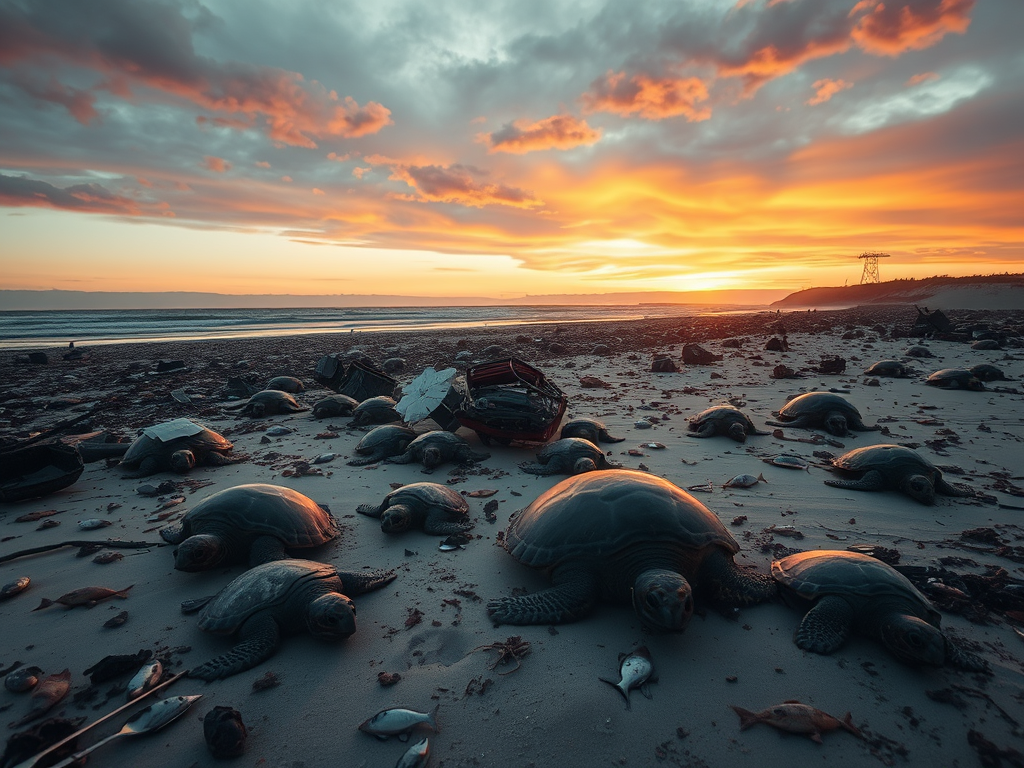
Environmental advocates and local officials in Tamaulipas have raised the alarm over what they describe as a growing ecological threat. They claim that the debris from the most recent explosion has had a devastating impact on marine ecosystems. Reports from the region include the discovery of dead fish, dolphins, and sea turtles along the coast—species that are both economically significant and environmentally sensitive. Residents of the city of Matamoros, located in Tamaulipas, have shared accounts of finding large fragments of metal and entire rocket components, including canisters, littering the shoreline.

As of now, SpaceX has not provided a direct public comment in response to these allegations. However, the company did release a statement via X, the social media platform owned by Musk, in which it downplayed any threat posed by the incident. According to the statement, there were “no hazards to the surrounding area,” and the materials from the disintegrated Starship carried no chemical, biological, or toxicological risks.
Furthermore, SpaceX stated that it has requested assistance from both local and national Mexican authorities to help recover the scattered debris. The company also offered resources to assist in the cleanup efforts and claimed it was working with officials to affirm its legal right to conduct recovery operations in the affected areas. “SpaceX looks forward to cooperating with the Government of Mexico and local authorities to ensure that debris is retrieved as swiftly as possible,” the statement concluded.
Despite these reassurances, concerns remain high on the Mexican side. The governor of Tamaulipas, Américo Villarreal Anaya, confirmed that his administration is investigating whether the launch operations at Starbase comply with international safety protocols. Specifically, they are looking into whether the facility maintains the necessary distance from populated urban areas to prevent any potential harm.
Meanwhile, the incident has ignited a firestorm of discussion on social media in Mexico. Many users have voiced frustration over what they perceive as an imbalance of power and influence. Critics argue that the world’s wealthiest individuals and their companies—especially those like Musk, who maintains a close relationship with former U.S. President Donald Trump—are allowed to operate without sufficient accountability, even when their actions affect other nations.
One particularly pointed critique came from María Elena Álvarez-Buylla Roces, a prominent molecular genetics professor at the National Autonomous University of Mexico. On social media, she questioned the ethical implications of such ventures: “How much longer will the greed of a few be allowed to marginalize the many and put life and our planet at risk or in peril of destruction?”
The broader context only amplifies the urgency of the situation. Earlier this year, SpaceX received approval from U.S. aviation regulators to expand the number of annual Starship launches from its South Texas site—from five to a staggering 25. This escalation in launch frequency raises concerns not only for Mexican environmental and political stakeholders but also for U.S. air traffic systems. A separate explosion in March reportedly disrupted commercial flight operations across several U.S. states, from Florida to Pennsylvania.
As SpaceX pushes the boundaries of private space exploration, tensions are growing between innovation and oversight. The company’s vision of space travel—including colonizing Mars—requires repeated testing and scaling of its technology, much of which is inherently risky. However, as this incident reveals, the consequences of these high-stakes tests do not stop at the company’s launchpads or national borders.
Mexico’s response underlines the broader implications of commercial space ventures that operate near international frontiers. While technological advancements in space exploration hold tremendous promise, they also come with responsibilities—particularly when those endeavors potentially endanger the environment and infringe on the sovereignty of neighboring nations.
What happens next could set a significant precedent. If Mexico proceeds with legal action and international courts become involved, this may lead to new regulatory frameworks governing the transnational consequences of space launches. Such developments would not only affect SpaceX but could also shape the operational guidelines for other private space companies aiming to launch from coastal sites near international borders.
In summary, while no lives were lost in the latest explosion at Starbase, the debris scattered across Mexican territory may have lasting repercussions—environmentally, politically, and diplomatically. The coming weeks and months are likely to reveal how nations navigate the balance between scientific ambition and the need for responsible international cooperation.




Leave a Reply