

Inside the Race to Save a Family Farm From Canada’s Wildfires

Thick smoke clouded the sky, casting a grim shadow over the remote expanse of western Canada. Out-of-control flames from a wildfire were quickly advancing toward a farm that had belonged to Jake van Angeren’s family for nearly seven decades. The fire’s erratic path and growing intensity were threatening to destroy not just buildings or crops, but a deeply rooted legacy.
In Goodlow, a rural farming community located in northeastern British Columbia near the Alberta border, evacuation alerts had been issued as wildfires swept through large swaths of countryside. The warnings triggered an organized rush among local families—many of whom had already packed essentials and prepared to flee at a moment’s notice.
But Jake van Angeren made a different choice.

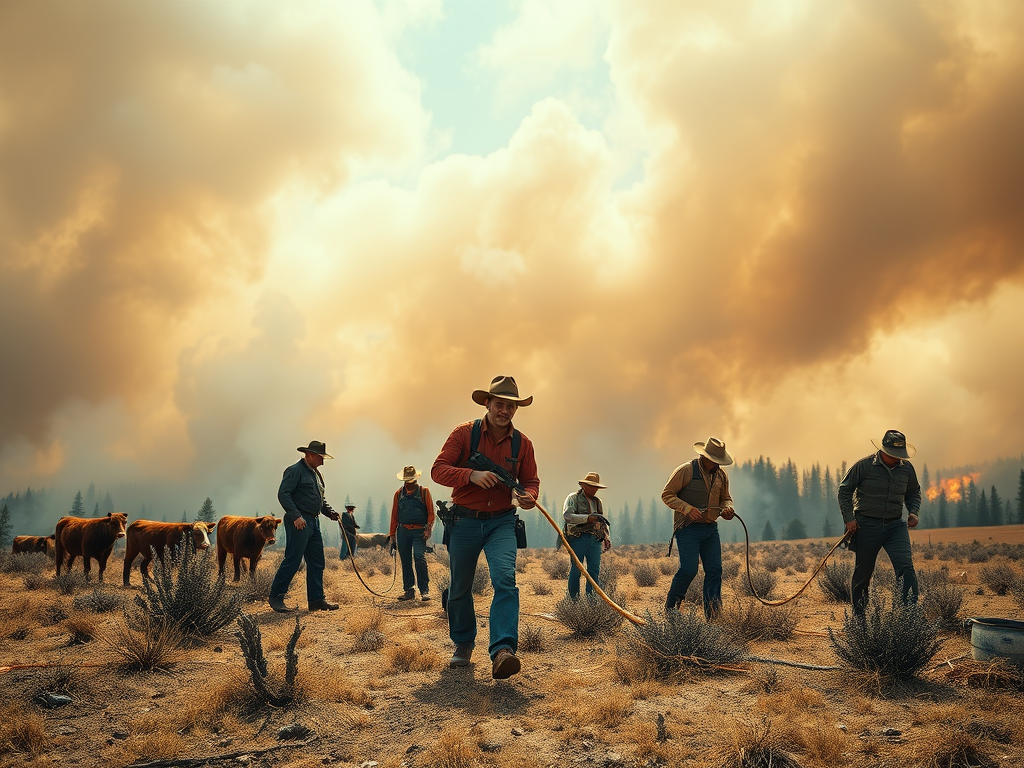
Rather than leave, Jake and a group of nearby farmers mobilized quickly. They filled tanks with water, unraveled long coils of hoses, and began clearing strips of land around their properties, removing any flammable vegetation to act as a buffer against the approaching flames. Together, they created firebreaks—gaps in vegetation designed to stop or slow a wildfire’s advance—and then moved toward the fire line itself.
Their coordinated efforts paid off. The van Angeren farm, which has been part of the family for 70 years, was saved.
Western Canada’s wildfire season typically runs from April to October, and this year’s fires have already scorched close to nine million acres across four provinces. Thousands of people have been forced to flee, many with little notice, as flames close in on their homes and land.
In many areas, officials have mandated evacuations, warning residents that staying behind can be extremely dangerous. Ignoring such orders may lead to serious consequences, including hefty fines or even jail time under Canadian law.


Still, not everyone chooses to leave.
In recent weeks, more than 30,000 people in Saskatchewan and Manitoba have evacuated their homes, either voluntarily or under official orders. But among those who stay are farmers like Mr. van Angeren, unwilling to abandon everything they’ve built and maintained over generations.
Jake, just 20 years old, inherited his 650-acre cattle and feed farm after the passing of his father four years ago. He’s fiercely committed to preserving the land his family has tended for decades. “If I had walked away, it would’ve meant losing everything,” he said. “I wasn’t ready to leave—not until there was absolutely no other option left.”
The fire threatening Goodlow was ignited by lightning and burned roughly 11,000 acres. Gusty winds carried embers across the landscape, sparking new blazes dangerously close to agricultural plots and homesteads.

For some farmers, frustration with the provincial wildfire response is growing. While they recognize the massive strain on firefighting services during peak wildfire season, they feel abandoned in rural areas where help often takes days to arrive.
“It’s not uncommon for fires to burn for days before any crews or equipment show up,” said Scott Hender, one of the farmers who helped battle the fire near van Angeren’s property.
As a result, many in the community have taken matters into their own hands. Farmers have become unofficial fire brigades, using their deep knowledge of the land and access to equipment like tractors, plows, and water tanks to protect what they can.
This collective effort was vividly evident in Goodlow. According to Jake, just a few phone calls among neighbors were enough to trigger a full-scale local response.

Roughly 80 people came together over four intense days following the outbreak of the fire on June 5. Their priority was to cut firebreaks using disc harrows—tractor-pulled machines that till the soil—and to remove anything combustible that might fuel the fire’s spread.
When flames threatened a spot near a creek, the group worked swiftly. They connected a hose to a water tank and carried it into the woods, using chainsaws to clear a path through the dense brush. The smoke was thick and acrid, obscuring visibility and irritating lungs and eyes.
“It’s like being a chain smoker without ever lighting a cigarette,” joked Scott Roberts, another farmer who joined the firefighting efforts. “None of us are smokers, but breathing that smoke was like a two-pack-a-day habit.”

The community members came well-prepared, bringing their own tools—hoses, pumps, water tanks, and power generators. “We had more gear than we had hands to use it all,” Roberts said. “It was really something to see.”
While the men fought the flames, others provided food and support. Kathy Roberts and Lynne Sha, Jake’s mother, handed out hot chili and buttered rolls from the back of a pickup truck, keeping the impromptu crew fueled and motivated.
As night settled in and the fire’s glow lit up the horizon, Jake and his friends sat down with a few beers to plan their next move. The wind shifted again, reigniting parts of the blaze. Without hesitation, the men jumped into a truck, racing across the fields to gather more water and resume firefighting.
Some of them worked to saturate the land, hoping to create a moisture barrier, while others continued to till the soil and widen the firebreaks. The vehicle headlights lit up a surreal mix of ash falling like snow and insects buzzing in the cool night air.


It wasn’t until around 3 a.m. that Jake finally got a few hours of rest.
By the following afternoon, the worst of the fire had been brought under control. Officials from the provincial wildfire service eventually arrived to inspect the property, douse any lingering hot spots, and install protective measures—including temporary sprinklers on rooftops.
For Jake, the experience underscored just how connected he feels to the land. His ancestors are buried there, and every inch of the property holds meaning.
“This farm isn’t just a place—it’s our whole life,” he said quietly. “It’s not something you walk away from without a fight.”
Jake’s story is just one among many in rural Canada, where farmers continue to stand their ground against the increasing threat of wildfires. Their choices are not always understood or supported by outsiders, but for them, the land is far more than just property—it’s identity, history, and livelihood.
And when fire comes for it, they fight back with everything they’ve got.





Leave a Reply