

Half a year ago, the outlook for TikTok in the United States was grim. The Supreme Court had upheld a federal statute requiring the app to be divested from its Chinese parent company, ByteDance, or else face a complete ban on American soil. At one point, the platform even experienced a temporary blackout, going offline for several hours. For a time, it seemed as though TikTok’s days in the U.S. were numbered.

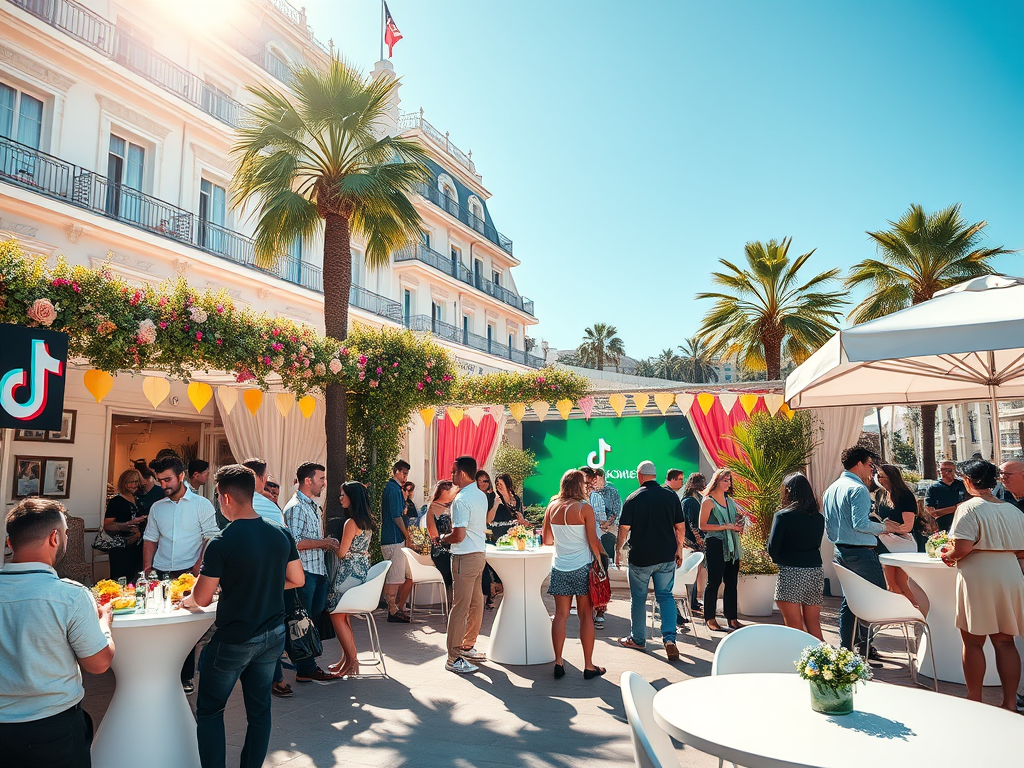
Yet, this week, the mood surrounding the popular social media app was strikingly different. Far from the tense courtrooms of Washington, TikTok was making waves on the sunny shores of the French Riviera. At the prestigious Cannes Lions International Festival of Creativity — one of the advertising industry’s most anticipated annual events — the company made a luxurious appearance, setting up what it dubbed the “TikTok Garden” at the elegant Carlton Hotel. Summer rates at the hotel often begin at around €1,000 (approximately $1,150) per night, yet the high cost did little to deter TikTok’s bustling presence.
The setup was a calculated move: a blend of branding, influence, and reassurance. TikTok’s team welcomed advertisers, digital creators, and fans into their pop-up space, creating an atmosphere more reminiscent of a thriving tech empire than a company under political siege.

TikTok CEO Shou Chew made personal appearances, engaging with content creators who later shared their interactions on the platform. Among them were viral personalities like @ReesaTeesa — whose real-life relationship saga has become the basis for a television adaptation — and comedian @AdamW (Adam Waheed), both of whom TikTok flew to Cannes as part of its promotional strategy. These influencers not only mingled with fans but also spoke on discussion panels, highlighting their success on the platform and the creative ecosystem it fosters.
Night after night, festival attendees queued for TikTok’s themed social events, including their now-popular “Frosé Soirées.” Meanwhile, other executives from the company, particularly those involved in advertising and brand partnerships, were seen holding meetings, playing recreational games like pickleball with influencers, and networking during boat trips to upscale coastal restaurants. These activities reflect TikTok’s ongoing efforts to maintain its global image and brand partnerships, even as it navigates regulatory obstacles back in the U.S.

In fact, the company appears to be walking a fine line — staying visible and culturally relevant while subtly downplaying the ongoing legal pressure. Former President Donald Trump, who had previously taken a hard stance on TikTok, recently issued an executive order granting the company a 90-day extension to find a buyer, delaying enforcement of the law that mandates a change in ownership. The deadline now extends to mid-September.
Despite these looming concerns, TikTok is doubling down on its presence at high-profile cultural and industry gatherings. Just weeks prior to Cannes Lions, the company had also participated in the Cannes Film Festival, not just as an attendee but as an official partner. And even after President Joe Biden signed the law aimed at banning TikTok, CEO Shou Chew made headlines for his attendance as a co-chair at the iconic Met Gala — a move that signaled the company’s intention to remain at the center of global cultural conversations, regardless of political tensions.

For many advertising professionals attending the Cannes event, the possibility of a TikTok ban in the U.S. wasn’t even top of mind. Craig Brommers, Chief Marketing Officer at American Eagle Outfitters, commented candidly, “As I’ve walked around the festival, the law banning TikTok is the biggest non-issue I’ve encountered. No one is really discussing it. People are carrying on as if it’s business as usual.”
Indeed, there appears to be a disconnect between the gravity of the legislative developments in Washington and the mindset of those in the marketing and entertainment industries. TikTok briefly acknowledged the issue during a press briefing on Tuesday, where Khartoon Weiss, TikTok’s Global Head of Business Solutions, referred to the potential ban as “the elephant in the room.”
Despite the tension, Weiss projected confidence. “We believe strongly in a positive outcome,” she told reporters. “So far, every meeting I’ve had this week — and I’ve been at it since 8 a.m. on Sunday — has been productive and supportive.” She emphasized TikTok’s desire to be a reliable, transparent partner to the brands and agencies it collaborates with, underscoring that the company does not want to take its commercial allies by surprise.

On Thursday, TikTok published a statement on its official website, thanking former President Trump for his leadership and support in signing the executive order that provides the company with additional time to find a solution. However, when asked to comment on Shou Chew’s other engagements at Cannes, the company did not respond.
Among those personally impacted by the uncertain future of TikTok is Adam Waheed, the 32-year-old comedic influencer known online as Adam W. Speaking in an interview during the festival, he said he was eager to meet CEO Chew for the first time and expressed appreciation for the executive’s attention to creators. Waheed admitted that he had serious concerns earlier in the year when talk of a ban first resurfaced. Though he had cultivated audiences on other platforms like YouTube and Facebook, he said TikTok’s unique recommendation algorithm and ability to generate viral trends made it irreplaceable.
“It would be a real loss if TikTok were to disappear,” he said. “There’s just something special about it — the way it drives culture, connects people, and elevates content. It’s too valuable a platform to be taken away.”
In many ways, Waheed’s sentiment captures the broader feelings of the TikTok community — creators, users, advertisers — who have grown to rely on the platform not only as a source of entertainment but also as a meaningful economic and creative outlet. Despite the legal hurdles, TikTok’s efforts in Cannes reflect a company that is far from retreating. If anything, it is leaning into its role as a global tastemaker and digital powerhouse, signaling to the world that it plans to be here for the long haul.
While the ultimate fate of TikTok in the United States remains undecided, for now, the company is continuing its strategy of charm, visibility, and cultural engagement — and, at least on the Riviera, it’s winning.

Leave a Reply