

Anti-Migrant Rioters in Northern Ireland Set Homes, and Then a Refuge Site, Ablaze

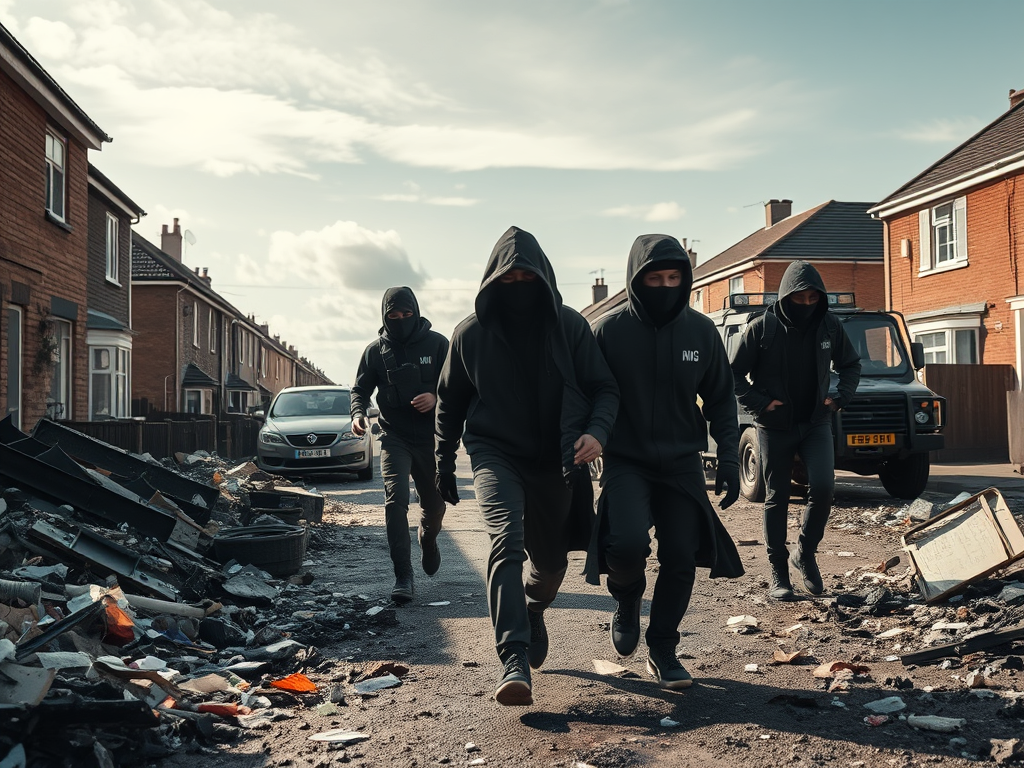
On Wednesday afternoon, the streets of Clonavon Terrace in Ballymena, Northern Ireland, remained littered with broken glass and debris. The aftermath of recent unrest was still visible as small groups of young people, dressed in dark attire and wearing face coverings, began to roam through the neighborhoods once again.
Amid a bright, cloudless sky, the charred frames of two burned homes loomed as stark reminders of the violence that had engulfed the area. From their windows, children watched silently as armored police vehicles rumbled down the road. The town, situated approximately 30 miles northwest of Belfast, was tense after two nights of chaotic rioting had shaken the community.
As dusk approached, the situation deteriorated once more. The familiar sound of fireworks and the clatter of stones filled the air, joined by the crash of Molotov cocktails. For the third night in a row, law enforcement officers found themselves engaged in confrontations with rioters, many of whom were demonstrating with an anti-immigrant agenda.

This wave of violence erupted following an incident last Saturday that allegedly involved a sexual assault in Clonavon Terrace. In response, a series of arson attacks and disturbances erupted across different towns in Northern Ireland, with immigrant communities becoming the main targets.
In Larne, a town roughly 20 miles to the east, masked individuals on Wednesday set fire to a community center that had been temporarily repurposed to shelter families displaced from Ballymena. Fortunately, no injuries were reported, and local officials later confirmed to the BBC that the affected families had been relocated to safer accommodations. Nonetheless, the attack underscored the targeted nature of the violence, as even those under official protection were not spared from intimidation.
The turmoil has brought to light a disturbing surge in xenophobic sentiment, much of which has been inflamed by far-right rhetoric circulating online. The events of the week seem to reflect not a spontaneous outburst, but a coordinated response to longstanding grievances, now redirected toward vulnerable groups.
The initial spark for the unrest came on Monday, when two 14-year-old boys were formally charged in connection with an attempted oral rape that allegedly occurred on Saturday night. During their court appearance, a Romanian interpreter was required, according to the BBC, and both youths denied the charges through legal representation. Under local laws designed to protect minors, the Police Service of Northern Ireland declined to disclose the boys’ identities or nationalities.
On the evening following the court appearance, hundreds of demonstrators marched through Ballymena. While the early part of the demonstration proceeded without major incident, the mood quickly shifted. A group of masked participants splintered from the main crowd, erecting barricades and launching attacks on private property.

Police have labeled the attacks as driven by hatred, and on Wednesday, authorities reached out to other police forces across the UK for reinforcements. Officers from Scotland were expected to join efforts in Northern Ireland by Thursday.
According to police sources, more than 40 officers have sustained injuries since the disturbances began. Many were struck by flying debris, including bricks and glass bottles. In other parts of the region, such as Carrickfergus—north of Belfast—protesters blocked roads, while in Coleraine, fires were ignited along railway lines, disrupting transportation networks.
In a rare show of unity, Northern Ireland’s power-sharing executive issued a joint statement on Wednesday, strongly condemning the disorder as racially motivated violence. The statement called for calm and emphasized the importance of safeguarding all communities.
Earlier that same day, tensions were already building in Ballymena. Near Harryville Bridge, a crowd began to assemble in anticipation of further clashes. Onlookers, some shouting insults at the police, watched from across the river, cheering as groups of young men prepared for confrontation. Behind police lines, a small boy began to cry, overwhelmed by the escalating chaos.

At times, the unfolding events seemed almost ritualistic—an orchestrated showdown that was both expected and, in some circles, encouraged. The visual landscape of the neighborhood reinforced the divisive atmosphere. Many houses displayed Union Jack flags, clearly signaling their occupants’ allegiance and identity.
Northern Ireland’s First Minister, Michelle O’Neill, voiced her dismay at the fact that some residents had resorted to placing signs on their doors indicating their ethnicity in hopes of avoiding violence. “No one should have to declare who they are just to stay safe in their own home,” she said.

Among the spectators was Phillip Logan, a 35-year-old former representative of the Democratic Unionist Party (DUP), a right-leaning, pro-union political group that has taken a hard stance on immigration. Speaking with reporters, Logan claimed that local frustration stemmed largely from Northern Ireland’s housing shortage. “People born and raised here, people with deep roots in this community, are struggling to get homes,” he said. “Then they see others, arriving from abroad—often illegally, in their eyes—being prioritized. That’s naturally going to cause resentment.”
Although the number of immigrants in Northern Ireland has risen over the past 20 years, it remains significantly lower than in England or many other European countries. Nevertheless, the perception of unfair resource distribution has been a powerful trigger for local unrest.
On a nearby street, a young man stood in front of his home, quietly observing the events. “There’s nothing good about what’s happening,” said Tobi, 26, who requested that only his first name be used. Recently arrived in Northern Ireland, Tobi said he had not encountered much discrimination before this week, but he now fears a shift in attitudes.
“It’s heartbreaking,” he remarked. “And the strange thing is, the people stirring all this trouble—they don’t even live here. They’re coming in from other areas, treating this like a game. They don’t understand our street, our neighbors. They’re just using it for their own entertainment.”
As the evening wore on, police erected blockades along the roads surrounding Tobi’s home. Just one street away, officers deployed water cannons and, eventually, police dogs to disperse crowds that refused to leave. By 11 p.m., the majority of the protesters had scattered, though the damage—both physical and emotional—was already done.
Before retreating inside, Tobi offered a final reflection: “It’s going to take a long time before these streets feel normal again.”





Leave a Reply