
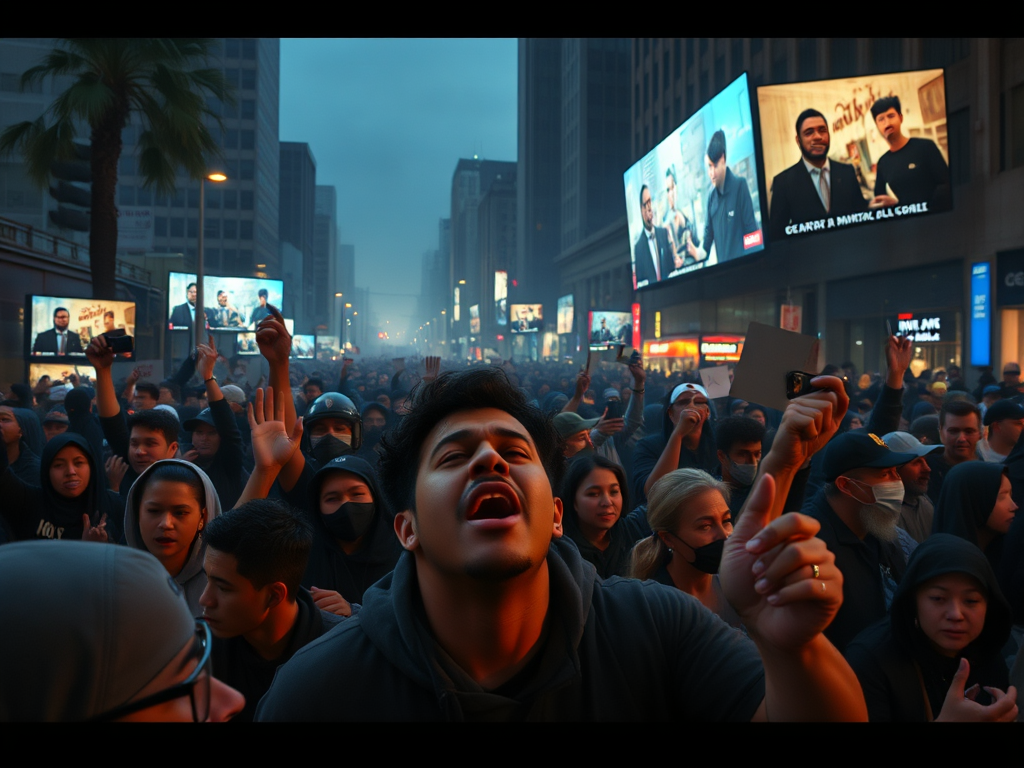

Misinformation and Protests: LA’s Recent Chaos

As protests erupted across Los Angeles in response to federal immigration raids, misleading visuals and false narratives flooded social media platforms. A deluge of fabricated images, altered videos, and misrepresented quotes began circulating widely online, reigniting long-standing conspiracy theories and amplifying support for President Trump’s policies.
These waves of misinformation seemed to have a clear goal: to inflame public sentiment against immigrants and discredit political figures—particularly those aligned with the Democratic Party. By spreading distorted representations of the protests, online users not only increased public confusion but also portrayed a deeply skewed version of the events.
On social media, ideological perspectives clashed, leading to conflicting portrayals of the situation. While some users described relatively contained protests, others posted sensationalized content suggesting that Los Angeles had descended into widespread chaos and lawlessness. This exaggerated imagery gave the false impression that the entire city was in turmoil, when in reality, confrontations were mostly confined to a limited number of neighborhoods.
Among the more graphic posts were videos and photographs depicting protesters hurling objects at law enforcement and setting vehicles ablaze—including several autonomous Waymo taxis. However, even more deceptive were the doctored or outdated images aimed at reviving discredited conspiracies. These suggested that the protests were part of a premeditated scheme rather than an organic response to the immigration raids.

Tensions further escalated on Monday when fresh demonstrations broke out and Defense Secretary Pete Hegseth announced via X (formerly Twitter) the deployment of 700 Marines from a nearby base to secure federal infrastructure. This followed an earlier directive from President Trump, who ordered 2,000 California National Guard troops into the city—bypassing Governor Gavin Newsom’s authority. Typically, the state governor commands the National Guard, but in this case, the federal government acted unilaterally.
These new troop deployments triggered a fresh cycle of misinformation online. Social media users shared misleading photos, some claiming to show Marines on active duty in Los Angeles. One particularly viral image turned out to be a still from Blue Thunder, a 1983 action movie about a fictional government conspiracy involving civil rights abuses in Los Angeles. The photo, taken from a climactic helicopter battle scene over downtown LA, was misrepresented as real-time footage of military involvement.
Dr. Darren L. Linvill, a researcher with the Media Forensics Hub at Clemson University, observed that many conservative accounts were deliberately exaggerating the unrest to reinforce President Trump’s narrative—that the city was under siege by violent insurgents. According to Linvill, such posts can become self-perpetuating. “By amplifying these claims,” he explained, “they actually attract more demonstrators, fueling the very conflict they claim to fear.”
One high-profile contributor to the spread of false information was actor James Woods, known for his promotion of conspiracy theories. Using his X account, Woods launched attacks against California’s Democratic leadership, particularly Governor Newsom. He also reshared a fabricated quote falsely attributed to former President Barack Obama, suggesting a covert plan to implement socialism. Alongside this, Woods posted a video of burning police vehicles—footage that was actually from the 2020 protests, not current events.
Another viral piece of misinformation involved a photo of a stack of bricks, purportedly placed near Immigration and Customs Enforcement (ICE) offices to be used by protesters. In truth, the image had been lifted from the website of a Malaysian construction materials supplier and had no connection to the protests. Nevertheless, right-wing influencers and anonymous accounts used the image as “evidence” of an orchestrated campaign funded by billionaire philanthropist George Soros. A widely shared post claimed, “It’s Civil War!!” and alleged that the bricks had been positioned by Democratic operatives to incite violence.
Even though the post was eventually flagged with a Community Note clarifying its inaccuracy, it had already been viewed over 800,000 times. It was also reshared extensively, including by accounts that appeared to be fake or managed from abroad—some even in Chinese.
This particular misinformation theme—of bricks being “planted” to incite violence—has resurfaced numerous times in recent years. It was especially prominent during the 2020 Black Lives Matter protests and made another appearance in 2022 after Representative Lauren Boebert, a Republican from Colorado, implied that paving bricks near Capitol Hill were part of a plot to instigate riots following the overturning of Roe v. Wade.
The Social Media Lab at Toronto Metropolitan University commented on the recurring nature of this hoax via the Bluesky platform. “It seems like every protest these days comes with the familiar ‘pallets of bricks’ myth,” the Lab noted. “Photos or clips of bricks supposedly left out to encourage violence become instant bait for conspiracy theorists and political opportunists on the far right.”
This type of narrative plays into broader claims that public demonstrations are not authentic expressions of dissent but rather calculated manipulations orchestrated by elites. On his own platform, Truth Social, President Trump echoed this sentiment by labeling the protesters as “Paid Insurrectionists!”
A number of accounts on social media continued to push baseless accusations, linking the protests to Soros-backed nonprofits, elected Democrats, or local organizations. Some of these posts originated from handles that closely resembled those of reputable news outlets or government departments, thereby deceiving users into believing they were consuming official information.
One of the more bizarre theories came from Mike Benz, a social media influencer known for his conspiracy-driven content. Last year, Benz claimed the Pentagon was using pop star Taylor Swift as part of a psychological operation to undermine Trump. This time, he suggested that Los Angeles Mayor Karen Bass had CIA ties and played a role in instigating the riots. His argument hinged on the fact that Bass once served on the board of the National Endowment for Democracy, a U.S. agency that promotes democratic institutions worldwide.

Unsurprisingly, these themes were echoed by accounts linked to Russian interests, which frequently amplify divisive content aimed at undermining U.S. institutions. Russian nationalist Aleksandr Dugin took to X on Sunday to declare that the protests were “a nationwide conspiracy of liberals” not just against Trump, but against the American people as a whole. The Kremlin has long accused Soros and the U.S. government of orchestrating so-called “color revolutions” in foreign nations—from the Arab Spring uprisings to protests in Ukraine.
The rapid spread of disinformation in events like these can overwhelm efforts to provide accurate, verified information. Nora Benavidez, a senior counsel at Free Press, an advocacy group that focuses on the intersection of media, technology, and civil rights, warned that these campaigns are part of a broader strategy to delegitimize movements for social justice.
“This kind of information warfare is a classic sign of political conflict,” Benavidez said. “Often, it’s intentionally provoked by those in power to achieve their own undemocratic objectives. It creates confusion, fosters fear among people who might otherwise sympathize with the cause, and undermines the unity we desperately need during times of civil strife.”




Leave a Reply