

Impact of Trump Administration on Harvard’s Veteran Research

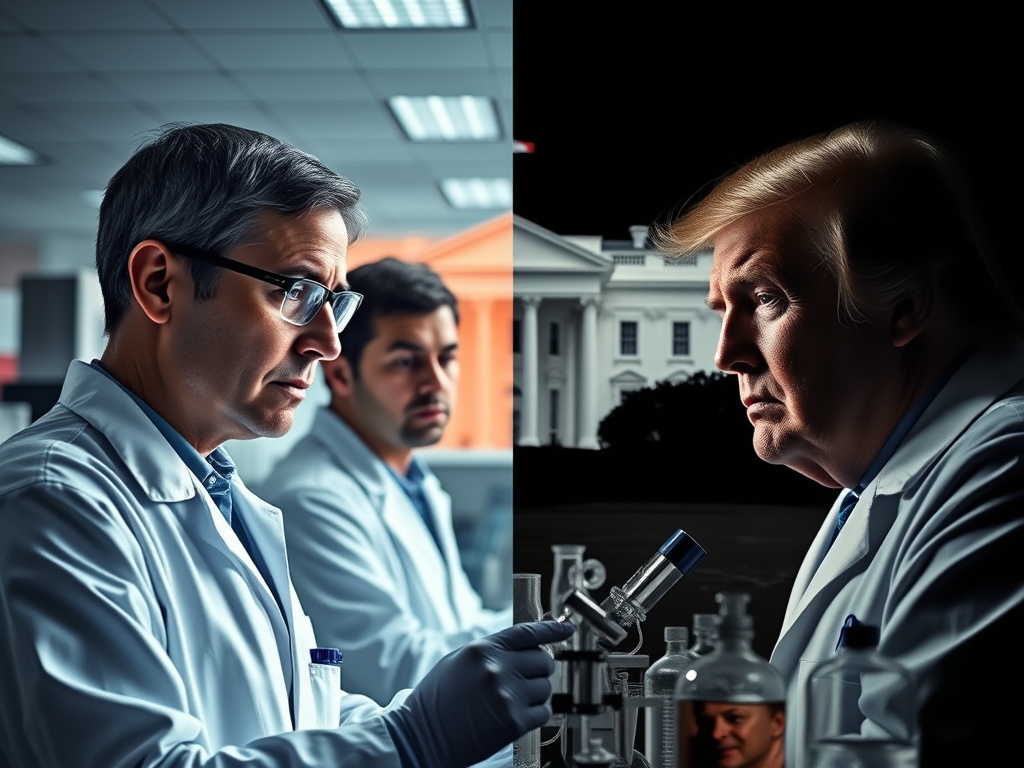
The Trump administration’s decision to terminate several federal contracts with Harvard University has sparked internal conflict over the potential disruption to vital medical research supporting veterans. Projects focusing on suicide prevention, toxic exposure, and prostate cancer screening are now at risk, according to emails obtained by The New York Times.
Among the canceled agreements is a partnership between the Department of Veterans Affairs (V.A.) and Harvard Medical School to develop a predictive model to help emergency room doctors assess whether suicidal veterans require hospitalization. In a May 8 email, Seth J. Custer, an official in the V.A.’s Office of Research and Development, warned that terminating this contract could lead to preventable veteran suicides. However, John Figueroa, a senior adviser to V.A. Secretary Doug Collins, argued that other institutions could take over the work.

V.A. spokesperson Peter Kasperowicz confirmed the contracts are under review to ensure alignment with the Trump administration’s veterans-first policy. Neither Custer nor Figueroa commented further, and representatives from the White House and Harvard declined to respond.

The situation reflects the broader political strategy behind President Trump’s use of research funding as leverage in ongoing disputes with universities. While the administration has scrutinized Harvard’s admissions, curriculum, and hiring practices, the V.A. has sought cost reductions by cutting contracts and enforcing a sweeping return-to-office mandate, a policy strongly backed by Elon Musk and the Department of Government Efficiency.
Harvard President Alan M. Garber described the funding cuts as part of a broader campaign to undermine scientific research, warning of potentially serious and lasting consequences. In response, the university has filed a lawsuit to block the terminations, underscoring the threat to critical ongoing research.

The V.A. has already begun terminating six contracts with Harvard, according to a May 7 email from a V.A. employee. The message noted that requests to retain the contracts would be “heavily scrutinized” and directed staff to begin cancellation procedures immediately.
One of the contracts under review evaluates the quality of cancer care provided by non-V.A. health facilities that serve veterans. Custer highlighted the project’s alignment with priorities set by Congress and V.A. leadership.
Another contract involves analyzing clinical data that has facilitated veterans’ access to clinical trials, including those supporting precision screening for prostate cancer. Custer called the work “highly critical” to the V.A.’s mission and noted there was “no internal V.A. solution” to replace it.
Dr. Walter Willett, a Harvard professor of epidemiology and nutrition, has worked with the V.A. for five years on a related project analyzing dietary data from 500,000 veterans to identify links between nutrition and chronic disease.
“This work benefits everyone,” Willett said. “It’s not about politics, but unfortunately, we’re caught in the middle of it.”




Leave a Reply