

Elon Musk Calls Trump Policy Bill a ‘Disgusting Abomination’

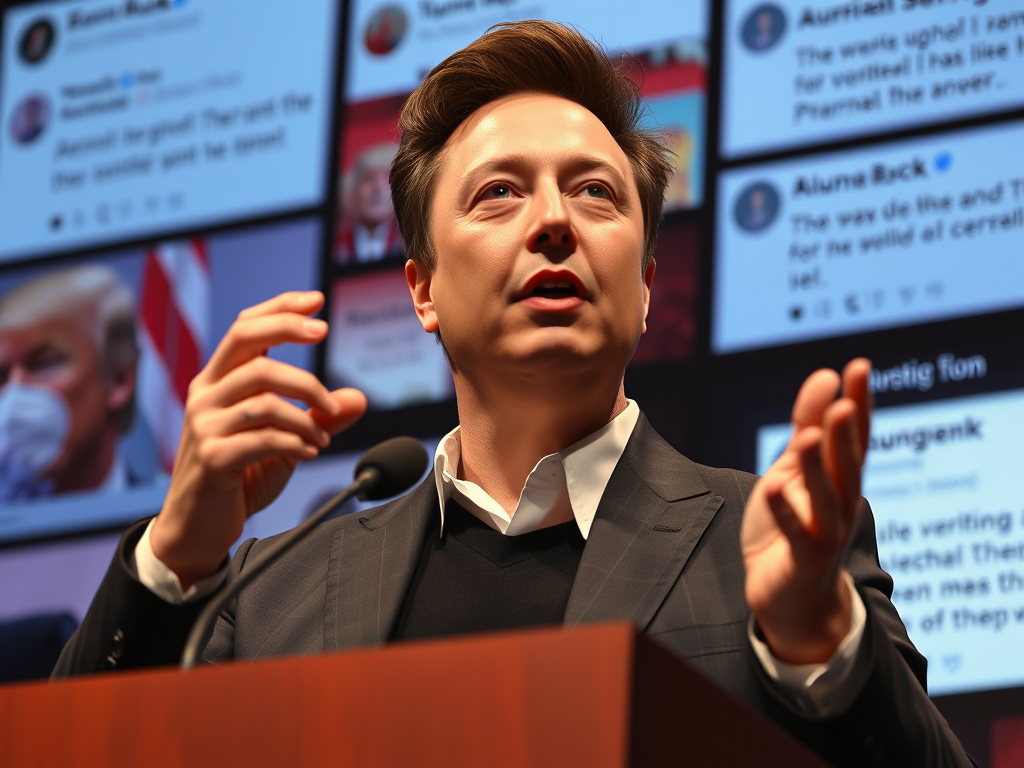
On Tuesday, Elon Musk strongly denounced a sweeping Republican legislative proposal designed to implement President Trump’s domestic agenda. Posting on his social media platform X, the billionaire entrepreneur referred to the bill as a “disgusting abomination” and sharply criticized House members who supported it, writing, “You know you did wrong.”
Musk’s outburst came in a rapid-fire sequence of around ten posts, where he expressed his deep dissatisfaction with the bill. He also shared statements from Republican Senators Rand Paul of Kentucky and Mike Lee of Utah, both of whom voiced concerns about the rising national deficit — a concern Musk echoed.
“I’m sorry, but I can’t stay silent any longer,” Musk wrote in one post. He described the legislation as “bloated, outrageous, and stuffed with unnecessary spending,” warning that it would significantly expand an already overwhelming budget deficit. “Congress is bankrupting America,” he added.
While Musk stopped short of naming specific lawmakers, he hinted at political consequences for those who supported the bill. “Come November 2026, we vote out every politician who betrayed the American people,” he declared, alluding to the upcoming midterm elections.

This series of posts marked an intensification of the growing divide between Musk and Trump. Although the two have publicly expressed mutual respect in the past, Musk’s gradual exit from his unofficial government role — which included oversight of the Department of Government Efficiency — appears to have freed him from the obligation to align closely with the administration’s message.
Freed from this role, Musk has returned to a more independent — and often unpredictable — mode of political engagement via his platform, X. This isn’t the first time Musk has disrupted political momentum: prior to Trump’s inauguration in December, Musk derailed a bipartisan government spending bill with a barrage of posts, even threatening to support primary challengers against Republicans who favored the measure. In March, he tried — unsuccessfully — to influence a high-profile judicial race in Wisconsin by using his platform to endorse the conservative candidate.
Now no longer bound by expectations to echo the Trump administration’s positions, Musk is once again wielding his digital clout to stir political controversy.
At 53, Musk is known for publicly challenging policies and institutions he sees as contrary to the interests of his business empire, which includes Tesla and SpaceX. Trump’s proposed domestic policy legislation — which threatens to remove subsidies and tax incentives for electric vehicle (EV) buyers — could severely impact Tesla’s sales and market positioning.
House Speaker Mike Johnson expressed disappointment in Musk’s stance. Speaking to reporters at the Capitol, Johnson revealed that he and Musk had spoken the day before, and that Musk “seemed to understand” the rationale behind the bill.
Nonetheless, Musk’s social media blitz reportedly blindsided the White House. Sources close to the administration indicated that President Trump had not anticipated such a public rebuke from Musk. However, it remains uncertain whether Trump will choose to respond directly.
Karoline Leavitt, the White House press secretary, downplayed the episode. “The president already knows where Elon Musk stands on this legislation,” she said. “That hasn’t changed his view. This is one big, beautiful bill, and the president remains fully committed to it.”
Musk declined to comment through his representatives.
The legislation in question — officially named the One Big, Beautiful Bill Act — is a cornerstone of Trump’s legislative priorities. It promises sweeping tax cuts, particularly benefiting high-income earners, and seeks to allocate significantly more funding to the military and border enforcement. However, in order to offset some of the costs, the bill also proposes cuts to programs such as healthcare, nutrition, education, and clean energy initiatives.
While the White House and Speaker Johnson have argued that the legislation would ultimately help reduce the national debt, analysis from the Congressional Budget Office and several independent think tanks suggests otherwise. According to these sources, the bill could actually increase the federal deficit by more than $1 trillion, even when factoring in projected economic growth.

Musk’s critiques came at a pivotal moment for the bill. Despite resistance from some Republican factions, the House passed the legislation on May 22 following a high-pressure campaign led by Trump. Johnson had worked tirelessly to unite disparate GOP groups, while Trump invited hesitant lawmakers to the White House and cast any opposition to the bill as “the ultimate betrayal.”
Even so, Republican senators have already signaled their intent to amend the bill. Fiscal conservatives in particular are troubled by projections that the bill will balloon the national debt and are demanding further reductions in programs like Medicaid. Trump, however, has cautioned against making significant changes to Medicaid, given its popularity among his voter base.
Musk first began voicing his objections last week during an appearance on CBS News’s Sunday Morning, expressing his concern about the bill’s size and the negative consequences for the national budget. According to two sources familiar with the situation, people close to the ongoing negotiations confirmed that Musk had been frustrated by the proposal to eliminate electric vehicle subsidies — a move that would directly impact Tesla.
“I understand that affects his business, and I sympathize,” Johnson said in reference to Musk. “But I don’t think it’s the federal government’s job to support a shift toward electric cars with taxpayer money.”
Musk’s willingness to challenge the Trump administration isn’t new. In April, he drew attention for publicly attacking Peter Navarro, Trump’s chief trade adviser, labeling him “a moron” and “dumber than a sack of bricks” in another flurry of X posts. Tesla insiders later revealed that Musk hadn’t initially understood how the administration’s tariff policy could harm his company’s supply chain.
At the time, the White House played down the tension. When asked about Musk’s tirade, Leavitt quipped, “Boys will be boys.” Shortly afterward, Musk was formally briefed on the tariffs’ potential effects on Tesla’s operations.
Musk’s current threats to unseat Republican lawmakers contrast with his recent political spending. In the last election cycle, Musk’s political action committee, America PAC, spent around $20 million to support Republican House candidates. Additionally, another PAC he backed contributed $10 million toward boosting Republicans in the Senate.
Some Democrats welcomed Musk’s opposition to the bill. Senate Minority Leader Chuck Schumer of New York even brought a printout of Musk’s social media posts to a press conference on Tuesday, declaring, “He’s right. Republicans should pay attention.”
Earlier that same day, Musk had posted a meme on X mocking the GOP’s promise to reduce government spending. The image showed a pair of fingers delicately holding a tiny pair of scissors, captioned: “Republicans getting ready to reduce the size of government.”
The meme, like the rest of Musk’s posts, drove home his core criticism: that despite the rhetoric, the current Republican leadership is driving the country deeper into debt, and that the proposed bill does little to address America’s long-term fiscal health.
As debate over the legislation continues in the Senate, Musk’s unfiltered online presence has once again thrown a wrench into Washington’s political machinery — and reaffirmed his role as a wildcard in American politics.s.tion read.




Leave a Reply