

TikTok Made Addison Rae Famous. Pop Made Her Cool.

A few years back, when Addison Rae approached Columbia Records in hopes of landing a music deal, her rise to pop stardom was far from certain. At that point, she was primarily recognized as one of TikTok’s early breakout influencers — a charismatic dancer and social media presence rather than a vocalist or songwriter. She had recently been embarrassed by the unauthorized leak of some early demo tracks she wasn’t proud of, and she was eager to separate her new artistic ambitions from that material.
Instead of arriving with polished audio samples, Rae brought a mood board — carefully assembled in a binder — to articulate her artistic vision.
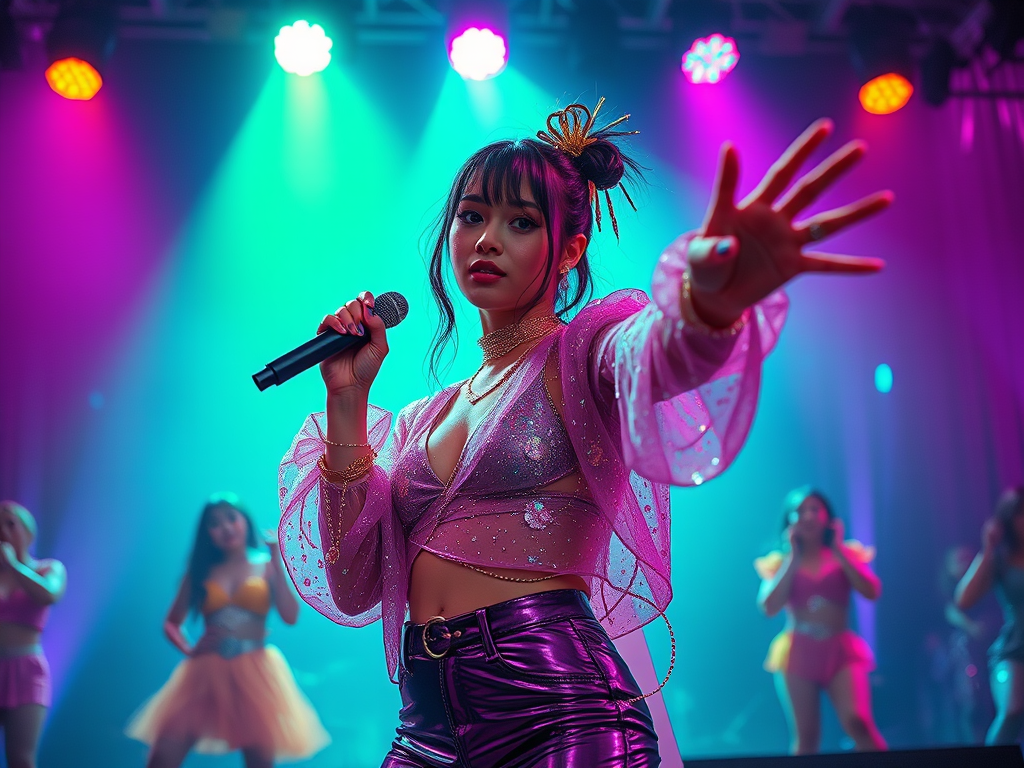
She started with words that captured her intended energy: “intentional,” “intense,” “loud,” “dance,” and “glitter.” Then came her chosen color palette — vibrant aquamarine, hot pink, bold purple, and electric yellow. The binder also included visuals of iconic pop performances that inspired her: Britney Spears’s 2001 MTV VMA performance of “I’m a Slave 4 U,” Madonna’s Girlie Show tour, and other legendary moments from pop history.
The unconventional approach paid off. Columbia saw her passion and potential, and she landed the deal. But what followed was a creative challenge, as Rae explained recently on Popcast, the New York Times’s music podcast: “I knew what kind of emotional response I wanted my music to create — I just wasn’t sure what that actually sounded like or what I wanted to say through my songs.”
These uncertainties launched her on a year-long journey of shaping and redefining her musical identity — an identity born in the fast-paced, trend-driven ecosystem of TikTok, but now evolving into something more intentional and nuanced. The result of this transformation is Addison, her debut album, which is set to be one of the year’s most noteworthy pop releases. The album is sensual, urgent, and dreamy — an homage to the sonic textures of the 1990s rather than an echo of the current pop scene.

What connects the songs on Addison isn’t a single genre. The tracks are generally upbeat, yet presented in a restrained, deliberate fashion. The production often plays with intensity, introducing unexpected shifts in rhythm and texture. Rae’s vocals are airy and ethereal — as if sung from the edge of a reverie — but the lyrics are grounded in physicality, emphasizing presence and sensation. Her voice floats in layers of harmonies, creating an intimate, almost otherworldly atmosphere.
The visual component of her music — her videos — is just as telling. These clips are rich in feminine extravagance: playful choreography, nods to retro glamour, sparkling body gems, melancholic moments on the beach, and luxurious gowns paired with hints of rebellion. While the music draws comparisons to artists like Lana Del Rey and Madonna, Rae’s persona is something more singular — not a copy of her idols, but a character shaped through both homage and originality.
What some might have dismissed as a superficial image overhaul was, in reality, Rae shedding an old skin. At 24, Addison Rae — born Addison Rae Easterling — hails from Louisiana, where she trained as a competitive dancer from an early age. She started posting videos on TikTok toward the end of high school and treated the platform like a full-time job, sometimes uploading as many as eight videos a day to stay on top of trends.
“When I look back on that time,” she recalled, “I realize how much freedom of choice and taste is a luxury — one I didn’t really have.”
Her strategy then was practical: “I wasn’t focused on revealing who I was deep down. It was more about survival — finding a way out, a way forward.” She saw TikTok as a vehicle, and leaning into trends was the price of entry. “It was a sacrifice I had to make,” she said.
She also understands why some critics still associate her only with her TikTok origins and doubt the sincerity of her artistic ambitions. “People ask, ‘Did you even like music? Did you ever sing? Were you ever more than a dancer who went viral on TikTok?’” Rae acknowledged.
The answer is yes — but she’s only now getting the chance to prove it. In interviews, she appears confident and self-assured, fully aware of the gap between who she once was and who she is now. Dressed in glittery tights, red lipstick, and denim thongs with pink leg warmers over black Louboutins, she leans into the surreal, glamorous image she’s carefully cultivated.

Rae was quick to recognize that music industry executives had been eyeing TikTok as a talent pipeline even in its early days. In fact, long before her music career took shape, record labels would send her $20 via PayPal to use their artists’ tracks in her viral dance videos. As one of the platform’s first major stars, she eventually amassed over 88 million followers by consistently adapting to the platform’s changing algorithms and trends.
Of all the influencers who rode TikTok’s first wave of fame, Rae may be the one who best understood that the app was a tool for capturing attention — not necessarily a showcase for any one talent. She leveraged that exposure into broader opportunities: starring in Netflix’s He’s All That in 2021, launching a podcast and a makeup line, and most recently working on Animal Friends, a film featuring Aubrey Plaza and Ryan Reynolds.
Yet music was always part of her ambitions. As far back as 2020, she was in the studio, not merely recording songs written for her, but actively writing her own material. “From the start, I didn’t want to just sing demos — I wanted to write them,” she said. “That way, I could connect more deeply with the songs.”
Her debut single, “Obsessed,” released in 2021, was well-received in some corners — The New York Times described it as “pleasant Pelotoncore” — but the track didn’t make a lasting impact. Rae, however, remained undeterred. “I kept writing. That was my way of saying, ‘I’m not done yet.’”
In 2022, more of her unreleased songs were leaked online. Though frustrating, the leaks gave her unexpected insights. Fans chose favorites and even burned CDs of their top picks. Charli XCX even reached out, wanting to jump on one of the leaked tracks, “2 Die 4.”
Those early leaks shifted Rae’s reputation — from wannabe pop star to underground favorite. “People started saying, ‘Wait, this is actually kind of good,’” she said. Encouraged by the response, she independently released the EP AR, a collection of some of those leaked songs.
Later, Rae connected with Swedish songwriting duo Elvira Anderfjärd and Luka Kloser, part of Max Martin’s acclaimed production group. Their first session together produced the hook for “Diet Pepsi,” which became the lead single for her album — a shimmering example of Rae’s take on dreamy, retro-pop. The album was built almost entirely in collaboration with that team.
Unlike traditional artists who spend years refining their style, Rae approached her music without rigid expectations. Her goal wasn’t imitation. “I don’t want my songs to sound like anyone else’s — just evoke a certain era or emotion,” she explained. One key instrument used on the album was the Korg M1, a keyboard that defined much of the early 1990s pop sound.
Asked what she admires most about icons like Madonna, Britney, Gaga, Prince, or Janet Jackson, Rae didn’t mention genre or image — she cited “commitment.” Each of those stars, she said, embraced their sound and persona wholeheartedly.
And Rae is equally committed, physically throwing herself into her performances — literally. In the video for “Aquamarine / Arcamarine,” she slides across a truck bed, and in another moment that went viral, she smokes a cigarette clutched between her toes. Her fascination with contortion and performance art dates back to her early love of Cirque du Soleil and Dance Moms.
This mix of dreaminess, sensuality, and unpredictability helps her straddle the line between mainstream pop and avant-garde experimentation. When she announced her album’s release date, she stitched it into a pair of underwear — playful, provocative, and timed perfectly during a surprise appearance with Arca at Coachella.
She hasn’t gone on tour yet and has made only a few live appearances. Still, she’s already earning the respect of the pop elite: Lorde has praised her; Lana Del Rey shared a clip of herself listening to “Diet Pepsi”; and Charli XCX featured Rae’s unmistakable scream in a remix that became a defining sound of the year.
Rather than borrowing credibility from these stars, Rae seems to draw them in — not as a follower, but as someone they admire for her originality.
In that sense, Rae’s evolving career answers a broader cultural question: Can someone who gains fame in one domain reinvent themselves authentically in another? Can past personas be let go, and fresh chapters begin?
Addison Rae thinks so. She doesn’t reject her past — she sees it as a platform. “Now, I have the freedom to explore — to be weird, reflective, playful, curious,” she said. “I can transform. I can experiment. I can be who I want now.”
And with Addison, she’s doing exactly that. benefits everyone,” Willett said. “It’s not about politics, but unfortunately, we’re caught in the middle of it.”




Leave a Reply