
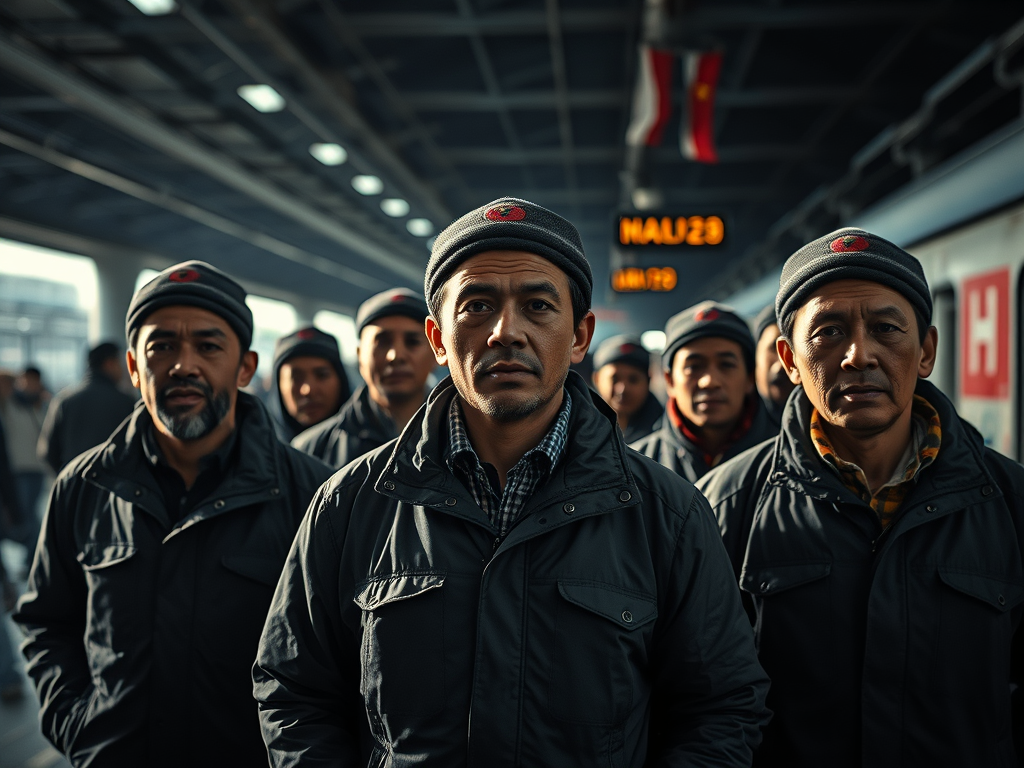

Across China’s industrial towns, groups of Uyghur workers arrive by train and airplane, often wearing identical jackets or hats that identify them as part of a coordinated labor transfer. These individuals are not traveling by choice but are dispatched under government-sponsored employment schemes. Their destinations vary—from footwear workshops producing rubber slippers, to automobile plants assembling wiring harnesses, to meat-processing facilities sorting poultry.
How China Uses Work to Reshape Uyghur Identity and Control a Strategic Region

An in-depth investigation conducted collaboratively by The New York Times, Der Spiegel, and the Bureau of Investigative Journalism has revealed the broad scale of these labor transfers. The findings suggest that the relocation of Uyghur workers from their native Xinjiang region to factories in other parts of China is far more extensive than previously reported.
These state-run labor transfer initiatives have led to Uyghurs being employed in dozens of Chinese provinces, producing goods that end up in global supply chains. As a result, many prominent international brands are at risk of being linked to forced labor—posing a dilemma for regulators and businesses trying to ensure ethical sourcing and labor compliance.
Investigators were able to trace Uyghur laborers to over 70 manufacturing facilities spanning at least five key industries. While not all the details surrounding their work environments are transparent, numerous international labor organizations, scholars, and human rights defenders agree that these programs exhibit coercive characteristics.
“Imagine being torn from your community and sent to a completely foreign environment under duress—that’s the reality for many Uyghurs,” said Rahima Mahmut, a London-based Uyghur human rights advocate and executive director of Stop Uyghur Genocide. “It’s not just about geography; the cultural shock is profound. The food, the language, the customs—everything is alien.”
In response to international scrutiny, the Chinese Embassy in Washington has repeatedly denied allegations of forced labor. “Claims about forced labor in Xinjiang are nothing more than malicious fabrications orchestrated by anti-China entities,” the embassy stated. It went on to say that the central government’s actions had improved regional stability and security. “Issues related to Xinjiang are fundamentally about combating violent extremism and secessionism, not about human rights,” the statement concluded.

However, the evidence points to a more complex picture. For many years, the Chinese government has orchestrated the transfer of Uyghurs from their home communities in Xinjiang to both intra-provincial and inter-provincial job placements. Initially framed as poverty alleviation initiatives, these programs have evolved into a core component of Beijing’s strategy to integrate—and, critics argue, assimilate—the Uyghur population.
This transformation coincides with a broader crackdown in Xinjiang, where authorities have aimed to eliminate dissent and curb ethnic separatism. The government’s efforts intensified following a series of violent incidents involving Uyghurs, including a 2013 vehicular attack near Beijing’s Tiananmen Square and a 2014 knife attack at a train station in Kunming that left dozens dead and injured.

According to internal government documents obtained by The New York Times in 2019, Chinese President Xi Jinping viewed these attacks as indicators that radical Islamist ideologies had penetrated deep into Uyghur society. In response, the government launched a sweeping campaign involving mass surveillance, the construction of internment camps, and the imposition of strict controls on daily life in Xinjiang.
For Uyghurs not confined in camps, the government has employed the labor transfer program as a method of social management. Adrian Zenz, a leading researcher on Uyghur forced labor and senior fellow at the Victims of Communism Memorial Foundation, explains that Chinese officials frequently label unemployed Uyghurs as “idle” and therefore potentially dangerous. By enrolling these individuals in labor programs, authorities claim to be offering economic opportunity while in fact tightening control.
In 2018, a policy analysis by scholars at Nankai University, located in northeastern China, advised the government to intensify labor transfers as a strategy to dilute Uyghur population concentrations in Xinjiang. The document explicitly suggested that this would help “assimilate” Uyghurs into Han-dominated regions and reduce the perceived risk of unrest.
Further evidence of coercion is found in leaked police records from Xinjiang. These documents, acquired by the Victims of Communism Memorial Foundation, indicate that Uyghurs who decline to participate in government programs, including labor transfers, may be detained. The files suggest that refusal is interpreted not as a personal decision but as an act of defiance against the state.


While some Uyghurs may agree to relocate in hopes of escaping constant police checkpoints and surveillance in Xinjiang, experts note that the recruitment process itself lacks genuine consent. Often, government officials visit rural communities and apply pressure on families to send at least one member to participate. These teams go door-to-door, and individuals with no previous travel experience—many of them farmers—are abruptly uprooted from their villages.
“The system operates under quotas,” says Darren Byler, an anthropologist at Simon Fraser University in Canada who specializes in Uyghur culture and surveillance in China. “Local officials are rewarded based on the number of workers they recruit. That creates strong incentives for coercion, especially in areas where residents are hesitant to leave.”
Economic hardship also plays a critical role in this phenomenon. In many Uyghur-majority rural areas, economic opportunities have dwindled due to land seizures and the expansion of large-scale state farms. Uyghurs also face systemic discrimination in the job market, as Han Chinese employers are often reluctant to hire minority workers. These obstacles leave few alternatives, making the government’s labor transfers seem like the only viable path—even if it comes at the cost of freedom and dignity.

The Nankai University report noted that Uyghur workers, once relocated, frequently encounter logistical issues. In some cases, law enforcement authorities in their destination provinces prevent them from disembarking at train stations. Even when they manage to reach the factory, they may be denied entry by local management, either out of prejudice or bureaucratic confusion. Some are sent back to Xinjiang after these confrontations, an outcome that is both humiliating for the workers and politically inconvenient for the authorities overseeing the program.
These repeated obstacles underscore the systemic challenges facing Uyghur workers and the contradictions inherent in the transfer scheme. While the state promotes the program as beneficial and voluntary, many aspects suggest otherwise: political pressure, cultural dislocation, restricted movement, and the looming threat of detention all point to an environment in which real choice is absent.
Ultimately, the growing visibility of these transfers raises pressing ethical questions for global companies. With Uyghur labor now linked to multiple sectors and brands, the burden is on multinational corporations and international watchdogs to scrutinize their supply chains more rigorously. As evidence of coercion becomes increasingly difficult to ignore, the responsibility to act rests with businesses, consumers, and policymakers alike.




Leave a Reply