

Federal Judge Dismisses Case Against Michigan Trooper Charged in Man’s Death

In a controversial legal decision that has sparked both support and outrage, a federal judge has thrown out murder and manslaughter charges against a Michigan State Police trooper who fatally struck a fleeing suspect with his unmarked police SUV last year in suburban Grand Rapids.
The officer, Brian Keely, was participating in a joint federal task force under the U.S. Marshals Service at the time of the incident. The judge ruled that Keely’s actions, although severe, were within the bounds of his authority as a federal officer. As a result, the court granted him immunity under the Supremacy Clause of the U.S. Constitution — a provision that protects federal officers from being prosecuted under state law in certain circumstances.
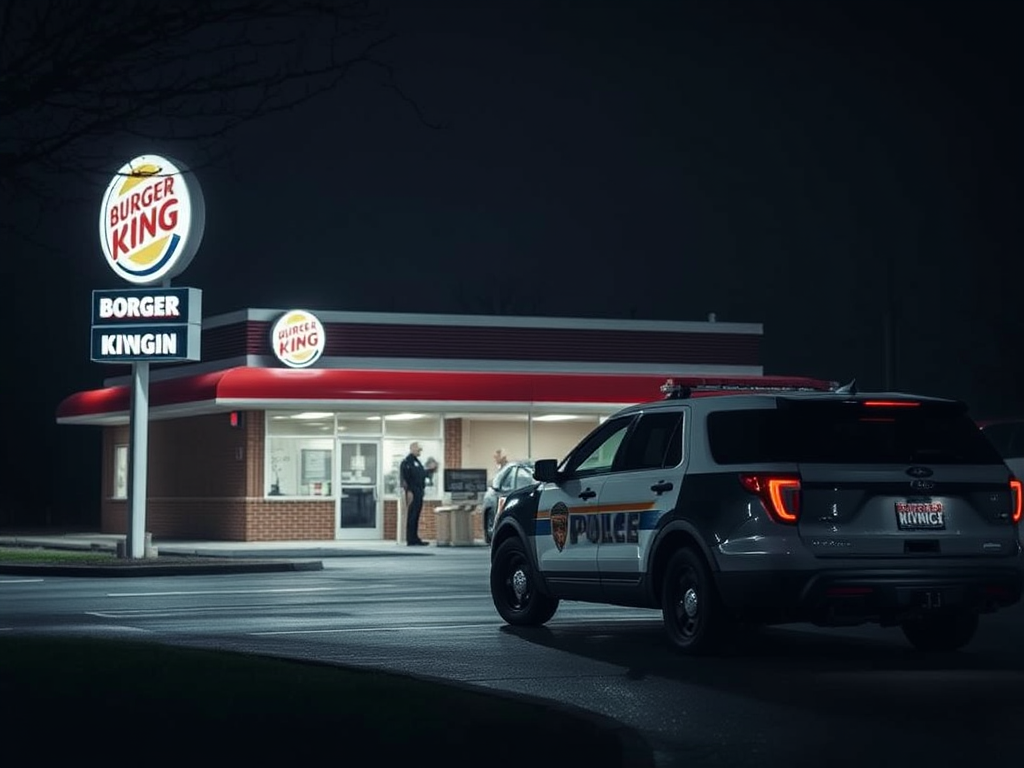
The deceased, 25-year-old Samuel Sterling, had been fleeing from officers when he was struck by Keely’s vehicle near a Burger King in Kentwood, Michigan, on April 17, 2024. Police body cam and dash cam footage show Sterling running on foot when Keely, in pursuit, drove the SUV directly into him, pinning him against the side of the restaurant. Sterling was seriously injured and later died in the hospital.
Despite the video evidence and the state of Michigan’s attempt to prosecute Keely, U.S. District Judge Hala Y. Jarbou, appointed by former President Donald Trump, ruled on Wednesday that Keely’s use of force was justifiable under the circumstances. In her opinion, even though the trooper’s actions involved significant risk, they were ultimately made in an attempt to protect the public and fellow officers from a potentially more dangerous situation.

Judge Jarbou noted that Keely had reason to believe Sterling could be armed and intended to enter a crowded public restaurant, posing an immediate threat. “Even if Keely’s actions were risky,” the judge wrote, “he made a reasonable decision to try to block or deter Sterling from entering the restaurant in order to prevent more serious risks to the public and to the officers created by Sterling’s flight.”
The ruling dealt a heavy blow to Michigan Attorney General Dana Nessel, who had filed the original charges in state court and attempted to prevent the case from being moved to federal jurisdiction. Following the dismissal, Nessel released a statement condemning the decision.
“This outcome represents nothing short of a miscarriage of justice,” said Nessel, a Democrat. “The precedent set here is deeply troubling — that individuals who are designated as federal officers by federal authorities can, in effect, carry out deadly acts against Michigan residents without being held accountable in our state’s courts.”
Her office confirmed that it is currently reviewing its options regarding an appeal.
Keely retired from the Michigan State Police following the filing of charges. His legal team, which had advocated for the transfer of the case to federal court from the beginning, welcomed the judge’s decision and portrayed it as a victory for law enforcement integrity.
“This ruling not only clears our client’s name but also sends a powerful message in defense of those who serve with honor and dedication,” attorneys Marc E. Curtis and Lance LoRusso said in a joint statement. “We are thankful that the court saw this case for what it was — a law enforcement officer responding to a volatile and dangerous situation involving a known fugitive.”

The U.S. Marshals Service frequently organizes task forces composed of both federal and state law enforcement officers who are deputized to act under federal authority. Keely was serving as part of such a task force when the incident occurred.
According to law enforcement accounts, Sterling was being sought on multiple warrants. On the day of the incident, officers spotted him near a Burger King. As police attempted to apprehend him, Sterling fled on foot. During the chase, Keely drove his SUV in a manner that ultimately led to Sterling’s death. While no firearm was recovered from Sterling at the scene, Keely told investigators that he believed Sterling was armed and posed a threat to the civilians inside the restaurant.
The video footage of the encounter was widely circulated and drew widespread condemnation across Michigan when it became public. Governor Gretchen Whitmer called the fatal incident “unacceptable,” while Lieutenant Governor Garlin Gilchrist II expressed empathy for the emotional distress it caused, particularly within the Black community.
The attorney representing Sterling’s family, Ven Johnson, expressed strong dissatisfaction with the federal ruling. “This decision sends a deeply unsettling message — that police officers can kill unarmed individuals without ever having to answer to a jury,” Johnson said. “Samuel’s family has been denied their right to justice, but we will continue to fight until they receive the answers and accountability they deserve.”

The broader implications of the case have added to an ongoing national debate about law enforcement accountability and the role of federal protections in shielding officers from prosecution. In recent years, the proliferation of body camera footage has led to a significant increase in public scrutiny of police actions and a greater number of criminal charges being brought against officers for on-duty conduct.
Meanwhile, former President Trump has made public safety and defense of law enforcement a central theme of his political platform. In a recent executive order, he instructed the Department of Justice to provide legal assistance and indemnification to officers who are, in his view, “unjustly” prosecuted for actions taken in the line of duty. This move was seen as a response to the growing number of cases in which police officers have faced charges for use-of-force incidents.
Further highlighting the tension between local prosecutors and federal standards, the Department of Justice recently announced plans to withdraw from proposed consent decrees aimed at reforming police departments in cities like Minneapolis and Louisville. These cities became focal points for police reform movements following high-profile deaths of Black individuals during encounters with law enforcement.

The Keely case also comes in the wake of another high-profile failure to convict a police officer in Michigan. A jury in Grand Rapids recently failed to reach a verdict in the murder trial of a former officer charged in the 2022 shooting death of Patrick Lyoya, another Black man. Prosecutors later revealed that most jurors favored acquittal and that they would not pursue a retrial.
Together, these outcomes have left many community members and civil rights advocates disillusioned with the criminal justice system’s ability — or willingness — to hold law enforcement accountable. For the families of victims like Samuel Sterling, the struggle for justice continues.
As the Sterling family explores civil litigation and the state considers an appeal, the broader legal and moral questions surrounding the case remain unresolved. What does justice look like in a system where jurisdiction can determine outcomes? And to what extent should federal protections shield officers from facing a jury of citizens?
These are questions that Michigan, and the nation at large, will likely continue grappling with long after the headlines fade.trial.




Leave a Reply