
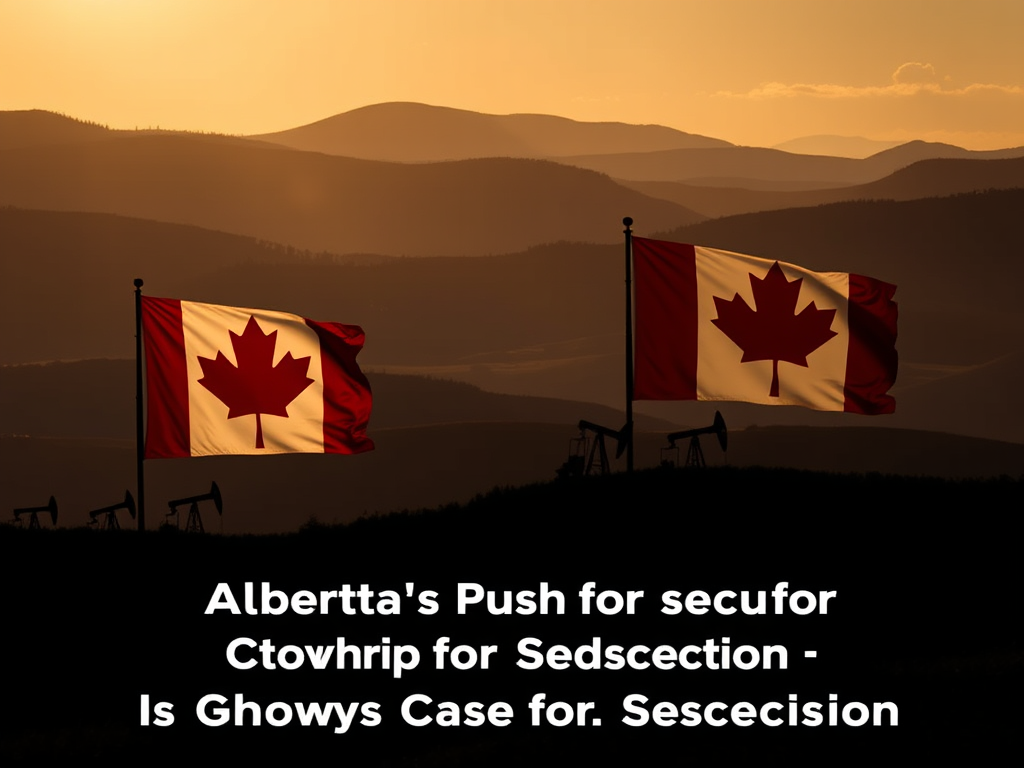

Alberta Stands Apart in Canada. Now It Plans a Long-Shot Bid to Secede.

Just as Canada begins to emerge from a challenging political transition and economic uncertainties triggered by former U.S. President Donald Trump’s tariffs and assertive rhetoric, it finds itself staring down the barrel of another potential crisis. This time, the tension is coming from within.
Alberta, Canada’s energy-rich western province, is taking steps toward a potential referendum that could ask its citizens whether they support separating from the nation. Though the practical chances of secession remain remote—given the legal and constitutional hurdles such a move would entail—the growing support for a vote reveals a deeper, more emotional unrest simmering beneath the surface.
Some Albertans have even voiced a preference to become a U.S. state rather than remain part of a federation they feel marginalizes them.
The discontent isn’t new. Alberta has long harbored a sense of alienation within Canada’s federal structure. Many in the province believe they shoulder more than their fair share of the national tax burden while being blocked from fully capitalizing on their oil and gas reserves—restrictions they see as largely imposed by politicians in far-off Ottawa.

Nicknamed “Canada’s Texas” for its conservative politics and energy industry, Alberta is home to a small but increasingly vocal group of separatists. While they once occupied the political fringes, recent events have brought their frustrations closer to the mainstream. Trump’s past remarks about annexing Canada and the federal government’s perceived disregard for Alberta’s interests have further emboldened this movement—especially following the fourth consecutive victory of the Liberal Party under newly appointed Prime Minister Mark Carney.
Unlike the separatist momentum in Quebec, which has waned in recent years after a narrow defeat in its 1995 referendum, Alberta’s push is gaining traction. Just weeks after Carney’s election, Alberta’s provincial government is actively laying the foundation for a potential breakaway vote.
At the heart of Alberta’s separatist argument lies the belief that the province is distinct in both its values and economic priorities. Where much of Canada leans liberal, Alberta tends to vote conservative. And where others see environmental regulations as a necessity, Albertans often see them as shackles.

In the wake of the election, secession has become a regular topic of conversation—from radio talk shows to family dinners.
“If it came down to a vote, I’d vote to leave,” said Bob Gablehaus, a retired public servant, while sipping drinks with friends on a sunny patio in Bragg Creek. “The Liberals don’t listen to us. They treat Western Canada like an afterthought.”
Surveys conducted before the April election showed that nearly 30 percent of Albertans would favor independence if the Liberals clinched another term. While hard-core secessionists remain a minority, referendums often serve as a vehicle for broader public dissatisfaction—and sometimes deliver surprising results, as demonstrated by Britain’s unexpected vote to exit the European Union.
Premier Danielle Smith’s Strategic Move
Danielle Smith, Alberta’s outspoken conservative premier, insists she’s not genuinely interested in separation. Instead, she frames the threat of a referendum as a bargaining chip—a means of pressuring Ottawa into granting the province more autonomy, especially concerning its resource management.
Her real target? Climate regulations that she believes suffocate Alberta’s oil and gas industry.

Smith wasted no time after Carney’s election victory. Within a day, she introduced legislation—subsequently passed by Alberta’s legislature—that dramatically lowers the threshold for triggering referendums. The new rules cut the required number of signatures for a constitutional referendum from 600,000 to roughly 177,000 and extend the collection period from 90 days to 120.
According to Smith, this is Alberta’s way of demanding respect from the federal government.
“Ottawa has acted in bad faith toward Alberta, violating both our constitutional rights and our ability to control our own resources,” she declared when presenting the bill. She specifically cited nine federal laws related to energy that she believes must be overhauled.
Alberta, Canada’s fourth-largest province by population, is the heart of the nation’s energy sector. Most of its oil and gas exports flow south to the United States, making the industry vital not just for provincial revenues but for the national economy.

Yet, over the past decade, the federal government under former Prime Minister Justin Trudeau focused heavily on environmental stewardship, introducing emission caps and rigorous environmental review procedures. These efforts, critics argue, have disproportionately hindered Alberta’s economic potential.
Smith’s response has been unapologetically defiant. In a recent speech, she said, “People around the world must think we’ve lost our senses. We have immense, accessible resources, yet we’re restricted from developing them. We let polluting regimes elsewhere profit while we tie our own hands.”
Her call for action has resonated. One grassroots campaign, the Alberta Prosperity Project, led by retired surgeon Dennis Modry, has already gathered more than 240,000 signatures in support of a referendum.
But Smith’s move has also ignited fierce opposition—especially from Indigenous communities, who argue that any discussion of Alberta’s sovereignty must respect the treaties that govern their lands and rights. First Nations leaders have condemned the proposed referendum, accusing Smith of heightening national divisions and undermining Indigenous sovereignty.

Carney’s Calculated Calm
For Prime Minister Mark Carney, a native Albertan himself, the rise in separatist sentiment could hardly come at a more inopportune moment. As he navigates the treacherous waters of Canada’s relationship with a volatile U.S. administration under Donald Trump, he must also manage domestic unrest without alienating his home province.
Carney has responded with caution, avoiding confrontational rhetoric. “Canada thrives when we collaborate,” he said during a recent visit to Washington, D.C. “I was born in Alberta. I understand the frustration. People have the right to ask questions. I also know how I would answer.”
Carney’s track record suggests a delicate balancing act. Once a central banker and later a champion of sustainable finance, he has advocated for environmental responsibility. Still, since taking office, he has made generally supportive remarks about Alberta’s energy sector—although he hasn’t endorsed the sweeping deregulation that Smith is demanding.

Some Albertans are cautiously optimistic. “Carney has pivoted faster than I expected,” said Doug Hayden, a property developer in Calgary. “Getting rid of the carbon tax was a smart move. I think the Liberals under him might have more in common with us than we thought.”
Not Just Talk—But Action
Even among those who don’t support full separation, there is agreement that Alberta must make its voice heard.
“Ottawa doesn’t pay attention unless we make some noise,” said Sean Fuller, a tattoo artist in Leduc. “We feel like a cash machine for the rest of Canada. Maybe if we shout loud enough, they’ll listen.”
And for a small but impassioned group, secession is just the beginning. They envision Alberta not as an independent nation—but as part of a different one: the United States.

Trump’s past musings about Canada becoming America’s 51st state have found a sympathetic audience in Alberta. The pandemic only deepened the divide, as many in the province rebelled against federal vaccine mandates and public health restrictions.
One of the most visible voices in the “Alberta, U.S.A.” movement is Paulette McCulloch, an 83-year-old widow who now travels the province in her motorhome, selling merchandise that promotes Alberta’s annexation by the United States.
“We’re being treated like second-class citizens,” she said, parked outside a buffalo ranch in Camrose. “This country doesn’t respect us. So maybe it’s time we found one that will.”




Leave a Reply