
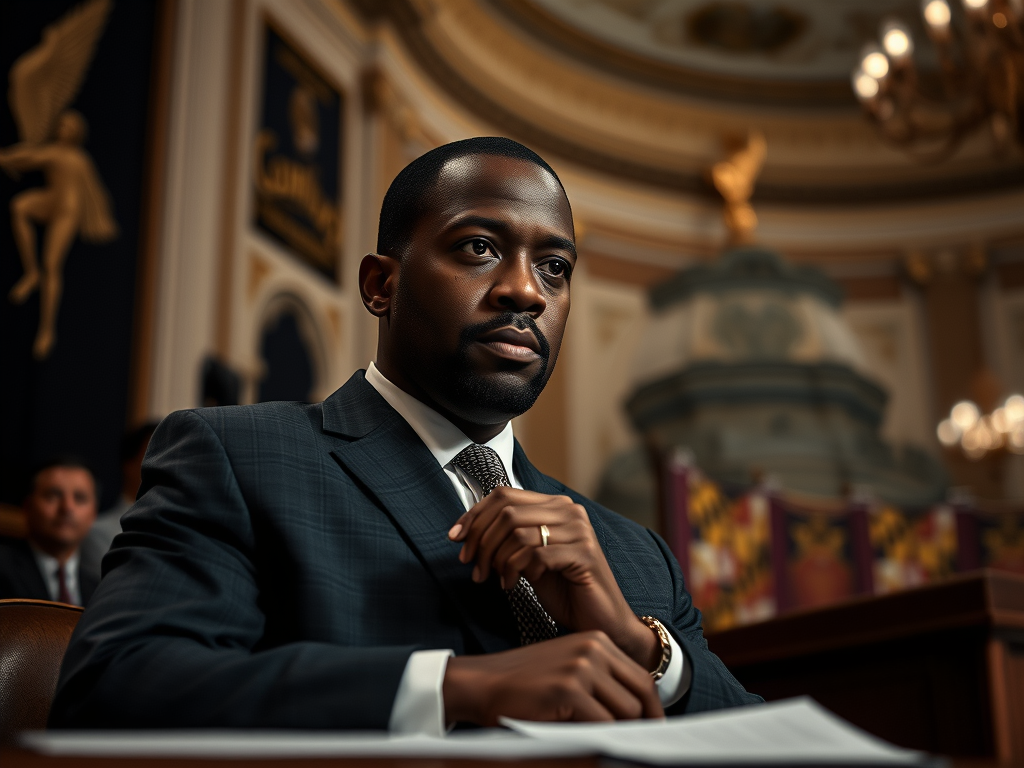

Maryland Governor Vetoes Reparations Bill

In a surprising move, Maryland Governor Wes Moore, the only sitting Black governor in the United States, vetoed a bill that aimed to propose measures for addressing the lingering impacts of slavery and racial discrimination. The decision, announced on Friday, diverges from recent actions taken by other Democratic governors who have supported similar initiatives and comes amid ongoing debates about the impact of identity politics on electoral outcomes following substantial Democratic losses last year.
The vetoed bill sought to establish a commission tasked with investigating how many Maryland residents are descendants of enslaved individuals and to recommend reparations. Potential remedies included official apologies, financial compensation, property tax reductions, college tuition assistance, or aid in purchasing a home, among other options.
Describing his decision as a “difficult” one, Moore asserted that Maryland has already conducted ample research on slavery’s legacy. “The scholarship on this topic is both vast in scope and robust in scale,” he stated in his veto message. “While I appreciate the work that went into this legislation, I strongly believe now is not the time for another study. Now is the time for continued action that delivers results for the people we serve.”

Moore emphasized his commitment to addressing racial disparities in wealth, homeownership, education, and food security. He pledged to introduce legislation next year to tackle structural barriers that have historically disadvantaged Black families in Maryland. Speaking with The Washington Post, Moore highlighted his focus on preparing the state for federal funding reductions implemented during the Trump administration.
The bill was championed by the Legislative Black Caucus of Maryland, which expressed strong disapproval of Moore’s veto. The caucus released a statement pointing out that the state capitol is situated less than a mile from Annapolis City Dock, one of the earliest and busiest slave trade ports in the nation. “At a time when the White House and Congress are actively targeting Black communities, dismantling diversity initiatives, and using harmful coded language, Governor Moore had a chance to show the country and the world that here in Maryland we boldly and courageously recognize our painful history and the urgent need to address it,” the statement read. “Instead, the state’s first Black governor chose to block this historic legislation that would have moved the state toward directly repairing the harm of enslavement.”

The bill had passed by a wide margin, and the Legislative Black Caucus hinted at a potential effort to override Moore’s veto, asserting that “the legislature will have the final say.”
Similar initiatives have gained traction in other states in recent years. Following the 2020 killing of George Floyd, California and Illinois passed laws to study reparations. In 2023, New York Governor Kathy Hochul also signed a bill to initiate a reparations study, making New York the third state to do so.
Governors Gavin Newsom of California and JB Pritzker of Illinois, like Moore, are considered potential Democratic presidential contenders in 2028. Their stance on reparations could emerge as a key issue in upcoming campaigns.
Public opinion on reparations remains divided. A 2021 Pew Research Center survey revealed that 68 percent of Americans opposed the idea of reparations for the descendants of enslaved individuals. However, 77 percent of Black respondents supported such measures. Meanwhile, a 2023 poll by the Institute of Governmental Studies at the University of California, Berkeley, found that 59 percent of California voters opposed cash reparations.

California’s approach to reparations has been contentious. Since the 2020 law established a reparations commission, the process has been marked by internal disputes among Democrats. The commission’s study calculated that an older Black resident could potentially receive $1.2 million in reparations, a sum that, if applied statewide, would surpass the state’s annual budget by hundreds of billions of dollars.
Despite the ambitious findings, California lawmakers have not pursued cash reparations. Instead, they have opted for less costly recommendations, such as issuing a formal apology for the state’s role in slavery and implementing policies to improve nutrition and workforce training.
As the debate over reparations continues, Governor Moore’s veto in Maryland underscores the complexities facing Democratic leaders as they navigate the political and economic implications of such initiatives. For now, the focus shifts to the Legislative Black Caucus, which appears determined to challenge Moore’s decision and keep the conversation on reparations alive.




Leave a Reply