
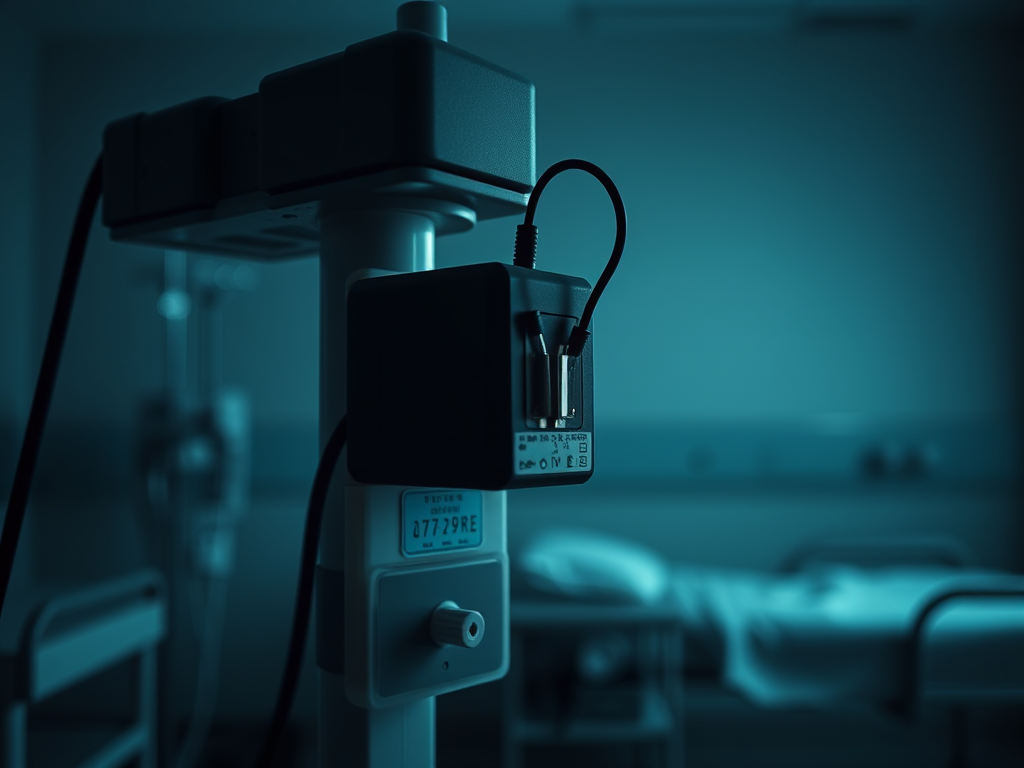

Long Effort to Ban Shocks as a Treatment Faces Uncertainty

For over a decade, a coalition of medical professionals, lawmakers, and advocates for individuals with autism has been striving to prohibit the use of a controversial medical device that administers painful electric shocks to people with severe neurodevelopmental disabilities.
Last year, a federal ban on the devices seemed almost certain. However, with the Trump administration’s early turbulence, the anticipated regulation may face further delays, potentially allowing the continued use of these contentious devices.
Federal health agencies, including the Food and Drug Administration (FDA), have announced sweeping cutbacks, impacting the division that had been navigating the intricate process of enforcing a ban on the devices.
Regulators determined that the electric shocks, delivered via electrodes attached to a patient’s arms and legs, pose significant long-term harm and should be discontinued. Despite this, some clinicians and family members of residents at a treatment center near Boston defend the devices, claiming they are a necessary last resort for individuals exhibiting severe, self-injurious behavior.
The uncertainty surrounding the future of these devices is further complicated by the influence of Robert F. Kennedy Jr., President Trump’s health chief, who has propagated the debunked theory that childhood vaccines cause autism. Recently, he described autism as a preventable epidemic that destroys families, a perspective that many autistic individuals have condemned as dehumanizing.

Since the year 2000, autism diagnoses among children have risen nearly fivefold, a trend attributed to expanded screening practices and broader diagnostic criteria. Autism encompasses a range of traits and varies widely in how it affects individuals’ daily lives. While some autistic people maintain independent, socially active lives, others require substantial support to navigate everyday tasks.
A small subset of autistic individuals experiences such severe communication challenges or sensory overload that they exhibit extreme self-harm or aggressive behavior. In such cases, families may seek intensive residential care, such as the Judge Rotenberg Educational Center in Canton, Massachusetts — the only known facility in the United States that employs electric shocks to control residents’ behavior.


The shock devices were created in the 1980s by the center’s founder, Matthew Israel, during a time when people with neurodevelopmental disabilities were often subjected to segregation and punitive treatment. Currently, the devices are approved for use on 55 adult residents at the center. Some individuals have worn the devices — often secured in fanny packs — for decades. Though previously used on children, the device is now permitted only for adults.
Jan Nisbet, a disability advocate and former director of the University of New Hampshire’s Institute on Disability, criticizes the use of shock treatment, emphasizing that it functions as a deterrent rather than a cure. “You can punish behavior to reduce its frequency, but that doesn’t address the underlying cause,” said Nisbet, who authored a book about the Rotenberg Center.
Most residents at the center cannot consent to wearing the devices, leaving the decision to relatives and probate judges. However, some former residents, like 48-year-old Jennifer Msumba, have spoken out against the treatment. In 2023, Msumba testified to Massachusetts lawmakers, describing the enduring trauma she suffers from years of shock treatment, including recurring nightmares.
The strongest jolts, delivered remotely by clinicians via remote control, reach 41 milliamperes — a level that causes severe pain and temporary muscle paralysis. For context, a current of 50 milliamperes can be fatal, depending on exposure time.


While Kennedy’s stance on the shock devices remains unclear, his prior statements linking autism to vaccines have raised concerns that his leadership at the FDA may undermine the ongoing efforts to ban the devices.
Zoe Gross, an activist with the Autistic Self Advocacy Network, said, “Ending the abuse of disabled people shouldn’t be a partisan issue.”
This is not the first time the FDA has sought to prohibit the shock devices. A previous ban was implemented in 2020 but was overturned by a federal court the following year. Congress later clarified the FDA’s regulatory authority, but the debate over the devices lingers, fueled by opposition from the Rotenberg Center, which reportedly spends over a million dollars annually on lobbying.
Relatives of some residents argue that the devices are essential. Tracy Green, whose 24-year-old son Anthony has been at the center since he was a teenager, said the treatment has enabled her to safely interact with her son after years of violent outbursts. “The cruel thing would be to take away the treatment that helps him,” she said.
Cheryl Lloyd, whose son Christopher Hinton has been receiving shocks since he was eight, fears that without the device, he could become a danger to himself or others. “My fear is that without it, he could end up in a confrontation with law enforcement that ends tragically,” Lloyd said.
The opinions of current residents are largely unknown. Many are nonverbal or communicate using only simple phrases. During a 2022 investigation by the Association for Behavior Analysis International, three of four interviewed patients expressed a desire to discontinue the treatment.


The backlash against shock treatment comes amidst a broader cultural shift toward more empathetic approaches to neurodevelopmental disabilities. Activists and clinicians advocate for alternatives such as speech therapy and sensory accommodations, emphasizing that punitive measures often cause more harm than good.
Jennifer Msumba, who now lives at a different treatment facility, said her new care team has helped her manage her conditions through therapy and medication — treatments she was previously denied at Rotenberg. “I have a life now,” she told lawmakers, urging them to ban the devices.
Glenda Crookes, the Rotenberg Center’s chief executive, acknowledged that the center has expanded its treatment methods since Dr. Israel left in 2011. Nevertheless, she affirmed that the shock devices remain a cornerstone of their approach. “Our priority has always been ensuring the safety of our residents,” Crookes said, “and for some, that means continuing the treatment.”




Leave a Reply