

Trump’s Order to Sanitize Black History Meets Institutional Resistance

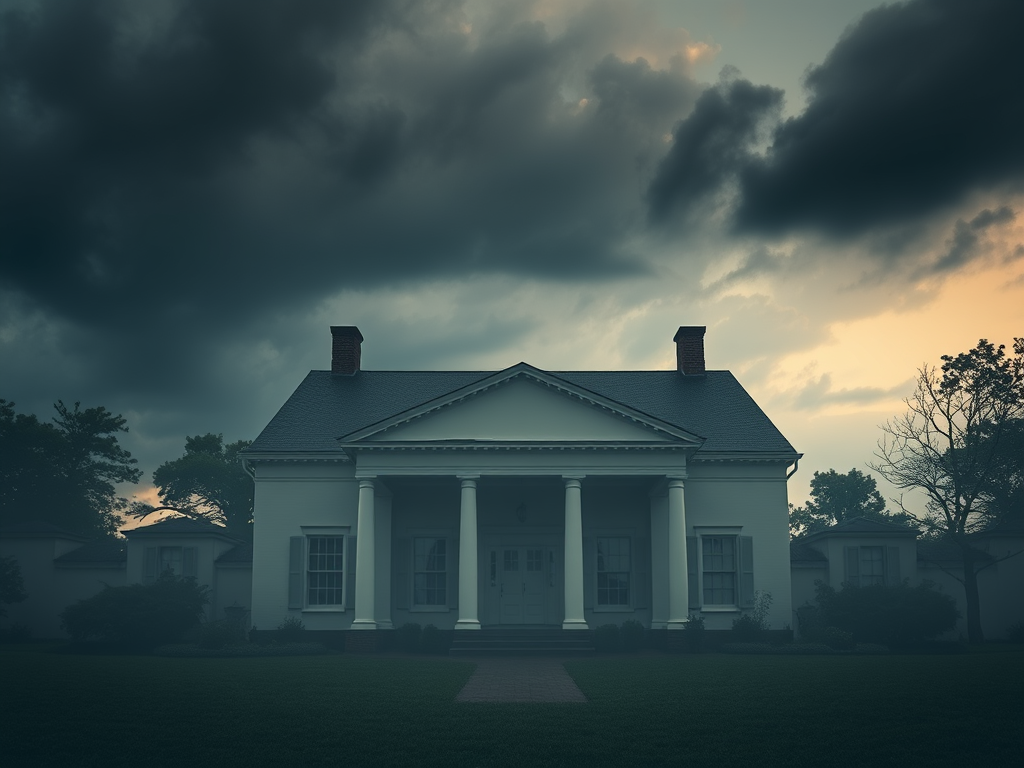
In late April, the Trump administration rescinded two federal grants previously awarded to the Whitney Plantation in Louisiana, signaling a potential crackdown on what President Trump has referred to as ‘improper ideology’ in cultural institutions that focus on Black history. The Whitney Plantation’s mission is to present an unvarnished depiction of life for enslaved individuals, a narrative that stands in contrast to the sanitized versions of Black history seemingly endorsed by the president.
However, just as swiftly as the grants were withdrawn, they were reinstated, according to Ashley Rogers, the executive director of the plantation. In an interview, Rogers speculated that the decision to restore the funding might have been influenced by potential legal repercussions. ‘Maybe they were worried about exposure to lawsuits,’ she suggested, though she admitted the exact reasons remain unclear.
Since the president issued an executive order in March condemning cultural institutions for allegedly ‘rewriting history to reflect ideology rather than objective facts,’ places like the Whitney Plantation have faced a climate of uncertainty. The directive, which specifically targeted the Smithsonian Institution, appointed Vice President JD Vance and other White House officials to oversee efforts to eliminate what the administration has labeled ‘improper ideology.’

Yet, the abrupt reversal of the Whitney Plantation grants and recent actions by the Smithsonian’s National Museum of African American History and Culture suggest a possible reconsideration of the directive. The difficulty of erasing decades of historical reckoning, particularly regarding the nation’s racist past, is becoming increasingly apparent.
Ashley Rogers expressed concern over the ambiguous term ‘improper ideology,’ describing it as alarmingly Orwellian. ‘Everything is being framed as ideology, which is strange because what we’re presenting at Whitney Plantation are facts,’ she said. According to Rogers, the real distortion lies in plantation museums that downplay or entirely omit discussions of slavery, perpetuating the false notion that enslaved people led content lives.

Reports surfaced last week that the Smithsonian was beginning to return artifacts to comply with the president’s directive, but the institution quickly refuted the claims. In a public statement, the Smithsonian clarified that no objects were being removed for reasons other than standard museum procedures. Two items returned to Reverend Amos C. Brown – a historical edition of ‘The History of the Negro Race in America’ and a Bible he carried during civil rights protests – came with an apology for any misunderstandings regarding the Smithsonian’s intentions.
In a video call with museum staff, Brown said they discussed the possibility of his artifacts being made a permanent part of the museum’s collection, pending a panel review. ‘Nothing has been resolved yet,’ he stated.
Meanwhile, White House official Lindsey Halligan, who was named in the Smithsonian executive order, stated that the review of the institution’s compliance was ongoing, with updates to be provided as the assessment progresses.
At the historic home of Frederick Douglass in Washington, D.C., 77-year-old Larry Burton reflected on his own upbringing in Memphis, Tennessee, where Black history was largely hidden from him. Visiting the abolitionist’s residence, he felt a renewed determination to educate his grandchildren about their heritage. ‘For the rest of my life, I’m going to make sure they know their history,’ he said.


Burton’s mission may face increasing obstacles if the Trump administration succeeds in reshaping narratives about race and history in the U.S. The executive order claims that cultural institutions are promoting ideologically driven distortions rather than objective history. The directive criticizes the Smithsonian, alleging that it has embraced a divisive, race-centric perspective that portrays American values as inherently oppressive.
Additionally, Trump’s recent budget proposal targeted the 400 Years of African American History Commission for elimination, claiming the move would reduce unnecessary governmental entities and enhance accountability.
But even as the administration attempts to curb discussions of systemic racism, the public appetite for truthful historical representation appears to be growing. The murder of George Floyd five years ago ignited a wave of public scrutiny of the nation’s past, opening doors to broader conversations about slavery and civil rights that may be difficult to close.
Dortha Burton, Larry’s wife, is not convinced that the administration’s efforts will succeed. ‘We have insight now,’ she said. ‘We have knowledge now.’

The Smithsonian’s Black history museum, known informally as the ‘Blacksonian,’ remains a powerful counterpoint to the administration’s narrative. On a recent visit, Quentin Peacock, who traveled with his family from North Carolina, was struck by the diverse crowd of visitors engaging with the museum’s exhibits. ‘It’s a Black history museum, but there’s white history in there too,’ he said, emphasizing that attempts to suppress these stories would ultimately harm all Americans.
Some conservative voices, however, support the president’s agenda. Dr. Carol M. Swain, vice chair of Trump’s 1776 Commission, has argued that the emphasis on racial narratives fosters division. Swain, 71, even described the Smithsonian’s Black history museum as ‘problematic,’ claiming that it segregates Black history rather than integrating it into the broader American story.
Yet, the number of federally funded Black history sites underscores the challenge of enforcing such a directive. The National Park Service alone manages over 400 civil rights sites, many of which receive funding from entities like the National Trust for Historic Preservation, the Institute of Museum and Library Services, and the National Endowment for the Humanities.
All of these organizations face budgetary pressures from the Department of Government Efficiency, led by Elon Musk’s cost-cutting measures. However, museum patrons like Dortha Burton remain hopeful that public interest and support will prevent closures or program cuts.
Hilary Green, a historian and author of ‘Unforgettable Sacrifice: How Black Communities Remembered the Civil War,’ cautioned that undermining Black history sites is a broader attempt to limit the scope of American history. ‘Museums are being targeted because they tell the fuller, more complex American story,’ she said.


For Green, the consequences of suppressing history are profound. She pointed to the ‘Lost Cause’ mythology that reframed the Civil War as a conflict over states’ rights rather than slavery, a distortion that minimized the role of Black Americans in the nation’s history for generations.
Rogers at the Whitney Plantation agrees that confronting the past can be uncomfortable but insists that it is necessary. ‘A wound doesn’t heal by ignoring it,’ she said. ‘It just festers.’
She draws a parallel to the surge in interest in Black genealogy following the 1977 television miniseries ‘Roots,’ which spurred many African Americans to trace their family histories. Libraries and archives responded by expanding their collections, leading to the establishment of community-based museums that have since become vital in preserving Black narratives.

Today, the same spirit of preservation animates the visitors who continue to seek out these sites, even as federal funding remains in jeopardy. ‘The truth can be uncomfortable,’ Rogers said. ‘But that doesn’t make it any less true.’




Leave a Reply